
Confira os prazos do animal antes de marcar a mudança
Antes de comprar a passagem, confira as regras do país de saída para seu cachorro, gato ou furão. Na rota de alto risco, a primeira vacina contra a raiva pode exigir uma espera de pelo menos 30 dias até a coleta de sangue. Também pode ser necessário esperar 90 dias desde a coleta até a emissão do certificado. Bens de mudança vindos de fora da UE (União Europeia) podem ter isenção aduaneira. Veículos precisam de análise fiscal e registro nos Países Baixos.
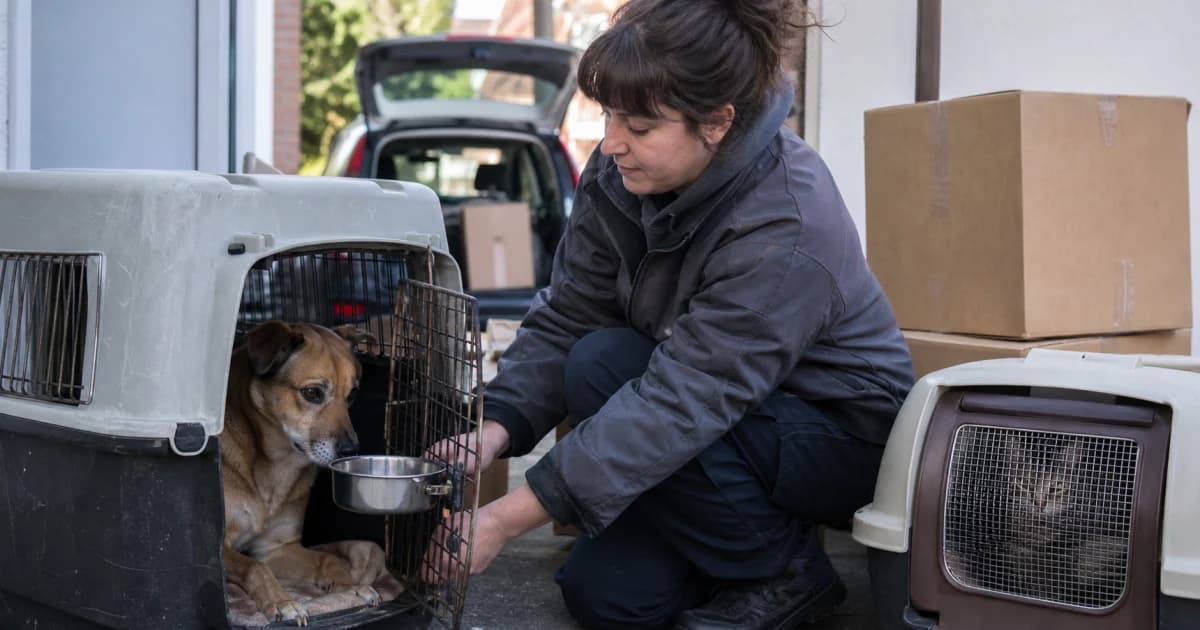
Escolha a rota antes de comprar passagens ou enviar a mudança
Para se mudar com seus próprios animais, bens pessoais ou um veículo, comece pelo país de saída do animal. Ele define os documentos necessários. Escolha a rota abaixo antes de reservar a viagem.
A NVWA (Site externo, abre em uma nova aba) (Nederlandse Voedsel- en Warenautoriteit, autoridade neerlandesa de segurança alimentar e de produtos) publica as regras de entrada dos animais. Depois da primeira vacina contra a raiva, é preciso esperar pelo menos 21 dias para viajar. A rota de alto risco também pode exigir exame de sangue e uma espera de 90 dias antes da emissão do certificado.
Você pode rolar as tabelas largas na horizontal.
| O que você leva | Primeira decisão | Quando começar |
|---|---|---|
| Cachorro, gato ou furão na rota de passaporte reconhecido | Confirme a validade do passaporte e da vacina contra a raiva | Antes de comprar a passagem; reserve pelo menos 21 dias após a primeira vacina |
| Cachorro, gato ou furão de outro país da lista oficial de baixo risco | Providencie o certificado sanitário da UE correto e a declaração do tutor | Antes de comprar a passagem; certificado emitido ou validado nos 10 dias anteriores à entrada na UE, com extensão pela duração da travessia marítima |
| Cachorro, gato ou furão de país de alto risco não listado, fora da UE, da Irlanda do Norte e da Noruega | Planeje o chip, a vacina, a sorologia antirrábica (exame de sangue para medir anticorpos contra a raiva) e a espera de 90 dias antes da emissão do certificado | Pelo menos 120 dias após a primeira vacina até a emissão do certificado; reserve também tempo para a viagem |
| Ave, coelho, roedor, réptil ou outro animal | Consulte a rota da espécie na NVWA | Antes de comprar a passagem; alguns certificados devem ter no máximo 10 dias |
Para os bens de mudança, considere de onde vem a remessa. Um veículo também passa pela análise do BPM (belasting van personenauto’s en motorrijwielen, imposto sobre carros e motocicletas) e pelo registro na RDW (Site externo, abre em uma nova aba) (Dienst Wegverkeer, órgão neerlandês de registro de veículos).
Você pode rolar as tabelas largas na horizontal.
| O que você leva | Primeira decisão | Quando começar |
|---|---|---|
| Bens de mudança de fora da UE | Confira a isenção para bens de mudança e contrate uma empresa de mudança | Antes da declaração da remessa |
| Bens de mudança de outro país da UE | Confira os accijnsgoederen (produtos sujeitos a impostos especiais), os bens restritos e as regras do destino | Antes de embalar itens restritos |
| Carro ou motocicleta | Conclua a etapa aduaneira se vier de fora da UE, providencie a isenção de BPM e faça o registro na RDW | Antes de dirigir após se tornar residente nos Países Baixos |
As regras da UE para animais de companhia mudaram em 22 de abril de 2026. Continuam as exigências principais de chip, vacina contra a raiva e documentos. Agora se aplicam novos modelos de documentos e novas listas de países.
Prepare seu cachorro, gato ou furão
Para viajar com um cachorro, gato ou furão, confira a identificação, a vacinação, os documentos e a saúde do animal:
- Identificação: use um microchip que cumpra os requisitos. Uma tatuagem bem legível feita antes de 3 de julho de 2011 ainda pode ser aceita.
- Vacina contra a raiva: o animal deve ter pelo menos 12 semanas para a primeira vacinação. O chip deve ser implantado ou lido antes da vacina, ou no mesmo dia e nessa ordem.
- Espera: aguarde pelo menos 21 dias após a primeira vacina para viajar. Um reforço só evita nova espera se for aplicado antes do vencimento da vacina anterior.
- Documento: use um passaporte válido na rota reconhecida. Para as demais rotas, providencie o certificado sanitário da UE correto.
- Saúde: um animal vindo de fora da UE não pode apresentar sinais evidentes de doença e deve estar apto para viajar.
Desde 1º de janeiro de 2026, há restrições para manter gatos sem pelos ou com orelhas dobradas nos Países Baixos. Para trazer um desses gatos de outro país, você precisa de prova escrita de que ele nasceu e recebeu o chip antes de 1º de janeiro de 2026. As regras da RVO (Site externo, abre em uma nova aba) (Rijksdienst voor Ondernemend Nederland, agência neerlandesa de apoio às empresas) também valem para visitas temporárias. Esses gatos não podem participar de exposições ou competições, mesmo quando se enquadram na regra de transição.
Confira a propriedade do animal e a viagem do tutor
A viagem com seu animal precisa cumprir estas condições:
- Propriedade: o animal continua sendo seu. A viagem não pode ter como finalidade a venda ou a transferência para outro tutor.
- Viagem do tutor: acompanhe o animal ou autorize outra pessoa por escrito. Faça a mesma viagem até 5 dias antes ou depois do animal. A pessoa autorizada deve levar prova da sua viagem, como uma cópia do cartão de embarque.
- Quantidade: normalmente, no máximo 5 cachorros, gatos ou furões podem viajar como animais de companhia. Em transporte particular, o limite vale para o veículo inteiro.
- Cães de serviço e assistência: eles também devem cumprir as mesmas regras veterinárias de entrada.
- Transporte: além das regras legais de entrada, confira as exigências da companhia aérea, do aeroporto e da caixa de transporte.
Mais de 5 animais podem se enquadrar nessa rota para uma competição, exposição, evento esportivo ou treinamento para esses eventos. Você precisa apresentar comprovantes, e cada animal deve ter mais de 6 meses.
Use o passaporte do animal quando a rota permitir
Use o passaporte europeu para animais de companhia se a viagem partir da UE, da Irlanda do Norte ou da Noruega. A rota também inclui territórios reconhecidos. Um veterinário autorizado deve preencher e assinar o passaporte. Para saídas de outros países, consulte as listas oficiais (Site externo, abre em uma nova aba).
Os passaportes antigos continuam aceitos se os registros sanitários estiverem válidos. A transição cobre passaportes dos modelos anteriores emitidos antes de 1º de janeiro de 2028. O regulamento de documentos de 2026 (Site externo, abre em uma nova aba) define essa data limite de emissão.
Se você mora em Portugal e precisa emitir o passaporte do seu cachorro, gato ou furão, siga a orientação da DGAV (Direção-Geral de Alimentação e Veterinária). O Passaporte de Animal de Companhia (PAC) deve ser emitido no país europeu onde você reside habitualmente, em seu nome.
Providencie o certificado sanitário para as demais rotas
Se o país de saída não estiver na rota de passaporte reconhecida, prepare o certificado e os documentos abaixo:
- Emissão: use o certificado sanitário da UE para deslocamento não comercial, ou seja, sem venda ou transferência de propriedade. Um veterinário oficial emite o documento. Um veterinário autorizado também pode emitir o documento, desde que a autoridade competente o valide depois.
- Datas: o certificado deve ser emitido ou validado no máximo 10 dias antes da entrada na UE. Em uma viagem marítima, esse prazo é ampliado pela duração da travessia.
- Anexos: inclua a declaração assinada de que o deslocamento não é comercial e cópias autenticadas dos registros de vacinação. Se a sorologia for exigida, anexe o laudo original ou uma cópia autenticada.
- Viagens seguintes: após o primeiro controle de fronteira da UE, o certificado permite viagens dentro da UE por até 6 meses ou até a vacina contra a raiva vencer, o que acontecer primeiro.
Para certificados emitidos a partir de 1º de outubro de 2026, use o modelo novo. Um certificado do modelo antigo emitido antes dessa data ainda pode ser aceito até 31 de março de 2027. Os prazos da vacinação e do exame de sangue continuam valendo. Confirme o modelo com o veterinário oficial e não altere o formulário.
O passaporte pode substituir o certificado em situações definidas. No retorno de um animal da UE, um veterinário da UE deve ter registrado a vacina exigida antes da saída. Para uma viagem de alto risco, ele também deve ter registrado o exame de sangue aprovado antes da saída. Se o animal receber uma vacina contra a raiva fora da UE, essa vacina precisa constar em um certificado sanitário da UE separado para o retorno. Alguns territórios listados podem emitir um passaporte reconhecido. Confira a regra de documentos do país de saída.
Se seu cachorro ou gato sair do Brasil pela rota de certificado sanitário, providencie o Certificado Veterinário Internacional (CVI) emitido pelo MAPA (Ministério da Agricultura e Pecuária). Para a UE, o pedido eletrônico é feito exclusivamente por veterinário habilitado na plataforma Gov.br; depois da emissão, imprima o CVI para apresentar na chegada.
Confira se seu animal precisa de sorologia antirrábica conforme o país de saída
Para saídas de fora da UE, da Irlanda do Norte e da Noruega, um país ausente das duas listas oficiais exige sorologia antirrábica. Nas rotas listadas, o documento é um passaporte reconhecido ou um certificado sanitário da UE, conforme o país. A classificação pode mudar: consulte as listas atuais.
Você pode rolar as tabelas largas na horizontal.
| Rota do país | Sorologia antirrábica | Documento principal |
|---|---|---|
| UE, Irlanda do Norte, Noruega ou território com passaporte reconhecido | Não é exigida nessa rota | Passaporte reconhecido, com todos os registros válidos |
| Outro país da lista oficial de baixo risco | Não é exigida | Certificado sanitário da UE, salvo uma situação definida de retorno com passaporte |
| País não listado fora da UE, da Irlanda do Norte e da Noruega | Obrigatória | Certificado sanitário da UE e laudo do laboratório, salvo um retorno à UE com passaporte que cumpra as condições |
A lista de baixo risco inclui Estados Unidos, Canadá, Japão, Austrália e Nova Zelândia, entre outros. Fora da UE, da Irlanda do Norte e da Noruega, um país ausente das duas listas é de alto risco. Rússia e Belarus estão nessa categoria desde 16 de setembro de 2024.
Para sair de um país listado fora da UE, da Irlanda do Norte e da Noruega sem fazer a sorologia, pelo menos uma das condições abaixo precisa ser cumprida. Elas estão no artigo 17 do regulamento de deslocamento de animais (Site externo, abre em uma nova aba):
- O animal vem diretamente de um país listado onde você reside habitualmente.
- Antes da viagem, o animal ficou apenas em um ou mais países listados.
- O animal passa por um país não listado, mas fica seguro no meio de transporte ou na área internacional de um porto ou aeroporto. Ele não tem contato com animais que possam contrair raiva. Você ou a pessoa autorizada apresenta uma declaração assinada que confirma essas condições.
Siga a ordem da vacina e da sorologia na rota de alto risco
Se o animal sair de um país de alto risco não listado, fora da UE, da Irlanda do Norte e da Noruega, siga estas etapas na ordem. Pelo modelo atual de certificado, os 90 dias de espera precisam terminar antes da emissão do documento.
- Identifique o animal com um chip e guarde o registro.
- Leve o animal ao veterinário para a primeira vacina contra a raiva, a partir de 12 semanas de idade. O chip deve ser implantado ou lido antes da vacina. Guarde o registro da vacinação.
- Um veterinário autorizado deve coletar o sangue pelo menos 30 dias após a primeira vacina. Se a vacina anterior ainda estiver válida, a coleta pode ser feita imediatamente. Guarde a data da coleta.
- Envie a amostra a um laboratório designado pela UE. O resultado deve ser de pelo menos 0,5 UI/ml (unidades internacionais por mililitro). Guarde o laudo.
- Espere pelo menos 90 dias desde a coleta até o veterinário emitir o certificado sanitário, salvo a exceção de retorno à UE explicada abaixo.
- Providencie o certificado sanitário. Ele deve ser emitido ou validado nos 10 dias anteriores à entrada na UE. Para uma viagem marítima, vale a extensão pela duração da travessia já explicada.
- Anexe o laudo aprovado ao certificado.
Por exemplo: com a primeira vacina em 1º de outubro de 2026, a coleta pode ser feita a partir de 31 de outubro. Se o resultado for aprovado, o certificado pode ser emitido a partir de 29 de janeiro de 2027. Planeje a viagem dentro do prazo de entrada permitido pelo certificado e reserve tempo para receber o resultado do laboratório.
A espera de 90 dias não é exigida no retorno de um animal à UE se um veterinário da UE tiver registrado a vacina válida e a sorologia aprovada antes da saída.
Uma sorologia aprovada continua válida enquanto cada reforço contra a raiva for aplicado antes do vencimento da vacina anterior. Se a vacina vencer, a próxima dose passa a contar como primeira vacinação, e as regras da sorologia voltam a se aplicar.
Apresente o animal no primeiro ponto de entrada na UE
Quando a rota do animal exigir controle de entrada, ele será feito no primeiro ponto de entrada na UE. Pode ser o país de uma conexão antes dos Países Baixos. Use um ponto de entrada de viajantes designado quando isso for exigido. Na entrada pelos Países Baixos, apresente o animal à Douane (Site externo, abre em uma nova aba) (alfândega neerlandesa) pelo canal vermelho de bens a declarar quando a rota do animal ou as regras aduaneiras exigirem. Os agentes conferem os documentos e a identificação do animal.
Animais protegidos têm menos pontos de entrada permitidos nos Países Baixos. Eles também podem precisar de um documento CITES (Convenção sobre o Comércio Internacional das Espécies da Fauna e da Flora Selvagens Ameaçadas de Extinção). A lista de pontos de entrada da NVWA (PDF, cerca de 105 KB) (Site externo, abre em uma nova aba) informa quais postos estão autorizados.
Registre o cachorro que veio de outro país
Se seu cachorro ficar nos Países Baixos por 3 meses ou mais, faça o registro conforme as instruções atuais da RVO em neerlandês. Solicite um UBN (uniek bedrijfsnummer, número único de cadastro) e leve o cachorro a um veterinário neerlandês em até 14 dias após a chegada. O veterinário registra o animal nesse número. As regras da RVO para cachorros vindos do exterior (Site externo, abre em uma nova aba) dispensam esse registro para visitas mais curtas, desde que o animal não seja vendido.
O UBN identifica o local onde você mantém o cachorro. Para quem não mantém cães como atividade comercial, o cadastro custa € 23,02 uma única vez em 2026. O veterinário e o registro na base de dados têm custos separados. O guia de pedido de UBN da RVO (Site externo, abre em uma nova aba) explica como solicitar e quais são os custos.
Confira quando declarar um animal comprado à alfândega
Em 2026, compras feitas fora da UE têm uma cota total de isenção de € 430 por viajante que chega de avião ou navio, quando se enquadram como importação pessoal de viajante. Um animal comprado entra nessa conta. Para viagens por estrada, trem ou outros meios, a cota é de € 300 por viajante. Aviões e barcos particulares também usam a cota de € 300. Você não pode somar as cotas de várias pessoas nem dividir o valor de um animal entre elas. Álcool e tabaco têm limites de quantidade separados.
Um animal comprado fora da UE e levado à UE pela primeira vez conta para essa cota. Declare o animal se o valor dele, somado às outras compras abrangidas pela cota, ultrapassar o limite da sua rota. Declare as compras tributáveis à alfândega no primeiro ponto de entrada pertinente na UE. Se esse ponto for nos Países Baixos, declare à Douane. A falta de declaração pode gerar multa além dos impostos.
Um animal comprado por € 500, por exemplo, ultrapassa a cota de € 430 para passageiros de avião ou navio, mesmo sem outras compras. Um animal de € 350 ultrapassa a cota de € 300 para viagens por estrada ou trem. Quando um item ultrapassa a cota, os impostos incidem sobre o valor inteiro. As regras da Douane para compras no exterior (Site externo, abre em uma nova aba) explicam os limites e o dever de declarar.
Essas cotas valem para importações pessoais que cumprem as condições, e não para remessas comerciais. Uma mudança definitiva não dá acesso automático a elas. Antes da viagem, pergunte à alfândega qual isenção pode se aplicar. As regras sanitárias de entrada do animal são um processo separado.
Confira as regras para aves e outros animais
Para coelhos, roedores, peixes ornamentais, répteis, anfíbios e invertebrados abrangidos pela regra que venham de fora da UE, o certificado sanitário geral deve ter no máximo 10 dias. Aves de companhia de origens sem dispensa normalmente precisam de chip ou anilha fechada e de exame veterinário antes da saída. A exceção de identificação para a rota de quarentena aprovada está explicada abaixo.
Aves de companhia vindas de Andorra, Suíça, Ilhas Faroé, Gibraltar, Groenlândia, Islândia, Liechtenstein, Mônaco, San Marino e Estado da Cidade do Vaticano têm uma dispensa prevista na lista da UE de origens das aves (Site externo, abre em uma nova aba). Essa rota dispensa a identificação individual, o certificado sanitário e as declarações anexas, o exame antes da saída, as medidas contra a gripe aviária e a exigência de origem em um membro da WOAH (Organização Mundial de Saúde Animal). Continuam valendo o limite de 5 aves e as regras de isolamento na residência explicadas abaixo.
Você pode rolar as tabelas largas na horizontal.
| Animal vindo de fora da UE | Documentos e prazos principais | O que mais conferir |
|---|---|---|
| Coelho, roedor, peixe ornamental, réptil, anfíbio ou invertebrado abrangido | Certificado sanitário veterinário geral emitido o mais perto possível da saída e com no máximo 10 dias, além de declaração não comercial assinada | Apresente o animal na primeira entrada na UE; confira as regras de espécies protegidas e invasoras |
| Ave de companhia de uma origem com dispensa listada acima | Essa dispensa de origem não exige certificado sanitário da UE, chip ou anilha individual, nem exame antes da saída | No máximo 5 aves; continuam valendo o isolamento na residência e as condições de aviso ao destino explicadas abaixo |
| Ave de companhia de uma origem sem dispensa | Declaração do tutor e certificado sanitário; chip único ou anilha fechada, salvo a exceção de quarentena aprovada abaixo; exame veterinário nas 48 horas anteriores à saída ou no último dia útil antes do embarque | No máximo 5 aves e a rota aplicável de vacina, exame ou país aprovado para gripe aviária, ou quarentena aprovada |
| Espécie protegida | Os documentos sanitários exigidos e o documento CITES necessário | Nos Países Baixos, animais protegidos só podem entrar pelos postos designados em Schiphol ou Maastricht |
Na rota dos outros animais, você também deve acompanhar o animal ou fazer a mesma viagem até 5 dias antes ou depois dele. O animal viaja porque você viaja. Essa rota não inclui coelhos destinados à alimentação nem animais que vão para feiras de répteis. Abelhas, mamangavas, moluscos e crustáceos não estão entre os invertebrados abrangidos.
Confira quais mamíferos você pode manter
Antes de trazer um mamífero menos comum, consulte a huis- en hobbydierenlijst (lista de mamíferos permitidos como animais de companhia). As espécies listadas podem ser mantidas. Há uma exceção para gamos e veados-vermelhos. A lista e as exceções da RVO (Site externo, abre em uma nova aba) explicam quais animais se enquadram.
A regra de transição inclui mamíferos não listados que já eram mantidos quando as regras começaram, em 1º de julho de 2024. Também inclui os filhotes se a mãe já estava grávida nessa data. Guarde provas com data, como registro de compra ou conta veterinária, e impeça novas reproduções. A decisão sobre a lista de mamíferos (Site externo, abre em uma nova aba) define essas condições. Continuam valendo as regras sanitárias, de CITES e de espécies invasoras. Antes da viagem, peça à RVO que confirme os documentos do seu animal.
Confira a saúde da ave e os cuidados na chegada
Para aves de companhia de origens sem dispensa, o país de saída deve ser membro da WOAH e cumprir as condições de saúde animal. Nessa rota, o tutor assina a declaração de deslocamento não comercial.
A rota de aves de companhia cobre suas próprias aves quando viajam sem venda ou transferência de propriedade. Ela não inclui galinhas, perus, galinhas-d’angola, patos, gansos, codornas, pombos, faisões, perdizes ou aves que não voam.
Aves de origens com dispensa e aves que cumprem as exigências comuns antes da entrada devem ir diretamente para a residência após chegar. Mantenha-as isoladas de outras aves por pelo menos 30 dias. Nesse período, elas não podem ir a exposições, feiras, mostras ou outros encontros de aves. Se o isolamento ocorrer em um país da UE diferente do primeiro país de entrada, informe o endereço da residência às autoridades do destino final.
Na rota de quarentena aprovada, as aves devem ir diretamente para o estabelecimento aprovado no país da UE que será seu destino final. A quarentena dura pelo menos 30 dias. As aves só podem sair com autorização escrita de um veterinário oficial. Antes de reservar a viagem, confirme a rota com a NVWA.
Para a rota de quarentena aprovada, sua descrição escrita de uma ave ou de um grupo pode substituir a identificação individual. A autoridade do país de saída deve lacrar as aves em um recipiente antes da viagem. O recipiente deve permitir a inspeção visual do espaço onde elas estão. Continuam valendo as exigências de exame, origem em membro da WOAH e certificado para origens sem dispensa.
Para aves de origens sem dispensa, o veterinário deve confirmar que não há sinais evidentes de doença e que elas estão aptas a viajar. Depois do exame, mantenha essas aves separadas de outras até a saída.
O certificado sanitário deve ser emitido ou validado nos 10 dias anteriores à entrada na UE. Em transporte marítimo, esse prazo é ampliado pela duração da travessia. Se o seu veterinário preencher o certificado, um veterinário do governo deve assinar e carimbar cada página. Essas exigências de certificado valem para origens sem dispensa.
Peça a isenção dos bens de mudança vindos de fora da UE
Uma empresa de mudança solicita a isenção para o verhuisboedel (bens de mudança) na declaração à Douane. Se a alfândega conceder a isenção, os bens pessoais elegíveis podem entrar sem direitos de importação. Você precisa cumprir todas as condições abaixo. Confira cada uma antes da declaração da remessa.
Você pode rolar as tabelas largas na horizontal.
| Condição | O que significa | Comprovante ou obrigação posterior |
|---|---|---|
| Transferência da residência habitual | Você se muda de fora da UE para morar nos Países Baixos ou em outro país da UE | Prova de que passou a morar no novo país |
| Residência anterior | Você morou fora da UE por pelo menos 12 meses consecutivos | Registros de residência e de cancelamento do registro |
| Propriedade e uso | Você foi dono dos bens e os usou por pelo menos 6 meses. Você vai usar os bens novamente. | Inventário, recibos ou outra prova, se a alfândega pedir |
| Prazo de importação | Você importa os bens nos 12 meses após passar a morar no novo país | Datas da mudança de residência e da importação |
| Depois da importação | Por 12 meses após a importação, não empreste, dê em garantia, alugue ou transfira os bens isentos | Mantenha os bens e guarde a decisão de importação |
O comprovante de registro no município deve mostrar quando você passou a morar nos Países Baixos. Se ainda não tiver esse documento, apresente prova de cancelamento do registro no país anterior e um documento aceito que comprove que você passou a morar nos Países Baixos. Pode ser um contrato de trabalho, declaração do empregador, autorização de trabalho, contrato de aluguel ou certificado de hipoteca.
Se ainda faltarem documentos, pergunte à empresa de mudança se ela pode solicitar a isenção antes de receber esses documentos. Envie os documentos que faltam assim que possível.
Para pedir a isenção, siga estas etapas com a empresa de mudança:
- Escolha uma empresa de mudança que possa apresentar a declaração à Douane com o código de isenção.
- Entregue um inventário assinado com cada bem pessoal da remessa.
- Forneça os comprovantes de que você passou a morar nos Países Baixos descritos acima.
- Se houver um veículo, envie cópias do certificado de registro e da prova de compra ou propriedade. O veículo ainda exige uma declaração de importação separada.
- Guarde a declaração, a decisão, o inventário e os comprovantes de que você passou a morar nos Países Baixos durante todo o período de restrição.
A isenção não cobre produtos com álcool, tabaco e derivados, veículos comerciais ou equipamento profissional não portátil. Outros bens têm restrições ou proibições próprias: armas, entorpecentes, falsificações, espécies protegidas, produtos de origem animal e alguns bens culturais. Confira quais itens podem ser declarados separadamente. Retire da remessa os bens proibidos.
Traga os bens de mudança de outro país da UE
Bens comuns de mudança vindos de outro país da UE não exigem declaração aduaneira, porque há livre circulação de bens dentro da UE. Continuam valendo regras separadas para produtos sujeitos a impostos especiais, animais, armas, entorpecentes, falsificações, espécies protegidas, produtos de origem animal e bens culturais. Um veículo ainda precisa passar pelas etapas de BPM e RDW.
Importe e registre seu carro ou sua motocicleta
Se o veículo vier de fora da UE, resolva a etapa aduaneira antes da inspeção da RDW. Peça a isenção de BPM antes da inspeção. Depois dela, entregue a declaração de BPM em papel se o veículo estiver sujeito a esse imposto.
Para uma mudança dentro da UE, use o pedido de isenção do Belastingdienst (Site externo, abre em uma nova aba) (administração tributária neerlandesa). Para uma mudança de fora da UE, é necessária uma declaração de importação separada do veículo.
Você pode rolar as tabelas largas na horizontal.
| Origem | Antes da inspeção da RDW | Como pedir a isenção |
|---|---|---|
| Outro país da UE | O veículo não precisa de declaração aduaneira; peça a isenção de BPM por mudança | Use o formulário do Belastingdienst, disponível só em neerlandês, e solicite em até 12 meses após a mudança |
| Fora da UE | Peça à empresa de mudança uma declaração de importação separada do veículo e obtenha a decisão sobre a isenção de importação | Use a declaração de importação com o código de isenção no processo de BPM antes da inspeção |
Para obter a isenção de BPM por mudança dentro da UE, você deve ter sido dono do veículo e usado o veículo por pelo menos 6 meses antes da mudança. Todas as condições abaixo precisam ser cumpridas. Siga as datas de restrição indicadas na sua decisão de isenção.
Você pode rolar as tabelas largas na horizontal.
| Condição da isenção de BPM por mudança | Regra |
|---|---|
| Uso do veículo | O veículo faz parte dos bens de mudança e você o usa para a mesma finalidade de antes |
| Propriedade e uso anteriores | Pelo menos 6 meses antes da mudança |
| Residência habitual anterior | Pelo menos 12 meses de residência habitual no outro país antes da mudança |
| Pedido | Em até 12 meses após a mudança |
| Depois da isenção | Não venda, alugue nem empreste o veículo por 12 meses após o registro, ou o BPM será devido. Familiares que moram com você podem dirigir o veículo. Confira as datas na sua decisão de isenção. |
Faça o registro do veículo nesta ordem:
- Inscreva-se no BRP. O guia de registro no município explica como fazer.
- Conclua a etapa aduaneira se o veículo vier de fora da UE.
- Peça a isenção de BPM antes da inspeção. Para uma mudança dentro da UE, imprima, assine e envie pelo correio o formulário de isenção em neerlandês.
- Agende a inspeção da RDW.
- Se não puder usar as placas estrangeiras, solicite um registro de um dia para ir à inspeção.
- Faça uma cópia do certificado estrangeiro de registro completo antes da inspeção. A RDW fica com o original.
- Compareça pessoalmente à inspeção. Leve o veículo, o certificado estrangeiro original, um documento de identidade válido e o documento fiscal que mostra que o veículo se enquadra como bem de mudança.
- Após a inspeção, entregue a declaração de BPM em papel se o veículo estiver sujeito ao imposto. A declaração continua obrigatória mesmo quando a isenção deixa o valor a pagar em zero.
- Aguarde a aprovação da RDW e do Belastingdienst. Depois, a RDW envia o certificado de registro em até 5 dias úteis. O código completo de registro é enviado 2 dias úteis depois. O prazo de entrega pelo correio pode variar.
- Contrate o seguro neerlandês de responsabilidade civil contra terceiros a partir do momento em que o veículo estiver registrado em seu nome.
- Mande fazer as placas neerlandesas.
- Mantenha válida a inspeção de segurança veicular exigida, quando aplicável.
O registro também inicia o processo do imposto sobre veículos.
A carteira de motorista estrangeira tem regras próprias de validade e troca. Importar o veículo não muda essas regras. Antes de dirigir, consulte o guia para trocar a carteira de motorista.
Resolva os problemas antes de viajar
Um documento ausente ou uma proibição de importação pode impedir parte da mudança. Confira estas situações antes de pagar pelo transporte.
Resolva problemas nos documentos e nas datas da viagem
Se os prazos exigidos para o animal não permitirem a viagem, mude a data da viagem. Peça a um veterinário oficial e à NVWA que confiram a rota. Cumpra os prazos legais completos e leve todos os documentos exigidos.
Providencie os comprovantes de residência que faltam
A empresa de mudança pode pedir a isenção antes de ter todos os documentos solicitados se as condições da Douane forem cumpridas. Confirme isso com a empresa antes do envio e entregue os comprovantes que faltam assim que possível.
A rota de pedido publicada pela Douane usa uma empresa de mudança. Se você pretende transportar os bens por conta própria, fale com a Douane primeiro.
Confira as proibições de importação para bens da Rússia
Se os bens vierem da Rússia, consulte a lista atual de proibições de importação da UE antes de embalar. A Douane informa que não há isenção para bens proibidos pelas sanções. Se a classificação de um bem não estiver clara, peça orientação à Douane ou a um especialista em sanções.
Confira os documentos antes da saída
Antes de viajar, confira cada item que se aplica à sua mudança:
- Animal: confira a espécie, a rota do país de saída, o documento de viagem, a situação da vacina e o primeiro ponto de entrada na UE.
- Animal na rota de alto risco: anote as datas da vacina, da coleta e da primeira emissão possível do certificado antes de pagar pelo transporte.
- Documentos do animal: confira o número do chip ou outra identificação exigida, datas, assinaturas, validações, declarações e laudos anexos.
- Outro animal: consulte a página da espécie na NVWA, a lista neerlandesa de mamíferos, a situação CITES e as regras de espécies invasoras.
- Bens de fora da UE: confirme todas as condições da isenção, contrate a empresa de mudança e assine o inventário completo antes da declaração.
- Bens restritos: confira as regras de declaração separada para álcool, tabaco e outros itens restritos. Não inclua bens proibidos na remessa.
- Veículo: resolva a etapa aduaneira se ele vier de fora da UE. Faça as etapas de BPM e RDW separadamente e não use placas estrangeiras quando a regra do BRP se aplicar.
Guarde as decisões e os comprovantes oficiais junto dos documentos da mudança.
Continue com estes guias:
- Autor
- Por Inburgering.org team
- Revisor
- Revisado por Kirill Svavolia
Fontes oficiais
- NVWA: entrada de animais de companhia nos Países Baixos (Site externo, abre em uma nova aba) - Ponto de partida para as regras atuais de viagens não comerciais, conforme a espécie e o país de saída.
- NVWA: cachorro ou gato vindo de fora da UE (Site externo, abre em uma nova aba) - Rotas de baixo e alto risco de raiva, certificado, declaração, prazos da sorologia antirrábica, controle de fronteira, quarentena e registro de cães.
- NVWA: cachorro ou gato vindo de outro país da UE (Site externo, abre em uma nova aba) - Passaporte, identificação, vacina contra a raiva e idade mínima na rota de passaporte.
- UE: Regulamento Delegado 2026/131 sobre animais de companhia (Site externo, abre em uma nova aba) - Regras aplicáveis desde 22 de abril de 2026: identificação, vacina, certificados, exames, dispensas por origem das aves, identificação por recipiente lacrado e rotas distintas de isolamento na residência e quarentena aprovada.
- UE: Regulamento de Execução 2026/705 sobre documentos dos animais (Site externo, abre em uma nova aba) - Modelos de passaporte, certificado sanitário e declaração de 2026; emissão de passaportes antigos antes de 1º de janeiro de 2028; transição dos certificados até 31 de março de 2027; espera da sorologia antes da emissão do certificado e prazo do exame das aves.
- Comissão Europeia: territórios e países fora da UE listados (Site externo, abre em uma nova aba) - Listas aplicáveis desde 22 de abril de 2026 que definem os territórios com passaporte reconhecido e a dispensa de sorologia antirrábica.
- Your Europe: viagem com animais de companhia e outros animais (Site externo, abre em uma nova aba) - Orientações atuais da UE sobre passaportes, certificados, vacinação, sorologia, viagem do tutor, limite de 5 animais e consequências no controle de fronteira.
- NVWA: pontos de entrada de animais de companhia (PDF, cerca de 105 KB; versão 1.0.4) (Site externo, abre em uma nova aba) - Pontos de entrada designados nos Países Baixos, canal de bens a declarar, viagem do tutor no prazo de 5 dias e pontos mais restritos para animais protegidos.
- NVWA: aves de companhia de fora da UE (Site externo, abre em uma nova aba) - Espécies excluídas, limite de 5 aves e procedimento nacional de validação do certificado nas rotas aplicáveis. Os regulamentos da UE definem as dispensas por origem e de identificação.
- NVWA: coelhos, roedores, répteis e outros animais de fora da UE (Site externo, abre em uma nova aba) - Condições não comerciais, certificado sanitário de 10 dias, declaração escrita, controle na primeira entrada na UE e transição da lista neerlandesa de mamíferos.
- RVO: registro de cachorros vindos de outro país (Site externo, abre em uma nova aba) - Resumo em inglês do registro de importação, UBN e visita ao veterinário em 14 dias. As páginas atuais em neerlandês definem o prazo de estadia e o custo do UBN em 2026.
- Douane: animais de companhia (Site externo, abre em uma nova aba) - Propriedade e documentos de entrada dos animais, documentos de espécies protegidas e tributação de animais comprados na primeira entrada na UE. As fontes sobre cotas de viajantes definem os limites conforme o transporte.
- Douane: mudança para os Países Baixos de fora da UE (Site externo, abre em uma nova aba) - Condições da isenção dos bens de mudança, comprovantes, uso de empresa de mudança, documentos provisórios, exclusões, declaração do veículo e aviso sobre sanções à Rússia.
- Douane: bens de mudança de outro país da UE (Site externo, abre em uma nova aba) - Bens comuns de mudança de outro país da UE dispensam declaração aduaneira; produtos sujeitos a impostos especiais, bens restritos, animais e veículos mantêm regras separadas.
- Belastingdienst: mudança dentro da UE e isenção de BPM (Site externo, abre em uma nova aba) - Condições de isenção de BPM na mudança dentro da UE, prazos de 12 meses para o pedido e restrições de transferência, formulário em neerlandês e envio pelo correio.
- RDW: mudança com um veículo para os Países Baixos (Site externo, abre em uma nova aba) - BRP e comparecimento pessoal, etapas fiscais antes da inspeção, documentos, declaração de BPM em papel, prazos do registro, seguro, placas e imposto sobre veículos.
- NetherlandsWorldwide (portal do governo neerlandês): dirigir com placas estrangeiras (Site externo, abre em uma nova aba) - Quem está ou deve estar registrado no BRP normalmente não pode dirigir com placas estrangeiras; há exceções limitadas.
- NVWA: cachorro ou gato de fora da UE (em neerlandês) (Site externo, abre em uma nova aba) - Regra de registro de cães para estadias de mais de 3 meses e prazo de 2 semanas para o registro.
- RVO: mamíferos permitidos e exceções (Site externo, abre em uma nova aba) - Lista atual de mamíferos, exceções para cervos, comprovantes com data e prevenção da reprodução na regra de transição.
- Overheid.nl (portal oficial do governo neerlandês): Besluit huis- en hobbydierenlijst (decisão sobre a lista de mamíferos permitidos) (Site externo, abre em uma nova aba) - Transição legal da lista de mamíferos: animais já mantidos em 1º de julho de 2024, filhotes de mães grávidas nessa data, comprovantes e proibição de novas reproduções.
- RVO: gatos sem pelos e de orelhas dobradas (Site externo, abre em uma nova aba) - Restrições de 2026, prova escrita de nascimento e chip antes de 1º de janeiro de 2026 para gatos vindos do exterior, visitas temporárias e proibição de eventos.
- Overheid.nl: restrições de 2026 para manter certos gatos (Site externo, abre em uma nova aba) - Restrição legal a partir de 1º de janeiro de 2026, transição com prova escrita da data do chip e proibição de competições e exposições.
- Douane: impostos sobre compras no exterior (Site externo, abre em uma nova aba) - Cotas totais de compras em 2026, incluindo animais comprados: € 430 para passageiros de avião ou navio e € 300 para aviões e barcos particulares; proibição de somar cotas ou dividir um item, imposto sobre o valor inteiro acima da cota, declaração e possível multa.
- Belastingdienst: pedido de isenção de BPM por mudança (PDF, cerca de 241 KB) (Site externo, abre em uma nova aba) - Condições de isenção em neerlandês, permissão para familiares da mesma residência dirigirem e restrição de transferência por 12 meses após o registro; descumprir a regra torna o BPM devido.
- RVO: cachorros vindos do exterior (em neerlandês) (Site externo, abre em uma nova aba) - Instruções atuais para estadias de 3 meses ou mais, visitas mais curtas sem venda, UBN e registro de importação pelo veterinário em 14 dias.
- RVO: UBN para quem mantém cães sem atividade comercial (em neerlandês) (Site externo, abre em uma nova aba) - UBN como número do local, taxa única de € 23,02 em 2026 e custos separados de veterinário e base de dados.
- Comissão Europeia: declaração aduaneira (Site externo, abre em uma nova aba) - A alfândega do país onde os bens são apresentados na entrada na UE normalmente é responsável pela declaração; a Douane não é responsável por todos os pontos de entrada na UE.
- RDW: dirigir com carteira de motorista estrangeira (Site externo, abre em uma nova aba) - Carteiras estrangeiras têm condições próprias de validade e troca, separadas da importação e do registro do veículo.
- UE: listas de países do Regulamento 2026/636, consolidadas em 19 de junho de 2026 (Site externo, abre em uma nova aba) - Os anexos I e II listam rotas de animais de países terceiros; o anexo III lista as 10 origens de aves com dispensa pelo artigo 28 do Regulamento 2026/131.
- Your Europe: cotas de viajantes para bens de fora da UE (Site externo, abre em uma nova aba) - Cota geral de € 300 por viajante e cota de € 430 para avião ou navio em compras pessoais elegíveis, incluindo viagens por estrada e trem.
- Douane: animais levados aos Países Baixos (em neerlandês) (Site externo, abre em uma nova aba) - Tributação de animais comprados na primeira entrada na UE e diferença entre viagem pessoal com animal e deslocamento com transferência de propriedade.
- Douane: manual de isenção para bagagem de viajantes (Site externo, abre em uma nova aba) - Importações pessoais ocasionais, condições do viajante, exclusão de remessas comerciais, proibição de somar cotas ou dividir um item e imposto sobre o valor inteiro acima da cota aplicável.
- DGAV: Na Europa (Site externo, abre em uma nova aba) - Orientação portuguesa para o Passaporte de Animal de Companhia: emissão no país europeu de residência habitual e em nome do tutor.
- MAPA: Sair do Brasil (Site externo, abre em uma nova aba) - Emissão do CVI pelo MAPA e pedido eletrônico para a UE feito exclusivamente por veterinário habilitado na plataforma Gov.br.
- Gov.br: solicitar CVI para a União Europeia (Site externo, abre em uma nova aba) - Emissão oficial do CVI eletrônico e obrigação de imprimir o documento para apresentá-lo à autoridade veterinária no destino.