
A1 Speaking Exam Summary PDF
Download a concise A1 speaking summary for the Basisexamen abroad with the 30-minute format, 10 answer questions, 12 sentence completions, 60-second recording rhythm, scoring model, answer frames, and short example answers.
- Fact
- 30 minutes
- Fact
- 22 questions: 10 answer questions and 12 sentence completions
- Fact
- 34/44 points to pass
Spreken A1 is the spoken half of the Basisexamen abroad: 22 short recordings in 30 minutes, with up to a minute for each. The exam does not ask for opinions or long stories — it checks that you can answer a basic question and finish a simple sentence so a trained listener understands you. The points below set the format; the rest of this guide turns it into a method you can rehearse before exam day.
Overview
- The A1 speaking exam has 22 spoken answers.
- Part 1 has 10 video-style questions that you answer yourself.
- Part 2 has 12 sentence completions with a picture.
- You have up to 60 seconds to record each answer.
- Each answer can receive 1 point for adequacy and 1 point for pronunciation.
- A practical target is 34 out of 44 points.
Prompt types
Vraag en antwoord
A person on screen asks a short everyday question and you reply yourself in simple Dutch. The usual slip is starting with a long pause or answering a different question because the key word slipped past. Catch the question word first (wat, waar, wanneer, hoe, wie, waarom) and let it shape your opening sentence.
- Listen for the question word: wat, waar, wanneer, hoe, wie, or waarom.
- Start with a direct answer, for example Ik ga ..., Ik woon ..., Ik eet ...
- Add one short detail only if it helps.
Zinnen afmaken
You see a picture, hear a first sentence, then a second sentence that breaks off — and you finish that second sentence aloud. The common mistake is starting a new sentence instead of continuing the one that began, which makes the completion sound off. Read the start once, look at the picture for the missing word group, then add one short logical ending such as warm, naar school, or met de bus.
- Look at the picture first: person, place, action, object.
- Finish the sentence with one logical word group.
- Use simple words such as warm, naar school, in de tas, met de bus, or voor mijn moeder.
Timing plan
| Time | What you do | Why |
|---|---|---|
| 0-5 sec | Find the main word in the question or the missing idea in the sentence. | Understand the task before speaking. |
| 5-20 sec | Say the direct answer or completion. Do not wait for a perfect sentence. | Adequacy points require any fitting Dutch answer. |
| 20-45 sec | For question-answer tasks, add one simple detail. For sentence completions, stop if the completion is already clear. | Extra detail shows vocabulary range. |
| 45-60 sec | Repeat or repair only if needed. A clear short answer is better than a confused long answer. | Clarity earns the pronunciation point. |
Rubric
Two tiny criteria scored per item: adequacy (1 point) and pronunciation (1 point). Adequacy is the gatekeeper — if the answer is not a real answer or completion, pronunciation also drops to zero, so getting any fitting Dutch out matters more than saying it beautifully.
Adequacy
| Score | Description |
|---|---|
| 0 | The answer is missing, not intelligible, not an answer to the question, or not a real completion of the sentence. |
| 1 | The answer or completion is imaginable and adequate for the task. |
Pronunciation
| Score | Description |
|---|---|
| 0 | The trained listener can understand the answer only with great effort. |
| 1 | The trained listener can understand the answer with some effort. |
If adequacy scores 0, pronunciation also scores 0 for that item.
Answer frames
- Ik ...
- Mijn ... is ...
- Bij mij ...
- Ik doe dat ...
- Ik ga naar ...
- Ik woon in ...
- Ik ga met de ...
- Dat is dichtbij/ver weg.
- Ik doe dat om ... uur.
- Ik doe dat elke dag.
- Ik doe dat soms.
- Ik doe dat in het weekend.
- De/Het ... is ...
- Hij/Zij gaat naar ...
- Hij/Zij doet ...
- Dat is voor ...
Repair phrases
- Sorry, ik bedoel ...
- Ik zeg het nog een keer.
- Even denken.
- Dat woord weet ik niet.
- Dat is alles.
Common mistakes
- Waiting too long and saying nothing.
- Answering a different question than the one you heard.
- Forgetting to complete the exact sentence start.
- Speaking so softly that the answer is hard to understand.
- Trying to say a long answer with words you cannot pronounce.
Example answers
Opgave 1: Bezoek krijgen
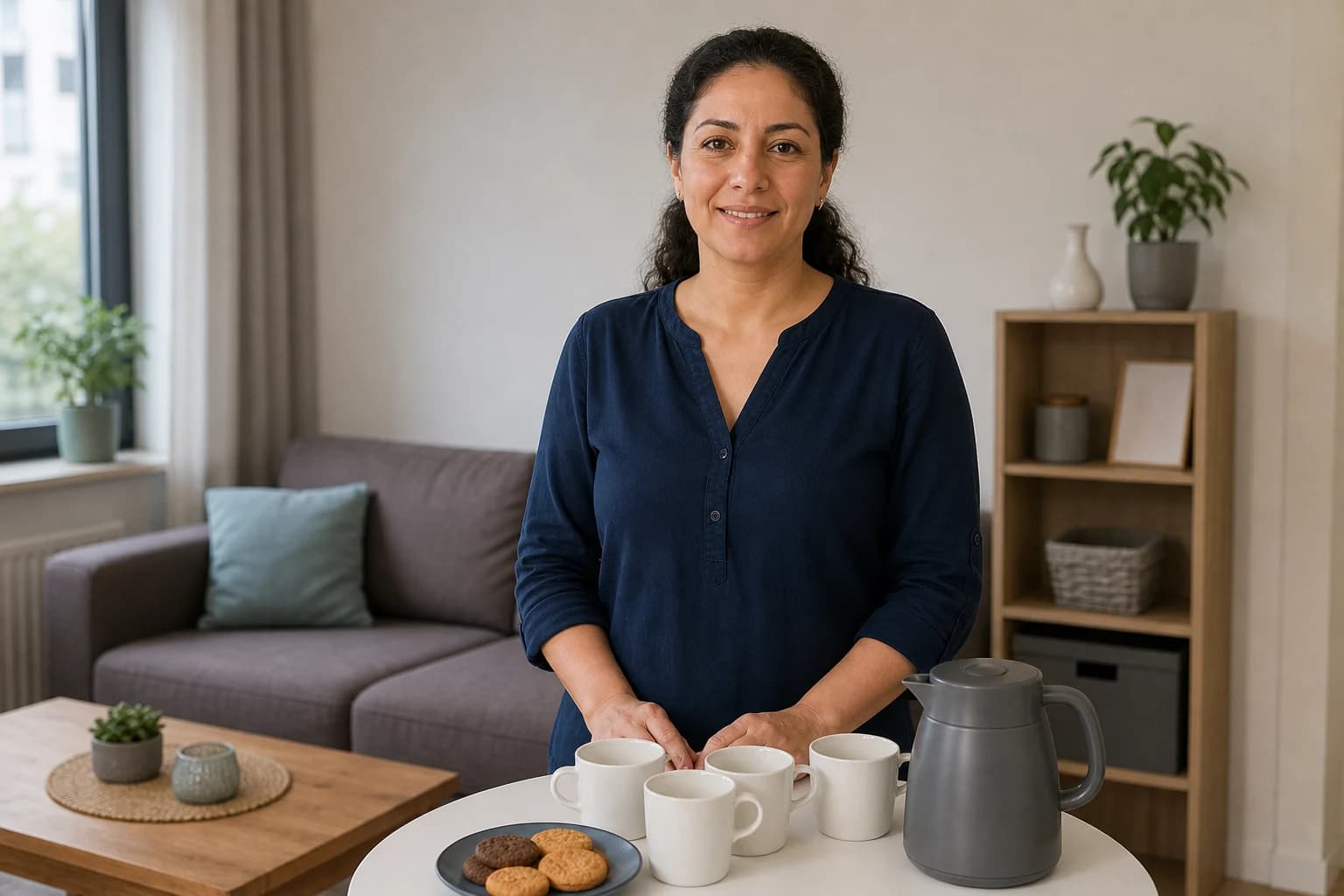
U krijgt bezoek. Wat zet u op tafel?
U krijgt bezoek. Wat zet u op tafel?
Answer plan
- Name one or two things you put on the table.
- Use a personal sentence with ik.
- Add a short reason or habit.
Self-check
- Did I name food or drink?
- Did I use ik and a clear verb?
- Did I speak in a complete sentence?
Example answer
Ik zet thee en koekjes op tafel. Mijn bezoek vindt dat lekker.
Opgave 2: Regen en wat u doet
Het regent. Wat doet u dan?
Answer plan
- Say your action for rainy weather.
- Use a practical object such as paraplu or jas.
- Add a second option if time allows.
Self-check
- Did I answer what I do in rain?
- Did I use a weather-related word?
- Was the answer short and clear?
Example answer
Ik neem een paraplu. Soms blijf ik thuis.
Opgave 3: Aanvulzin: thee op tafel
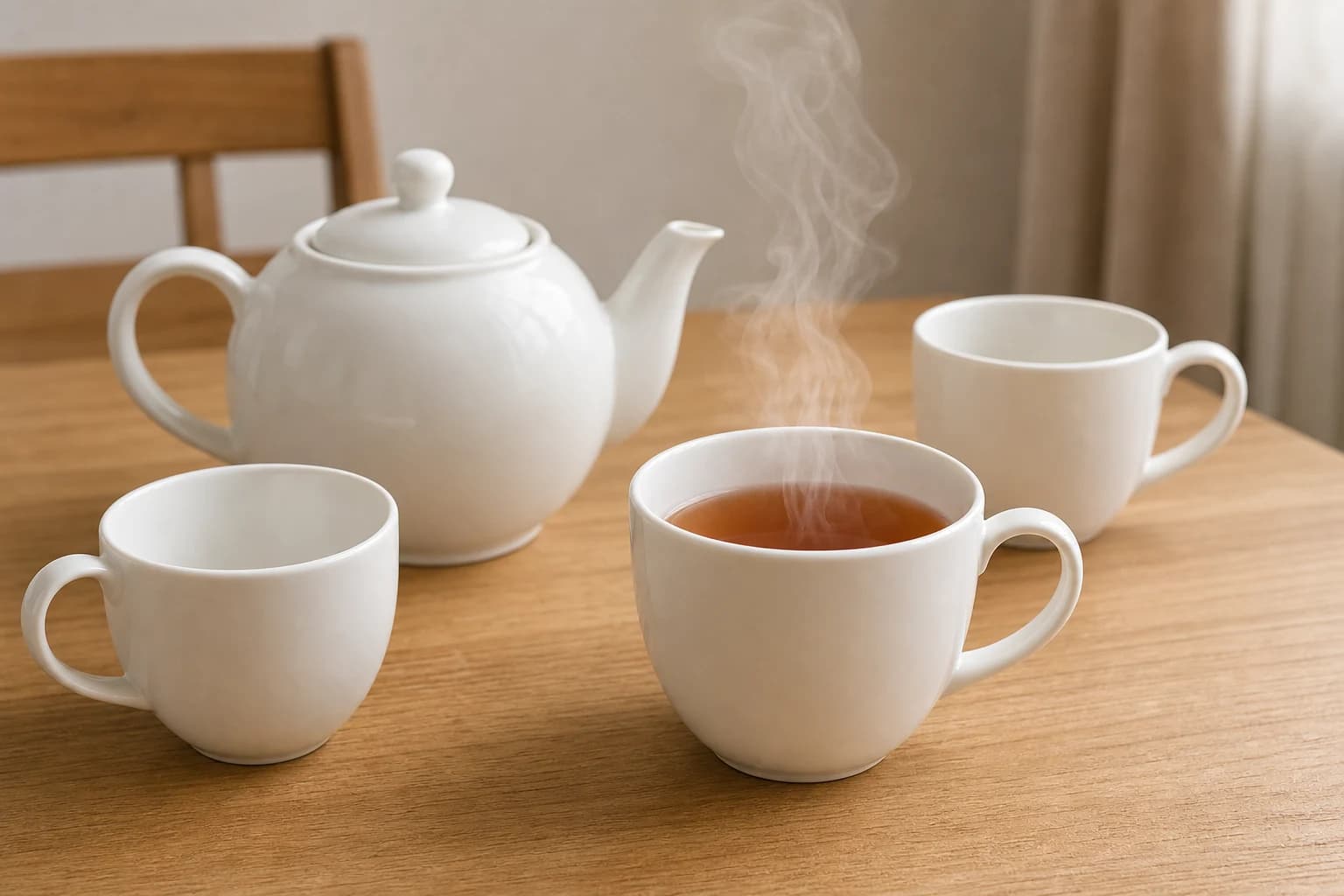
Noor zet thee op tafel. De thee is...
Answer plan
- Look at the tea and pick one adjective.
- Say one logical word that completes the sentence.
- Keep the answer minimal.
Self-check
- Did my word fit the tea in the picture?
- Did I complete the sentence logically?
- Was the word easy to hear?
Example answer
warm.
Opgave 4: Aanvulzin: een brief sturen
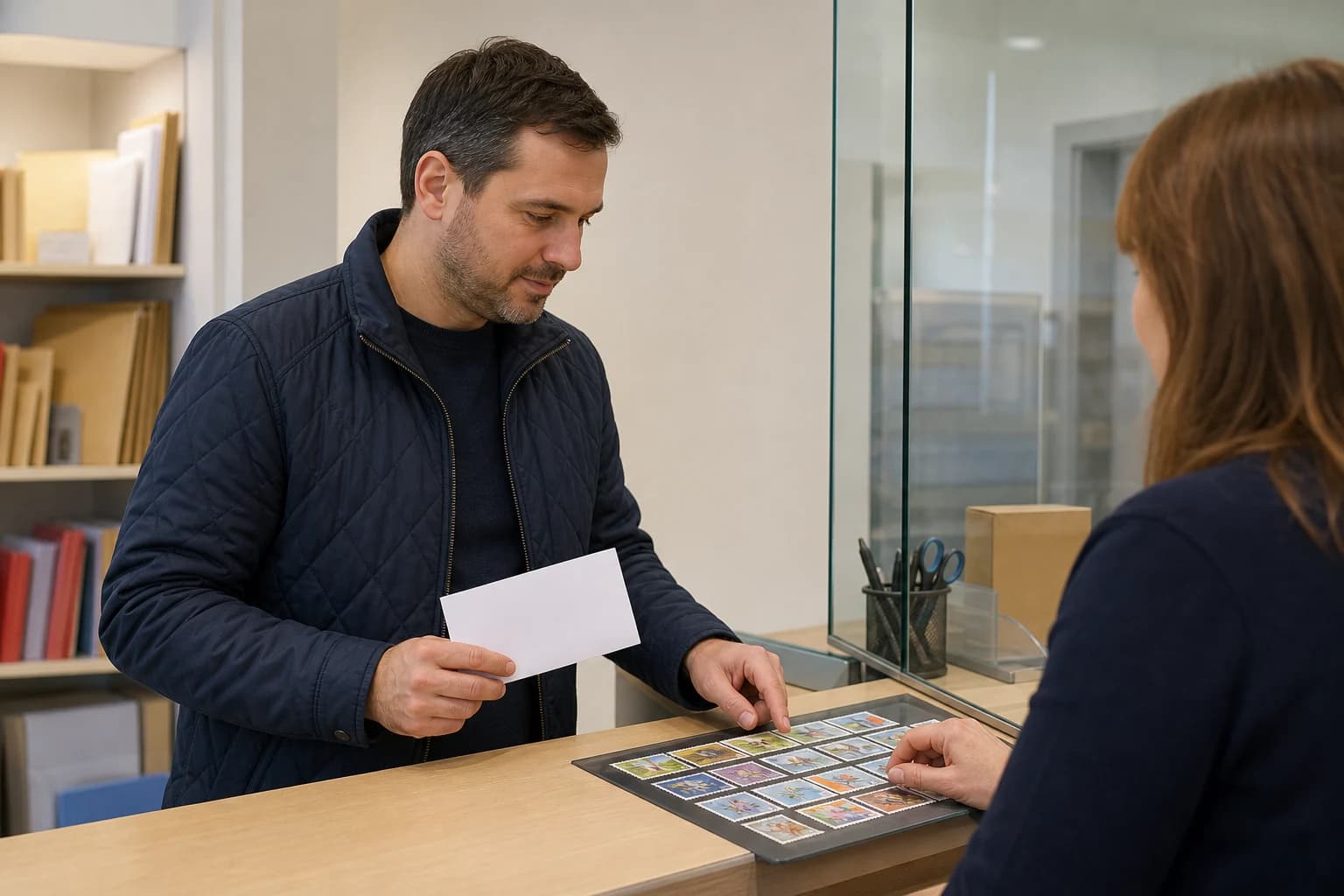
Ivan koopt postzegels. Hij wil een brief...
Answer plan
- Think about what stamps are used for.
- Use one infinitive verb.
- Complete hij wil een brief with that verb.
Self-check
- Did my verb fit the stamps and the sentence start?
- Did I complete the sentence?
- Was the answer pronunciation clear?
Example answer
sturen.
Final checklist
- I answered the question I heard.
- I completed the sentence start logically.
- I used simple A1 words.
- I spoke loudly and clearly enough.
- I continued after a small mistake.
Practise this skill in the app
Download the PDF, then jump into interactive practice for grading and feedback.