Inburgering.org Logo

Inburgering.org

  • Courses
  • Exam Info
  • Podcasts
  • Free
Inburgering.org Logo

Inburgering.org

Prices

Exam Info

Guides

Podcasts

Grammar

Privacy Policy

Terms & Conditions

FAQ

Contact

Partners

Listening

A1

A2

B1

B2

Reading

A1

A2

B1

B2

Speaking

A1

A2

B1

B2

Writing

A1

A2

B1

B2

Inburgering

A1

A2

B1

B2

KNM

KNS

Need help?
Contact us at info@inburgering.org

Join our community:

Instagram

Practice Bot

Telegram Group

Facebook Group:

A1

A2

B1

B2

Telegram Channels:

A1

A2

B1

B2

© 2026 Inburgering.org. All rights reserved.

  1. Inburgering.org
  2. /
  3. Living in the Netherlands: Practical Guides
  4. /
  5. Getting your deposit (waarborgsom) back: the 14-day rule, what a landlord may deduct, and what to do when the money does not arrive
Housing

Getting your deposit (waarborgsom) back: the 14-day rule, what a landlord may deduct, and what to do when the money does not arrive

Your deposit must be back in your account within 14 days after the tenancy ends. If the landlord deducts costs, you get the rest within 30 days, with a written statement. Only four costs may be deducted, and cleaning is not one of them. Here is how to protect the money before you move out, and how to claim it afterwards.

Author
By Inburgering.org team (Editorial team)
Reviewer
Reviewed by Kirill Svavolia (Editorial review)
Last updated
July 21, 2026
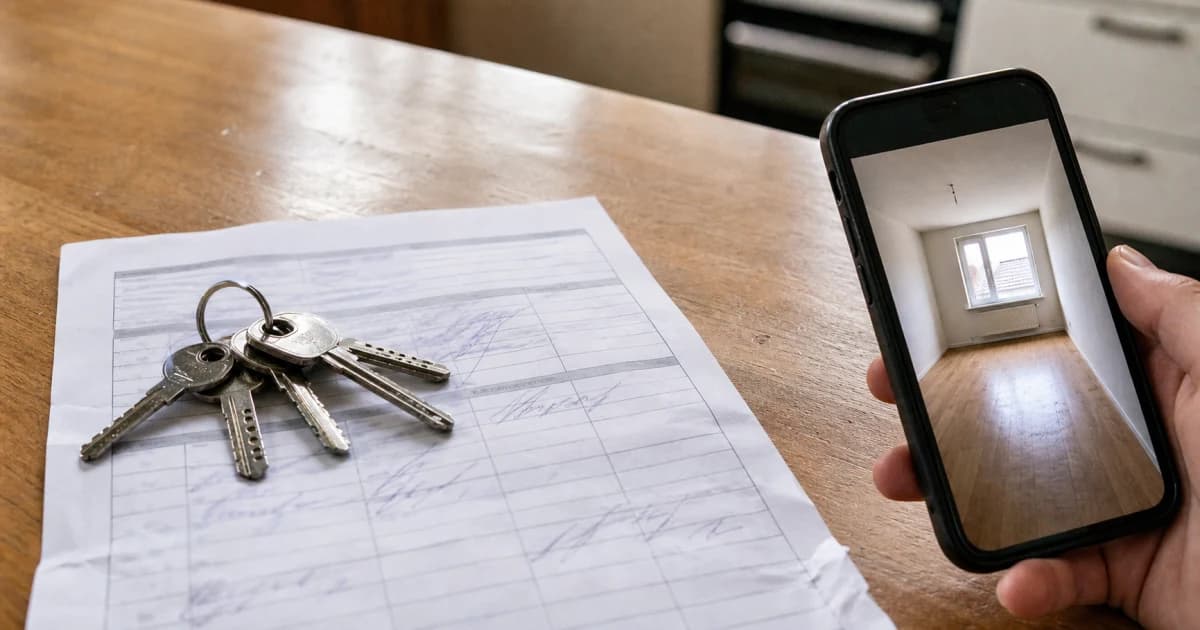
A set of house keys and a signed inspection form on a table, next to a phone showing a photo of an empty room

Almost every Dutch tenancy starts with a deposit (waarborgsom) of one or two months' rent. Getting it back is a fixed procedure with fixed deadlines. It is not a negotiation. The landlord must pay the money back within 14 days after the tenancy ends. Only four costs may be taken out of it. Four things decide whether you get the money back: the legal cap, the two deadlines, the closed list of deductions, and the inspection reports. For what your contract type means for notice and rent increases, see Dutch rental contracts explained.

When does my landlord have to return the waarborgsom?

Within 14 days after the tenancy ends. If the landlord deducts costs, you get the rest within 30 days, with a statement of each deduction. Only four costs may be deducted: unpaid rent, unpaid service costs, damage that is for your account, and an unpaid energy performance fee (energieprestatievergoeding). Wear from normal use may not be deducted. Administration costs may not be deducted either. The deposit itself may be at most two months' basic rent for a contract signed on or after 1 July 2023. Protect the money before you leave: photograph every room, insist on a written move-out inspection, and record the meter readings. If the money does not arrive, send a written demand (ingebrekestelling) with a deadline, then claim it at the kantonrechter.

How much deposit a landlord may hold

Since 1 July 2023, the waarborgsom may be at most two months' basic rent. This cap comes from the Wet goed verhuurderschap (the Good Landlordship Act), the same law that sets the 14-day repayment duty, the closed list of deductible costs and the municipal reporting point below. Basic rent (kale huur) is the rent without service costs. For a contract signed before 1 July 2023, a maximum of three months' basic rent applies. So check your contract for the kale huur figure, and compare the deposit with that number, not with the all-in monthly price you transfer.

A worked example. Your contract says the kale huur is €900 a month. Service costs, gas, water and electricity bring the all-in price you transfer to €1,150. The legal maximum deposit is two months of the kale huur, so €1,800. It is not two months of the all-in price, which would be €2,300. A landlord who asks for €2,300 is over the cap by €500.

Two recent laws are easy to mix up. The Wet betaalbare huur has been in force since 1 July 2024 and changed how the maximum rent price is set, by extending the points system to mid-priced homes up to 186 points. It did not change the deposit rules. The cap is still two months' kale huur, and it still comes from the Wet goed verhuurderschap.

Other money an agency asks for at the start is not a deposit and never turns into one. Rijksoverheid states that a landlord may not ask you for sleutelgeld (key money), and that you pay nothing for drawing up the rental contract. You also pay no bemiddelingskosten (agency fees) when the agent is already working for the landlord of the home you rent, and that applies to social housing, free-sector homes and rooms. If you paid agency fees you did not owe, you can reclaim them from the bemiddelaar, separately from your deposit. Rent you pay in advance is rent for a month you will actually live there, so it is not deposit and does not count towards the two-month cap.

The two deadlines: 14 days, or 30 days with a deduction

SituationDeadline after the tenancy endsWhat you should receive
The landlord deducts nothing14 daysThe full deposit, paid into your bank account
The landlord deducts costs30 daysThe remaining amount, plus a written statement of every deducted cost

The 14 days start on the last day of the tenancy. The date the landlord starts working on it does not matter. Two practical steps keep the deadline usable. Give the landlord your IBAN and your new address in writing before you hand over the keys. Then write down the exact end date from your contract and count the 14 days from there, so you know the day on which the landlord is late.

An example of the 30-day route. You paid €1,800 and the landlord claims €400 for a damaged worktop. The €1,400 that is left must be in your account within 30 days of the end date, together with a written statement showing the €400 and what it is for. The landlord may not hold the whole €1,800 while the €400 is being discussed. If you dispute the €400, you dispute that amount only, and the other €1,400 is still due on time.

Do this in your last week

Send one short email to the landlord or agency with four things:

  • The end date of the tenancy.
  • Your IBAN.
  • Your new postal address.
  • One sentence asking for the deposit within 14 days of the end date.

Attach your move-out photos and keep the sent copy. It shows that the landlord had everything needed to pay on time.

The four costs a landlord may deduct

The list is closed. Only these four costs may be set off against your deposit:

  • Rent you still owe (achterstallige huur).
  • Service costs you still owe (servicekosten).
  • Damage to the home that is for your account as a tenant.
  • An unpaid energy performance fee (energieprestatievergoeding).

Nothing outside that list may come out of the deposit. Other costs, such as administration costs, may not be set off against the waarborgsom. A landlord who deducts anything must pay the remaining balance within 30 days. So ask two questions about every charge you receive. Which of the four grounds does this fall under? And where is the invoice or the quote for the amount? Dispute every amount that has no document behind it.

Wear from normal use versus damage you have to pay for

Three of the four grounds are simple to check against your bank statements. The damage ground causes the disputes. Two rules narrow it. A landlord may not deduct wear from normal use (normale slijtage). A landlord may also not deduct wear or damage caused by their own poor or overdue maintenance. A bathroom that is worn after fifteen years of ordinary use is not damage you pay for.

The split of maintenance costs works the same way. Major maintenance is the landlord's cost, for example exterior paintwork and a new central-heating boiler. Daily maintenance and small repairs are yours, for example a new toilet seat or a washer in a tap. The full list of small repairs is in the Besluit kleine herstellingen (the decree listing small repairs). Work on the landlord's side of that split is not a cost for your deposit. Check every damage charge against these rules before you accept it.

The move-in and move-out inspection reports

Almost every deposit dispute comes down to one question: what condition was the home in when you moved in? Documents answer that question. A move-in inspection report (opnamestaat or beschrijving van het gehuurde) lists the state of every room, the fittings and the meter readings on the day you get the keys. Both parties sign it. A move-out report (eindinspectie or oplevering) does the same on the day you leave. Together, the two signed reports show what changed during your tenancy. Ask for a move-in inspection before you sign anything, and ask for a move-out inspection as soon as you give notice.

Build your own record as well, and do it on both days:

  • Photograph every room, the floors, the walls, the kitchen units, the bathroom, the window frames and the garden or balcony. Include a wide shot of each room and a close-up of anything already damaged.
  • Photograph the gas, water and electricity meters, and write the readings into the report.
  • Photograph existing defects individually: a stained carpet, a chipped worktop, a hole in the wall from an earlier tenant.
  • Keep the file dates. Phone photos carry the date automatically, so keep the originals rather than screenshots.
  • Ask for a signed copy of the report on the day. If the landlord promises to send it later, email your own summary of what you both agreed that same day.
  • Take a photo of the keys you hand over, and ask for a short written confirmation that the landlord received them.

Attend the move-out inspection in person if you can. That is the moment to see any claimed damage and to say on the spot that you disagree. If you cannot attend, ask for the inspection to be filmed or photographed, and ask for the report before it is finalised.

When the landlord does not pay

Many landlords do not pay on the 14th day. You still have a clear route. Work through these steps in order, and keep everything in writing.

  • Send a formal written demand (ingebrekestelling). It is the step the law expects before you go to court. State the end date of the tenancy, the deposit amount, the deadline that has passed, and your IBAN. Give a clear final deadline, for example 14 days, and say that you will go to court after that. Het Juridisch Loket publishes a model letter for asking a rental deposit back that you can send from two weeks after the tenancy ended.
  • Send it by email and keep the sent copy. If you have the landlord's postal address, send a letter as well.
  • If the landlord replies with deductions, ask in writing for the invoices behind each amount, and for the signed move-in report the damage claim is based on.
  • Get free advice before you escalate. Het Juridisch Loket answers legal questions for free and helps you check whether your case is strong.
  • Check whether you have a rechtsbijstandverzekering (legal expenses insurance). Many people have one through a package with home or liability insurance and never use it. If the policy covers housing disputes, report the case to the insurer before you start court steps.
  • If you need a lawyer and your income is low, ask about a toevoeging (subsidised legal aid), where you pay a fixed contribution instead of an hourly rate. Free and subsidised legal help explains who qualifies and what it costs.
  • If the landlord still refuses, claim the money at the kantonrechter.

Report the landlord to your municipality as well. Since 1 January 2024 every gemeente has a reporting point for undesirable landlord behaviour (meldpunt ongewenst verhuurgedrag). Tenants and home-seekers can report there, and a report can be anonymous. Unjust deposit and service charges are among the things people report. If the gemeente establishes that the landlord broke the rules, it has to act. Since 1 January 2024 your landlord must also give you the contact details of that meldpunt. The VNG publishes an overview of the meldpunt per gemeente if you cannot find yours.

The gemeente can take several enforcement measures. It can give a warning. It can impose an order with a penalty payment (last onder dwangsom) or an administrative fine (bestuurlijke boete). It can issue an enforcement order (last onder bestuursdwang). As a last step it can take over the management of the property. A report covers the landlord's conduct. It does not get your money back. Send your own written demand as well.

Claiming the deposit at the kantonrechter

A deposit claim is a money claim, and money claims up to €25,000 are handled by the kanton section of the rechtbank, by a judge called the kantonrechter. Rental cases go there as well. Two things make this route realistic for a tenant. You do not need a lawyer at the kantonrechter, so you may bring and argue the case yourself. And only the party that starts the case pays the court fee.

That court fee is the griffierecht. For a natural person starting a kanton case in 2026 it depends on the amount you claim.

Amount you claimGriffierecht in 2026, natural person
Up to €500€93
More than €500 up to €1,500€233
More than €1,500 up to €12,500€265
More than €12,500€753

So claiming a €1,400 balance costs €233 to start, and claiming a full €1,800 deposit costs €265. If you are on a low income, or you have a toevoeging for subsidised legal aid, you pay the reduced rate of €93 whatever the claim size. That rate is not automatic: send the toevoeging or an income statement in together with your claim, because a claim filed without it is charged the full fee. Ask the court in your claim to order the landlord to pay your griffierecht and costs as well.

Also claim wettelijke rente (statutory interest) on the money from the day the deadline passed. For debts that are not commercial transactions the wettelijke rente is 4% a year since 1 January 2026. On €1,800 that is around €6 a month, which is small, but it is part of what you are owed and it shows the landlord that waiting costs money.

What the Huurcommissie can and cannot do here

The Huurcommissie is the independent rent tribunal. It helps tenants and landlords who disagree about the rent price, maintenance or service costs. The deposit is not one of those subjects. So a service-cost charge you dispute can be a Huurcommissie case, while the deposit itself follows the route above: written demand first, then the kantonrechter. The rent protection guide explains how a Huurcommissie procedure works.

Common problems

There was never a move-in report

Many small private landlords skip the move-in inspection. Tenants often notice only when a damage claim arrives at the end. If you are still living in the home, fix it now. Photograph everything today, write a short list of the defects you found when you moved in, and email both to the landlord with one line: 'This is the state of the home as I received it. Please confirm.' Keep the sent copy. The email carries a date, even if the landlord never replies.

The deposit is kept 'for cleaning'

Cleaning is not on the list of four. Rijksoverheid states that other costs may not be set off against the deposit. Ask the landlord which of the four the charge falls under, and ask for the cleaning company's invoice. Then compare that invoice with your move-out photos. Dispute any flat amount with no invoice and no photo behind it. Name it in your written demand.

The deposit you paid was above the legal maximum

Work out two months' basic rent from your contract and compare it with what you paid. If you paid more on a contract signed on or after 1 July 2023, the amount was above the maximum. Say so in your written demand, and report it to the gemeente's meldpunt. Unjust deposit charges are one of the things that reporting point exists for.

Deductions arrive with no invoices

A written statement of deductions is not the same as proof. Reply in writing, point by point. For each amount, say whether you accept it or dispute it, and ask for the invoice and the report entry it relies on. Ask also whether the charge is for a repair or for a full replacement, and how old the item was. For an old item, state in your reply that its condition is wear from normal use, which may not be deducted from the deposit.

The landlord stops answering

Do not chase by phone. Every message that matters goes in writing. Send your written demand, wait out the deadline you set, and then move to the next step. Keep one file with a simple timeline: contract end date, keys handed over, email sent, deadline passed. Put the contract, the inspection reports, the photos and the emails in the same file.

The deposit sits with the agency, not the landlord

Many tenants transfer the deposit to a bemiddelaar or a letting agency rather than to the owner. That does not change who owes you the money. The landlord is your contract party, and the deadlines run against the landlord. Write to both in the same email, name the account you transferred to, and attach the payment. If the agency says it already passed the money to the landlord, ask for the date and the proof, and keep that reply. It is useful evidence later. Agency fees are a separate question: when the agent works for the landlord of the home you rent, you should not have paid bemiddelingskosten at all, and you can reclaim them from the bemiddelaar.

The landlord lives abroad, or the company has disappeared

Keep sending your demand to the last email address and postal address you have, and keep the proof of sending. A landlord who lives abroad still has the same duties, and a Dutch court can still handle a claim about a Dutch home. If your landlord is a company, look it up in the KVK trade register to see whether it still exists and who represents it. Check the Centraal Insolventieregister at insolventies.rechtspraak.nl to see whether it has been declared bankrupt. If it has, the register names the curator (the trustee who handles the estate), and that is the person to contact about your claim.

The home is sold during your tenancy

Selling the home does not end your tenancy. Article 7:226 of the Burgerlijk Wetboek says that when a rented property is transferred, the tenancy passes to the acquirer ('wanneer de verhuurde zaak wordt vervreemd, gaat de huur over op de verkrijger'). Your contract, your rent and your notice period stay the same, and the buyer becomes your landlord. The deposit is the part that gets lost in the handover. Ask the old and the new owner in one written message who holds your waarborgsom now and who will repay it when you leave, and keep the answer with your contract. Do the same when the managing agency changes.

Rooms, shared houses and cash deposits

In a shared house the deposit is often paid to the previous tenant or to a housemate rather than to the landlord. Get it in writing who holds your money and who has to pay it back. Never pay a deposit in cash without a signed receipt naming the amount, the date, the address and the person who received it. A bank transfer with the description 'waarborgsom [address]' gives you the same proof with no extra effort. Paying a deposit before you have seen the home is a standard scam pattern, covered in the rental scams guide.

For the rules that apply while you are still in the home, see Dutch rental contracts explained, which covers notice periods and rent increases. Finding a rental in the Netherlands covers the next search, including the document file agents ask for. If you need help with the letter or the court claim, free and subsidised legal help explains who advises for free and when a lawyer costs you a fixed contribution instead of an hourly rate.

Official Sources

Official source checked: July 2026.

  • Rijksoverheid: Ik wil een woning huren. Mag mijn verhuurder een waarborgsom vragen? - the deposit cap of two months' basic rent since 1 July 2023 (three months for older contracts), the 14-day return deadline, the 30-day deadline when costs are deducted, the four costs that may be deducted (unpaid rent, service costs, tenant-caused damage, energy performance fee), and the route of a written demand followed by the court
  • Rijksoverheid: Stappenplan voor huurders - the step-by-step plan for tenants, including that the deposit comes back within 14 days after the rental period
  • Rijksoverheid: Nieuwe regels voor verhuurders en verhuurbemiddelaars (1 juli 2023) - the Wet goed verhuurderschap rules seen from the landlord's side: the two-month deposit cap, the 14-day repayment duty, the four costs that may be set off, that other costs such as administration costs may not be set off ('Andere kosten zoals administratiekosten mogen niet verrekend worden met de waarborgsom'), that landlords must give tenants the contact details of the municipal reporting point since 1 January 2024, and that a gemeente can impose sanctions such as an administrative fine and can ultimately take over the management of the property
  • Rijksoverheid: Welke kosten zijn voor de huurder en welke voor de verhuurder? - that major maintenance (groot onderhoud, such as exterior painting and a new central-heating boiler) is the landlord's cost while daily maintenance and small repairs are the tenant's, with the detailed list in the Besluit kleine herstellingen
  • Volkshuisvesting Nederland: Waarborgsom - that the deposit is at most two months' basic rent, must be repaid within 14 days when the home is left without damage and as agreed, and within 30 days when costs are set off, and that wear and damage caused by the landlord's poor or overdue maintenance may not be deducted ('Slijtage en schade als gevolg van slecht of achterstallig onderhoud door de verhuurder mag een verhuurder niet van de waarborgsom aftrekken')
  • Volkshuisvesting Nederland: Gemeentelijk meldpunt goed verhuurderschap - that every gemeente has had a reporting point for undesirable landlord behaviour since 1 January 2024, that tenants and home-seekers can report anonymously, that unjust service or deposit charges (onterechte service- of borgkosten) are among the things reported there, that the gemeente must act on a confirmed breach, and that the VNG publishes an overview of the meldpunt per gemeente
  • Volkshuisvesting Nederland: Handhaving en toezicht (Wet goed verhuurderschap) - the enforcement ladder a gemeente can use against a landlord: a warning, a last onder dwangsom, an administrative fine (bestuurlijke boete), a last onder bestuursdwang, and taking over the management of the property
  • Huurcommissie - that the rent tribunal handles disagreements between tenant and landlord about the rent price, maintenance and service costs
  • Rechtspraak: Griffierecht kanton - the 2026 court fees for a natural person starting a kanton case: €93 for a claim up to €500, €233 for more than €500 up to €1,500, €265 for more than €1,500 up to €12,500, and €753 above €12,500, with the reduced rate of €93 for people on a low income or with a toevoeging, that the toevoeging or income statement must be sent in with the dagvaarding or verzoekschrift to get that rate, and that in a kantonzaak only the party starting the case pays griffierecht while the party defending pays none
  • Wet griffierechten burgerlijke zaken: bijlage, tabel griffierechten (wetten.overheid.nl) - the statutory fee table itself, in the version in force since 1 January 2026, which fixes the kanton amounts for a natural person at €93 for a claim of no more than €500, €233 above €500 up to €1,500, €265 for each of the three bands from €1,500 up to €12,500, and €753 above €12,500, with the onvermogenden column at €93 in every one of those bands; and article 4, first paragraph, under b, that no griffierecht is levied from the defendant in a case before the kantonrechter
  • Het Juridisch Loket: Voorbeeldbrief terugvragen borg huur - the model letter for demanding a rental deposit back, which a tenant can send from two weeks after the end of the rental contract
  • VNG: Wet goed verhuurderschap (Wgv) - the VNG inventory of municipal reporting points and rental ordinances under the Wet goed verhuurderschap, so a tenant can find the meldpunt of their own gemeente
  • Rijksoverheid: Hoe hoog is de wettelijke rente? - that the wettelijke rente for debts that are not commercial transactions is 4% since 1 January 2026
  • Rijksoverheid: Welke extra kosten mag een verhuurder bij een huurcontract vragen? - that the deposit is at most two months' kale huur (three months for contracts from before 1 July 2023), that a landlord may not ask for sleutelgeld, and that a tenant pays no costs for drawing up the rental contract
  • Rijksoverheid: Moet ik bemiddelingskosten betalen voor een kamer of huurwoning? - that an agent who already works for the landlord may not charge the tenant bemiddelingskosten, that this covers social housing, free-sector homes and rooms, and that costs paid wrongly can be reclaimed from the bemiddelaar
  • Volkshuisvesting Nederland: Wet betaalbare huur - that the Wet betaalbare huur has applied since 1 July 2024 and regulates the rent price through the modernised points system for homes up to 186 points, with municipal enforcement of maximum rents since 1 January 2025
  • Burgerlijk Wetboek Boek 7, artikel 226 (wetten.overheid.nl) - that when a rented property is transferred the tenancy passes to the acquirer: 'Wanneer de verhuurde zaak wordt vervreemd, gaat de huur over op de verkrijger'
  • Centraal Insolventieregister (Rechtspraak) - the public register in which to check whether a landlord company has been declared bankrupt and which curator handles the estate

Preparing for the inburgering exam too?

Our courses and free practice materials cover every exam part.

Explore the courses