
Check the home and permission to rent it out before paying
Before paying for a Dutch rental, view the home and check the owner, permission to rent it out, the contract and payment details. A viewing or matching bank-account name alone does not prove the rental is genuine. If someone blocks these checks, pause the payment. If you already paid, call your bank and save the evidence. Ask the Politie (police) (External site, opens in a new tab) how to report the case.
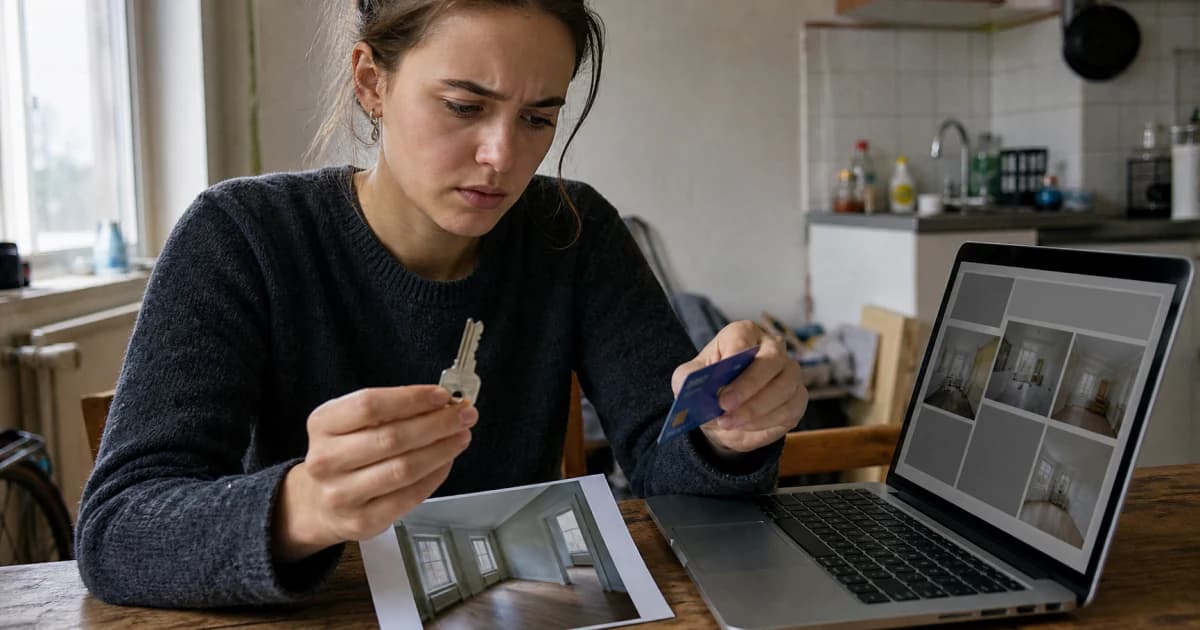
This guide is for people who suspect a fake rental home, a false landlord or a payment request made to deceive them. A dispute inside a genuine tenancy may need a different route. For search sites, viewing documents and the normal rental process, use the guide to finding a rental in the Netherlands.
Checks before you pay
Before paying rent, a deposit or a reservation amount, complete the checks below. The agency check applies only when an agency offers the home.
- View the inside of the home, or ask someone you trust to view it. The Fraudehelpdesk (fraud advice service) (External site, opens in a new tab) warns that scammers may use a borrowed or short-let home and may have keys. Continue checking after a viewing.
- Check the advert. Search the photos with a reverse-image tool and check the location in Street View. Search the address, phone number, email and name with “review”, “scam” or “oplichting” (fraud). A copied advert, unusually low rent or photos that do not match the address need further checks.
- If an agency offers the home, check its registration. Search the KVK (Kamer van Koophandel, Chamber of Commerce) (External site, opens in a new tab) Handelsregister (Business Register) for its trade name, registration number, public address and active status. A paid extract can show directors and who may sign contracts. Some addresses can lawfully be hidden. Registration alone proves neither honesty nor permission to rent out this home.
- Check the owner. Order Eigendomsinformatie (ownership information) through the Kadaster (property register) (External site, opens in a new tab) web shop. It costs €3.70 in 2026.
- Check permission to rent out the home. An agent, company, co-owner or property manager may have authority to act. Ask for written proof and confirm it through contact details you found independently.
- Compare the owner or authorized agent, contract and person receiving payment. An identity-document photo may be stolen. Call the agency or owner through a number you found yourself.
- Check the IBAN (international bank account number), email, phone number or website with the Politie seller check (External site, opens in a new tab). If the result shows known reports, pause payment and verify the offer independently. A result with no known reports still gives no safety guarantee. The IBAN-Naam Check (account-name check) (External site, opens in a new tab) confirms only whether the name matches the IBAN. Pause on a mismatch and verify the explanation independently.
- Read the complete contract. Check the address, parties, kale huur (bare rent, without service costs), service costs, deposit, start date, key handover and signatures.
After completing the checks, use a bank transfer from your own account and save the receipt. A cash payment without a receipt can be hard to prove. Cryptocurrency, gift cards and money-transfer services can make it hard to get your money back.
Once you have checked the offer, use Dutch rental contracts explained before signing. It covers contract types, deposits, rent changes and the documents both sides should keep.
Warning signs in a rental offer
Copied photos or unusually low rent
Scammers copy real adverts and may lower the price. The photos can look professional and the address can be real. If the same photos appear with another price, address or contact, pause the payment and verify the offer. Low rent alone is not proof of fraud.
An owner abroad, no viewing or pressure to pay
An owner abroad or pressure to pay before a viewing is a warning sign. Complete the viewing and authority checks even if someone promises keys by courier or through a platform after payment. Apply the same checks to a paid viewing slot or a “refundable” holding payment. A contract file, passport image or platform logo alone does not prove that the person has permission to rent out the home.
Agency details and permission to sublet
A professional website, KVK number or real viewing can be copied or misused. Match the website address, business details and person signing, then contact the registered business independently. If the person is a tenant, ask for the owner’s permission to sublet. Room subtenants and subtenants of self-contained homes have different protections. Missing permission does not settle what rights you have. Check any claim that “you can never register” or “the owner must not know”. If a housing corporation owns the address, verify the offer directly with that corporation.
Identity documents, contracts and address registration
Ask why an identity copy is needed and share only the necessary details. Wait until you have verified the recipient before sending a copy. Use the official KopieID (identity-document copy app) guidance (External site, opens in a new tab). Hide unnecessary data, such as your BSN (burgerservicenummer, citizen service number), where allowed. Add the recipient, purpose and date as a watermark. A landlord may ask for documents during screening. You still need to protect your data.
Rental agreements made on or after 1 July 2023 must be recorded in writing. The landlord must also give written information about matters such as the deposit and contact routes. Read the agreement before signing.
If you come to live in the Netherlands for more than four months, you must register in the BRP (Basisregistratie Personen, Personal Records Database). Register at your fixed home address with your gemeente (municipality). If you have no fixed home address, ask the gemeente about a briefadres (correspondence address). The gemeente decides whether you qualify. “No registration” is a reason to check with the gemeente, though it is not proof of a criminal scam. Use the address-registration problems guide if registration is blocked.
Lawful rental charges
A real landlord or agency can still demand an unlawful charge. First establish that the home and tenancy are genuine. Then identify what the payment is actually for; the label on the invoice does not decide whether it is allowed.
You can scroll wide tables sideways.
| Charge | Current rule | What to check or do |
|---|---|---|
| waarborgsom (security deposit) | For rental agreements entered into on or after 1 July 2023: at most 2 months’ bare rent. The landlord must return it within 14 days after the tenancy ends. With permitted deductions, the remaining amount must return within 30 days, with a written explanation and full cost statement. | Keep payment proof. Deductions are allowed only for damage you caused, unpaid rent, unpaid service costs or an unpaid energy-performance fee. |
| bemiddelingskosten (mediation fee) | If an agent offers the home for the landlord, it may not charge you for mediation. This applies even if the landlord pays the agent nothing. You can owe a fee if you commissioned a search for a home outside the agent’s offer. See the Rijksoverheid (Dutch government) mediation-fee rules (External site, opens in a new tab). | Ask whom the agent represents and what service it provided. Prohibited mediation charges may be called administration, registration, contract or rental fees. |
| Registration or membership fee | A search-only housing website may charge an agreed subscription. Registration fees cannot hide prohibited mediation for the landlord. If the promised service is missing, seek advice about challenging the fee. | Check the organization, cancellation terms and promised service. A general register fee differs from a payment to reserve one unverified home. See the official rental-search fee guide (External site, opens in a new tab). |
| Contract fee or sleutelgeld (key money) | A landlord may not charge for drawing up the rental contract or merely giving you the home. A reasonable charge for a real separate product or service can be allowed. | Ask for an itemized invoice and challenge a prohibited charge in writing. |
Example: you enter into a rental agreement in 2026 with €900 bare rent and €100 service costs per month. The maximum deposit is €1,800: twice the €900 bare rent. The €100 service costs stay outside this calculation.
Recovery of prohibited fees
You can usually reclaim prohibited mediation fees within five years after payment. For sleutelgeld, the limit is five years. In a genuine tenancy, Juridisch Loket (legal advice service) (External site, opens in a new tab) advises asking for repayment after signing the contract. Asking earlier may lead the landlord to choose another tenant. Its fee guide provides a sample letter. It explains when you can use a dispute committee or go to court.
Juridisch Loket’s free personal advice is for people with low income and little savings, with some exceptions. Check the Juridisch Loket eligibility rules (External site, opens in a new tab).
A recovery claim needs a person or business you can identify. Keep checking a suspicious offer before paying, even when a fee could later be reclaimed.
Help after paying or sharing an identity document
Keep all these records for your bank and the police:
- Save the full advert, advert number, website link, screenshots, photos and platform profile.
- Export or save the complete email, WhatsApp, Messenger or platform conversation. Keep dates and times.
- Keep the contract, invoices, payment proof, IBAN, account name, phone numbers, email addresses and website address.
- Write a short timeline. Note the viewing address, people present and contact details you checked independently.
Keep identity-document evidence private. Police may later request a signed report, identity copy, bank statement or messages through an official channel. Verify unexpected requests through an official police contact before sending anything.
Use the Politie internet-fraud decision helper (External site, opens in a new tab) or call 0900-8844 to ask which reporting route fits your rental case. From abroad, call +31 34 357 8844. The online “paid but received nothing” route covers purchase-and-sales fraud. Check whether your rental case fits it. That online form requires DigiD (Dutch digital identity) (External site, opens in a new tab). Police check reports for links to other cases, but not every report leads to an investigation.
For qualifying purchase-and-sales-fraud reports, the bank may ask the recipient to repay. If the recipient has not repaid you after 21 days, the bank may release the account holder’s name, address and place of residence. You may use those details only for a civil court claim to recover the money. Ask your bank and the police whether your rental case qualifies. The protocol gives no automatic refund.
Also use the Fraudehelpdesk rental-fraud service (External site, opens in a new tab), especially if you sent an identity copy. It gives advice for your situation, including risks of identity misuse. Your report helps it identify new scams and warn other people. A report does not guarantee that you get your money back.
If you do not understand Dutch well, ask the police for a free interpreter when reporting the crime or being questioned. These victim rights also apply if you live outside the Netherlands or have no Dutch residence status.
Reporting routes for different problems
Suspected fraud and problems in a genuine tenancy need different reporting routes. Use the row that matches your problem. Each service has different powers.
You can scroll wide tables sideways.
| Problem | First route | What that route can do |
|---|---|---|
| A fake home, false authority to rent it out or deceptive payment request | Bank first, then Politie via its decision helper or 0900-8844, and Fraudehelpdesk. | Try to limit payment loss and record possible crime. Reports can connect cases. Repayment and investigation are not guaranteed. |
| Intimidation, discrimination, an excessive deposit or prohibited landlord or agent conduct | Your gemeente’s meldpunt goed verhuurderschap (landlord-conduct reporting point). See the Rijksoverheid renting steps (External site, opens in a new tab). | The gemeente can investigate and enforce the Wet goed verhuurderschap (Good Landlordship Act). Call 112 in immediate danger. Discuss non-emergency threats with Politie. |
| Rent or service-cost dispute in a genuine tenancy | Check whether the Huurcommissie (Rent Tribunal) route (External site, opens in a new tab) covers your tenancy and issue. | The Huurcommissie decides only matters within its powers. The kantonrechter (subdistrict court) may be the route if it cannot decide your issue. |
| Deposit dispute in a genuine tenancy | Ask Juridisch Loket for advice about recovery. The Huurcommissie does not decide deposit disputes. | The kantonrechter can decide a repayment claim. The gemeente may also act against prohibited landlord conduct. |
| Illegal sublet or a housing-corporation home offered without permission | Verify with the owner or housing corporation and use the relevant municipal reporting channel. | Your report can help address housing fraud. Your rights depend on whether you rent a room or a self-contained home and on other conditions. |
For a charge or dispute in a genuine tenancy, use the relevant deposit or legal-help guide:
Official Sources
- Fraudehelpdesk: Woonplek gevonden? Check voordat je huurt! (External site, opens in a new tab) - rental-fraud warning signs, reverse-image and address checks, viewings, borrowed homes, foreign accounts and the advice not to pay before checking
- Fraudehelpdesk: Ik heb iets gehuurd (External site, opens in a new tab) - what to do after paying for a rental that is not delivered, including help when identity documents were shared
- Politie: Check vooraf om internetoplichting te voorkomen (External site, opens in a new tab) - searching an IBAN, email, phone number or URL; known-report warnings and the limit that no known reports do not guarantee safety
- Politie: Slachtoffer van internetoplichting? Doe aangifte! (External site, opens in a new tab) - online purchase-and-sales-fraud report categories and police updates after ten weeks and no later than six months
- Politie: Aangifte van internetoplichting — niets ontvangen (External site, opens in a new tab) - the decision helper, DigiD route and 0900-8844 appointment route for cases in which someone paid but received nothing
- Politie: Gegevens nodig bij aangifte van internetoplichting (External site, opens in a new tab) - advert, contact, payment and social-profile details to preserve, plus documents the police may request later for an investigation
- Politie: Internetoplichting en opsporingsonderzoek (External site, opens in a new tab) - that every report is checked for leads and connections but not every report results in an investigation
- Politie: Wat doet de bank na aangifte van aan- of verkoopfraude? (External site, opens in a new tab) - the limited 21-day account-holder-data protocol for qualifying purchase-and-sales-fraud reports and its civil-claim purpose
- Politie: 0900-8844 bellen vanuit het buitenland (External site, opens in a new tab) - the +31 34 357 8844 police number for callers outside the Netherlands
- Kadaster: Eigendomsinformatie (External site, opens in a new tab) - the €3.70 web-shop price in 2026 and the registered owner and rights shown by ownership information
- KVK: Geregistreerd in het Handelsregister (External site, opens in a new tab) - the public Business Register search and the basic company information it provides
- KVK: Check via uittreksel (External site, opens in a new tab) - the difference between free basic search results and a paid extract with officers and signing authority
- Betaalvereniging Nederland (Dutch Payments Association): IBAN-Naam Check (External site, opens in a new tab) - matching an account name to an IBAN, mismatch warnings and the limits of that check
- Rijksoverheid: Veilige kopie identiteitsbewijs (External site, opens in a new tab) - using KopieID, hiding unnecessary details and adding the recipient, purpose and date as a watermark
- Rijksoverheid: Documenten meenemen naar een bezichtiging (External site, opens in a new tab) - documents a landlord may ask for at a viewing and the advice to redact the BSN on an ID copy
- Rijksoverheid: Bemiddelingskosten bij een huurwoning (External site, opens in a new tab) - when a tenant may owe an agent and when landlord-side mediation, administration, registration or contract fees are prohibited
- Rijksoverheid: Extra kosten bij een huurcontract (External site, opens in a new tab) - the two-month deposit limit, 14- and 30-day return rules, permitted deductions, key money and contract charges
- Rijksoverheid: Regels voor verhuurders en verhuurbemiddelaars (External site, opens in a new tab) - Good Landlordship Act duties, written agreements, tenant information, deposits and municipal reporting points
- Rijksoverheid: Stappenplan woning huren (External site, opens in a new tab) - current renting steps and the division between municipal reporting points, the Huurcommissie and the subdistrict court
- Rijksoverheid: Wanneer inschrijven in de BRP? (External site, opens in a new tab) - the duty to register at a fixed residential address and when a correspondence address may be possible
- Juridisch Loket: Bemiddelingskosten (External site, opens in a new tab) - reclaiming prohibited mediation or key-money charges, the five-year period and dispute or court routes
- Juridisch Loket: Onderhuur (External site, opens in a new tab) - the different legal positions of room and self-contained subtenants and the conditions that apply
- Fraudehelpdesk: Opgelicht? Laat de schuld bij de dader! (External site, opens in a new tab) - contacting the bank quickly because a payment can sometimes still be stopped; stopping contact and further payments
- Fraudehelpdesk: Veelgestelde vragen (External site, opens in a new tab) - personal fraud advice, possible recovery routes and how reports reveal new fraud methods
- Juridisch Loket: Hoe we werken (External site, opens in a new tab) - income and asset conditions for free personal advice, including exceptions
- Huurcommissie: Huurder sociale- en middensector (External site, opens in a new tab) - rent and service-cost disputes within its powers; deposit and contract questions are outside its remit
- Staatsblad (government gazette): Wet goed verhuurderschap (External site, opens in a new tab) - legal text for written rental agreements, municipal reporting and enforcement, and deposit limits, return periods and permitted deductions
- ACM (Autoriteit Consument & Markt, Authority for Consumers and Markets) ConsuWijzer (consumer advice service): Kosten bij het zoeken van een huurwoning (External site, opens in a new tab) - agreed subscriptions for search-only rental websites, misleading service claims and prohibited landlord-side mediation fees
- DigiD: About DigiD (External site, opens in a new tab) - DigiD as the Dutch digital identity used to log in to public services
- Volkshuisvesting Nederland (Dutch government housing portal): Huurbescherming en huurcontracten (External site, opens in a new tab) - a rental agreement can be entered into orally before it is recorded in writing; since 1 July 2023, written recording is required
- bunq: When will my payment arrive? (External site, opens in a new tab) - asking the bank to recall a sent transfer and using transaction identifiers to trace a payment with the receiving bank
- Federal Trade Commission (US consumer-protection authority): Avoid a scammer’s money grab during Older Americans Month (External site, opens in a new tab) - practical recovery limits for money transfers, gift-card payments and cryptocurrency payments to scammers
- Western Union: Dutch fraud-awareness brochure (PDF, 769 KB) (External site, opens in a new tab) - warnings against sending rental deposits through its service and the difficulty of obtaining a refund once funds have been paid out
- Betaalvereniging Nederland: IBAN-Name Check (English) (External site, opens in a new tab) - the official English institution name Dutch Payments Association and its explanation of account-name checking
- Politie: Wat zijn mijn rechten bij aangifte doen? (External site, opens in a new tab) - If you do not understand Dutch well, ask the police for a free interpreter when reporting the crime or being questioned. These victim rights also apply if you live outside the Netherlands or have no Dutch residence status.