
Your registration follows where you live
If you must register as a resident, register in the BRP (External site, opens in a new tab) (Basisregistratie Personen, municipal population register) at the home where you live. Your landlord’s refusal does not remove this duty. Give your gemeente (municipality) evidence of where you live. If you share a home, check how registration affects your host’s benefits. If you have no home address, ask about a briefadres.
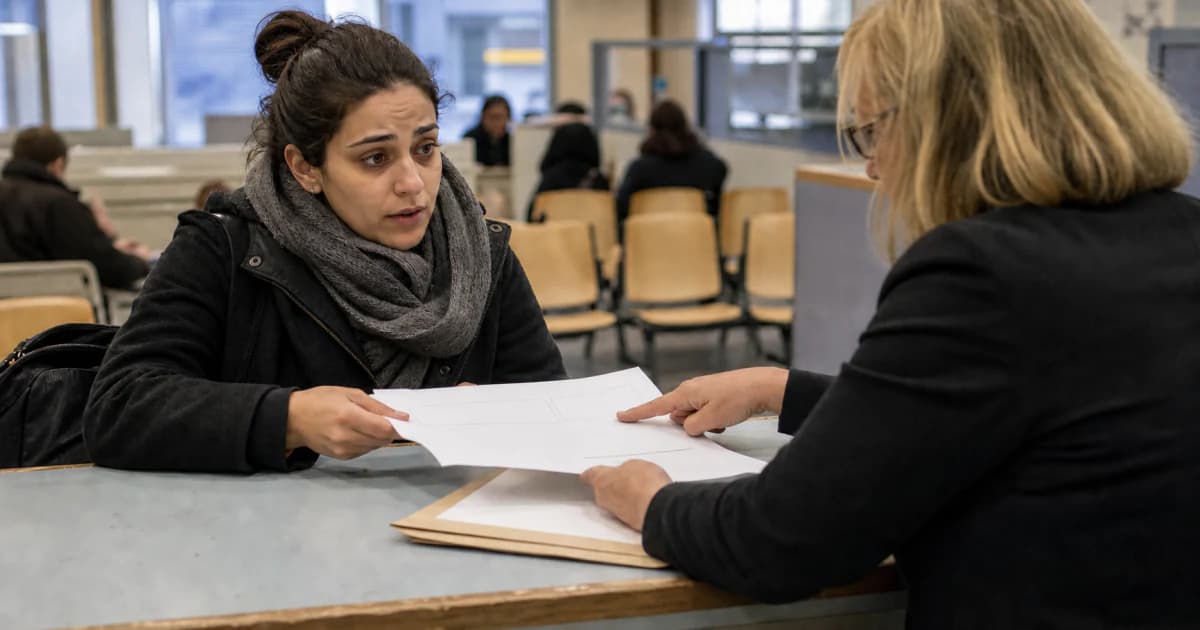
This guide covers registration problems for people living lawfully in the Netherlands as residents: landlord refusal, a host’s benefit concerns and having no home address. For ordinary first registration and your burgerservicenummer (BSN, citizen service number), use the BSN and gemeente registration guide. The non-resident route for short stays appears below.
Why does your BRP address matter?
Dutch public bodies use your BRP address to record where you live and send official mail, including voting cards. When the gemeente changes your address, the Belastingdienst (External site, opens in a new tab) (tax authority), pension funds and health insurers receive the change automatically.
You can check your registration on MijnOverheid (External site, opens in a new tab) (government account) with DigiD (External site, opens in a new tab) (digital government login). Open Persoonlijke gegevens (personal data). If you cannot log in, the DigiD setup and recovery guide explains the options.
Each toeslag (benefit) has its own household test. For example, huurtoeslag (rent benefit) counts a medebewoner (co-resident), while zorgtoeslag (healthcare benefit) uses partner rules. The table below compares these with bijstand (social assistance). The toeslagen (benefits) overview covers the wider benefit system.
Residence-permit holders and family sponsors must report changes affecting residence conditions to the IND within four weeks, such as no longer living together. An address change reported to the municipality on time reaches the IND automatically. If you report it late, notify the IND yourself.
What if your landlord refuses registration?
You must register where you live even if your landlord objects. !WOON (External site, opens in a new tab) (tenant support service) confirms that you do not need your landlord’s permission to register. It offers free, confidential support in Amsterdam and nearby municipalities.
If you expect to stay in the Netherlands for at least 4 months in the next 6 months, register in person within 5 days of arrival. Later registration can apply if you are waiting for a required residence status. It can also apply when the gemeente must investigate your identity. Ask the gemeente which rule applies to you. When you move within the Netherlands, report the move from 4 weeks before to 5 days after the moving date.
A rental-contract clause cannot remove the gemeente’s registration duties. Missing or wrong registration can lead to a fine of up to €325 in 2026. It can also prevent huurtoeslag for that address and send official mail elsewhere. A “no registration” condition may signal an illegal sublet or another problem with the letting.
Why might a landlord object?
Possible reasons for an objection include:
- The room is sublet without permission. A main tenant needs their landlord’s permission to sublet a room, and the contract may ban it.
- A resident worries that another adult will affect their huurtoeslag or bijstand.
- The letting breaks a local rule. Some gemeenten require a huisvestingsvergunning (housing permit) for social housing.
These possibilities do not prove the landlord’s motive. Your duty to register where you live still applies.
How can you register without the landlord’s cooperation?
You can ask the gemeente to register you using evidence of where you live. Follow these steps:
- Ask Burgerzaken (civil affairs) which documents it needs when your landlord refuses to cooperate.
- Submit your rental contract and other evidence the gemeente requests.
- Check the resulting BRP address on MijnOverheid.
If the gemeente refuses registration, ask for a written decision so you can check the objection route.
Amsterdam’s move-reporting page (External site, opens in a new tab) gives one local example. When you move in with someone, it asks for a signed toestemmingsverklaring (consent declaration) from the longest-registered resident and a copy of their identity document. If that person refuses, explain your living situation to the gemeente. It may start an adresonderzoek (address investigation) to establish your BRP address.
Correct registration lets public bodies assess benefits and send mail to the right address. If you rent directly from the owner, tenancy protection may apply. The rental contracts guide explains when a landlord can end a tenancy.
If you sublet a room from a main tenant, you must leave when the main tenancy ends. You may be able to claim damages from the main tenant if you have to leave earlier than agreed. Get advice about that risk, especially if the subletting lacks permission.
Intimidation, such as threatening to end your tenancy because you register, is banned under the Wet goed verhuurderschap (External site, opens in a new tab) (Good Landlord Act). Since 1 January 2024, every gemeente must have a meldpunt goed verhuurderschap (good-landlordship reporting point). Reporting is free, and the gemeente can fine a landlord. Search your gemeente’s website for that reporting point.
Where can you get help?
These services handle registration or tenancy problems:
- Het Juridisch Loket (External site, opens in a new tab) (legal advice service) gives free personal advice to people with a low income and little savings. Call 0800-8020 or visit a walk-in location. Its BRP page has a model objection letter.
- The municipal meldpunt goed verhuurderschap takes free reports about landlord intimidation or other conduct covered by the law.
- A huurteam (tenant support team) can help with local rental problems. !WOON offers confidential help with registration, contracts and rent in the Amsterdam region. Search your gemeente’s website for a local huurteam and check its services and fees.
- The gemeente’s Burgerzaken desk handles registration and can investigate where you live.
What if you live with a friend or relative?
Register at your friend’s or relative’s home when that is where you live. Ask your gemeente for its evidence requirements. Amsterdam, for example, requests the longest-registered resident’s signed consent declaration and ID copy. Check each benefit separately before the move.
These three benefits use different rules. The table gives the first check; the conditions below explain the exceptions.
You can scroll wide tables sideways.
| Benefit | Possible effect | First check |
|---|---|---|
| Huurtoeslag | Your income and assets may reduce or end your host’s rent benefit. | Check whether you count as a medebewoner or toeslagpartner (benefit partner). |
| Bijstand | Another adult can lower your host’s social assistance. | Check the kostendelersnorm (cost-sharers rule), age and exclusions with the gemeente. |
| Zorgtoeslag | Sharing an address affects the calculation if you become toeslagpartners. | Check partner status and when income and assets start counting. |
How does huurtoeslag count you?
Dienst Toeslagen (External site, opens in a new tab) (benefits service) counts most people registered at the same address as medebewoners. A toeslagpartner counts separately. If you register on the 1st, you count from that date. Otherwise, you count from the 1st of the next month. Someone using the address only as a briefadres does not count as a medebewoner.
A genuine onderhuurder (subtenant) can also be excluded. Your host must live in the home and rent part of it to you under a rental agreement. A toeslagpartner, parent or child cannot use this exception. The official subtenant rules (External site, opens in a new tab) also list step, adoptive and in-law family relationships that cannot use it.
Your host must report the subtenant by telephone to Dienst Toeslagen within 4 weeks after registration. Dienst Toeslagen decides whether the exception applies and may ask for the rental agreement and bank statements.
A host who rents needs their landlord’s permission to sublet a room.
Use a proefberekening (trial calculation) through the huurtoeslag guide to check the effect.
A refugee from Ukraine whom you host usually does not count as a co-resident for huurtoeslag while receiving temporary protection in the Netherlands. For a non-Ukrainian guest, check whether temporary protection still applies before relying on this exception.
How does bijstand count you?
The kostendelersnorm (External site, opens in a new tab) counts eligible housemates aged 27 or over. Housemate income and assets do not determine the count. Since 1 January 2023, people under 27 are excluded. The gemeente also excludes these groups:
- Students following a course that can qualify for study finance or education-cost assistance.
- Students in a Beroeps Begeleidende Leerweg (BBL, work-based vocational route).
- Commercial tenants, subtenants, boarders and their live-in landlords or hosts, where the commercial-rental exception applies.
- Informal carers who move in temporarily to provide care.
If you are spouses, partners or form a gezamenlijke huishouding (joint household), separate rules apply. That person’s income and assets count when the gemeente assesses your right to bijstand. Ask the gemeente that pays the bijstand to confirm which rules apply before you move.
In 2026, the per-person rates are 70% of the couples’ benefit for one eligible adult, 50% for two, 43.33% for three, 40% for four and 38% for five. The rule also covers larger households. For example, if your host lives alone and you move in at age 30, the host’s rate can fall from 70% to 50%. That example assumes you count under this rule and form no joint household.
How does zorgtoeslag count you?
Zorgtoeslag uses your own income and assets and those of your toeslagpartner. Sharing an address alone does not make you partners. Use the official toeslagpartner rules and checker (External site, opens in a new tab) to test your situation.
A spouse or registered partner is a toeslagpartner. For other people sharing an address, any one of these conditions can create partnership:
- You have a notarial cohabitation contract.
- You have a child together, or one of you has acknowledged the other’s child.
- You are partners for a pension scheme.
- You jointly own the home where you both live.
- One of you has a child under 18 registered at the address, and only two adults are registered there.
- You were already toeslagpartners last year.
The minor-child condition has exceptions for a subtenant, a Ukrainian refugee staying with someone who is not a Ukrainian refugee, and an au pair with a contract. A subtenant is not exempt from the other partner conditions.
Since January 2025, a parent and child living together are no longer toeslagpartners. This also covers step and foster relationships.
Partner status starts on the 1st of the month after the qualifying change. If the change happens on the 1st, it starts that day. If you become partners after 1 January, the new partner’s assets count from 1 January of the following year. Check the relevant income and asset limits for that year.
When can you use a briefadres?
A briefadres (External site, opens in a new tab) lets you receive government mail while you have no home address. Certain institution residents can use one too. The official briefadres rules (External site, opens in a new tab) also cover safety reasons. The gemeente decides whether you meet the conditions.
A person registered in the BRP at a home address, or an institution designated by the gemeente, can provide a briefadres. For an individual provider, use their registered home address. The briefadres must be in the Netherlands and cannot be a PO box. The provider must pass government mail on to you, and you must remain reachable by the gemeente.
Amsterdam’s briefadres page (External site, opens in a new tab) lists homelessness or being thuisloos (without a stable home), and a short gap between homes. It also lists having no fixed place to stay because of your profession, for example as an inland barge skipper. Other examples are staying abroad for at most 8 months without a Dutch home address, or living in a domestic-violence shelter, care institution or prison.
Ask your own gemeente to assess your circumstances. For a stay abroad, the national departure rule also applies: if you expect to spend at least 8 months outside the Netherlands within a year, report your departure instead of keeping resident registration.
If you have no home address and cannot find a briefadresgever (address provider), the gemeente must arrange a briefadres itself. This duty has applied since 1 January 2022. It can use the gemeentehuis (town hall). You still need to meet the legal conditions and provide the information the gemeente requests.
How do you apply for a briefadres?
To apply for a briefadres, follow these steps:
- Ask Burgerzaken in the gemeente where the briefadres is located for its application form and document requirements. If you cannot find a provider, ask the gemeente about its own address.
- Submit your ID, the provider’s signed written consent and their ID or a copy, where a provider is available. Include the reason, start date and expected duration.
- Answer requests for further information.
- Keep contact with the provider so government mail reaches you.
Someone recorded as using the address only for post does not count as a medebewoner for the provider’s huurtoeslag. Check any other benefit separately.
A briefadres cannot replace the address of a room where you live merely because the landlord refuses registration. If you live at several addresses, the gemeente looks at where you expect to spend the most nights over the next 6 months. If you have no such home address, the gemeente also checks whether you expect to spend at least two-thirds of your nights at one address over 3 months. Ask it to establish your home address. Wrong registration can lead to a fine of up to €325 in 2026; Amsterdam uses €240 to €325. It can also affect benefits at the borrowed address.
Registratie Niet-Ingezetenen (External site, opens in a new tab) (RNI, non-residents register) serves people living abroad or staying in the Netherlands for less than 4 months. A resident without a home address needs the briefadres route instead. The BSN and gemeente registration guide linked above explains the RNI and first-registration procedures.
How do you respond to an adresonderzoek?
The gemeente uses an adresonderzoek to establish which address belongs in the BRP. Its own checks, a public body’s report or a resident’s report can trigger an investigation. You can also request one if someone is registered at your address but lives elsewhere. The gemeente may contact you by post, phone, email, social media or a home visit.
Follow these steps when the gemeente contacts you:
- Read what evidence the gemeente requests and the response date in its letter.
- Send the requested evidence and your current address if you have moved.
- Check the gemeente’s decision.
- If the decision is wrong, submit a bezwaar (objection) within 6 weeks.
The gemeente may request your rental agreement, an energy bill or commute records. Withholding requested information can lead to a fine.
The gemeente may record you as vertrokken onbekend waarheen (VOW, departed with destination unknown) only if all three conditions apply. It cannot reach you, has received no move or departure report, and cannot establish your whereabouts after a thorough investigation. You then lose resident registration. That can interrupt toeslagen, kinderbijslag (child benefit), bijstand or WW (Werkloosheidswet, unemployment benefit) payments. Health insurance and DigiD may stop, and passport, ID-card or driving-licence applications may be blocked.
What fines and service interruptions can follow?
A fine and loss of services are separate possible consequences. Neither follows automatically in every case. The table shows the registration problems that can cause them. Correct the record and object within 6 weeks if the gemeente’s decision is wrong.
You can scroll wide tables sideways.
| Situation | Possible consequence |
|---|---|
| Missing the 5-day arrival deadline when resident registration is required | A fine of up to €325 in 2026. The residence-status and identity-check exceptions above can affect when you register. |
| Reporting a move more than 5 days after moving | A fine of up to €325 in 2026. The date the gemeente receives your report becomes the official moving date. |
| Registering where you do not live, or knowingly allowing someone to do this at your address | A fine of up to €325 in 2026; Amsterdam uses €240 to €325. The gemeente may investigate and correct the record. |
| Having no resident registration, including after a VOW decision | Benefits, health insurance and DigiD may stop. Passport, ID-card or driving-licence applications may be blocked. |
What can you do about common registration problems?
The next action depends on whether the problem concerns your tenancy, benefits, deregistration or missing evidence.
What if your landlord threatens to end the tenancy?
Keep a copy of the threat. Intimidation is banned under the Wet goed verhuurderschap. Report it to the municipal reporting point and ask Het Juridisch Loket or a local huurteam to read your contract. Whether the landlord can end the tenancy depends on the contract. Do not sign a promise to stay unregistered. If you sublet a room, ask about the risk of losing it when the main tenancy ends.
What if your host is afraid of losing benefits?
Check each benefit using the table and exceptions above. A rental arrangement must match how you live and pay. A host who rents needs their landlord’s permission to sublet a room. If you live there, register there; staying unregistered can lead to a fine of up to €325 in 2026. If you have no home address, ask about a briefadres. That postal registration does not count you as a medebewoner for your host’s huurtoeslag.
What if the municipality deregistered you?
Contact Burgerzaken with your ID and evidence of where you live. Ask how to restore resident registration at your current address. If you have no home address, ask for a briefadres and provide the information needed to assess eligibility. If the decision was wrong, object within 6 weeks. After re-registration, contact Dienst Toeslagen and your health insurer to check whether benefits or insurance need correction.
If deregistration also blocks your inburgering (civic integration) account, the DigiD problems in Mijn Inburgering (civic integration account) guide explains login fixes and official paper forms.
What if you cannot prove where you live?
Ask the gemeente which evidence it can use. In an adresonderzoek, it may request a rental agreement, energy bill or commute records. Keep evidence from the start of an informal tenancy:
- Ask for a written rental contract.
- Pay rent by bank transfer with huur (rent) and the address in the payment description.
- Put an energy or internet contract in your name if possible. The utilities guide explains the steps.
- Keep post addressed to you at the home.
The gemeente assesses your evidence and decides which address belongs in the BRP.
If you are looking for another home, the rental search guide covers checks before signing, including registration conditions. The rental scams guide covers suspected fraud.
For benefit amounts and full eligibility rules, use the huurtoeslag guide and toeslagen overview linked above.
If you live at an address, ask Burgerzaken to correct or confirm that record. If you have no home address, ask it to assess a briefadres. If you disagree with a decision, use the objection instructions and the 6-week deadline in the letter.
- Author
- By Inburgering.org team
- Reviewer
- Reviewed by Kirill Svavolia
Official Sources
- Rijksoverheid (Dutch central government): Wanneer moet ik mij in de BRP laten inschrijven? (External site, opens in a new tab) - Resident registration at the actual home address, the 5-day arrival deadline, exceptions for pending residence status or identity checks, and the briefadres route.
- Het Juridisch Loket: Inschrijven in de Basisregistratie Personen (External site, opens in a new tab) - the maximum €325 fine for late, missing or wrong registration; the 4-weeks-before to 5-days-after window for reporting a move; how an adresonderzoek runs and the proof the gemeente can ask for (rental agreement, energy bill, commute records); the VOW outcome; the consequence list when you are not registered (toeslagen, kinderbijslag, uitkering, zorgverzekering, passport/ID/driving licence, DigiD); the 6-week objection window; the briefadres via family, an institution or the gemeente; and the free advice line for people with a low income
- Rijksoverheid: Adresonderzoek om adresgegevens te verbeteren (External site, opens in a new tab) - that government organisations such as the Belastingdienst report address doubts to the gemeente, that the gemeente can investigate and visit the home, and that wrong registrations can cost residents huurtoeslag because of supposed medebewoners
- Gemeente Amsterdam: Boete bij verkeerde informatie in registratie (External site, opens in a new tab) - the fine of €240 to €325 for wrong BRP information, including not reporting a move and letting someone register at your address who does not live there
- Gemeente Amsterdam: Verhuizing binnen of naar Amsterdam doorgeven (External site, opens in a new tab) - Amsterdam’s 4-weeks-before to 5-days-after reporting window, consent and ID from the longest-registered resident when moving in with someone, and automatic address updates to tax authorities, pension funds and health insurers.
- Rijksoverheid: Kan ik mijzelf laten inschrijven op een briefadres? (External site, opens in a new tab) - what a briefadres is, who can give one, the application documents (ID, signed written consent, copy of the giver's ID), the no-PO-box rule, and the duty since 1 January 2022 for the gemeente to register you on a briefadres itself when you cannot find a briefadresgever
- Gemeente Amsterdam: Briefadres aanvragen (External site, opens in a new tab) - Amsterdam examples: homelessness, a short gap between homes, having no fixed place to stay because of your profession, for example as an inland barge skipper, a stay abroad of at most 8 months without a Dutch home address, and a domestic-violence shelter, care institution or prison.
- Dienst Toeslagen: Wie telt als medebewoner voor de huurtoeslag? (External site, opens in a new tab) - Huurtoeslag co-residents, when they start counting, the subtenant exception and the exception for someone using only a postal address.
- Dienst Toeslagen: Toeslagpartner voor de toeslagen (External site, opens in a new tab) - Partner conditions and the limits on the minor-child rule, the parent-and-child exception since January 2025, and when partner income and assets start counting.
- Dienst Toeslagen: Kan ik zorgtoeslag krijgen? (External site, opens in a new tab) - that zorgtoeslag counts only your own income and assets and those of your toeslagpartner
- Rijksoverheid: Wat is de kostendelersnorm in de bijstand? (External site, opens in a new tab) - Housemates aged 27 or over, student and commercial-rental exceptions, temporary live-in carers, separate partner rules, and per-person rates of 70%, 50%, 43.33%, 40% and 38%.
- Rijksoverheid: Welke regels gelden voor verhuurders en verhuurbemiddelaars? (External site, opens in a new tab) - the ban on intimidation such as threatening to end the tenancy, the municipal meldpunt for complaints about landlord conduct, and the gemeente's power to fine landlords
- Het Juridisch Loket: Wat zijn mijn rechten als onderhuurder? (External site, opens in a new tab) - Permission from the main tenant’s landlord, possible contractual bans, room subtenants leaving when the main tenancy ends, possible damages, and written rental contracts.
- Rijksoverheid: Kom ik in aanmerking voor een sociale huurwoning? (External site, opens in a new tab) - that some municipalities require a huisvestingsvergunning, requested from the gemeente
- !WOON: Information and advice for tenants (English) (External site, opens in a new tab) - free and confidential tenant support in Amsterdam and surrounding municipalities, including the statement that you do not need your landlord's permission to register at an address
- MijnOverheid (External site, opens in a new tab) - where you check your own BRP registration and receive government mail digitally, with DigiD
- Rijksoverheid: Hoe kan ik mijn verhuizing doorgeven aan de gemeente? (External site, opens in a new tab) - Move-reporting deadlines and the reporting date used as the official moving date after a late report.
- RvIG (Rijksdienst voor Identiteitsgegevens, National Office for Identity Data): Veelgestelde vragen Briefadres (External site, opens in a new tab) - Institution and safety exceptions, provider duties, application details, multiple-address rules and the municipal duty since 1 January 2022, subject to eligibility.
- RvIG: Registratie Niet-Ingezetenen (External site, opens in a new tab) - Non-resident registration for people abroad or staying in the Netherlands for less than 4 months.
- Dienst Toeslagen: Telt mijn onderhuurder mee voor de huurtoeslag? (External site, opens in a new tab) - Subtenant eligibility, excluded family relationships, the 4-week reporting deadline and evidence Dienst Toeslagen may request.
- Het Juridisch Loket: Contact voor gratis juridisch advies (External site, opens in a new tab) - Personal advice for people with a low income and little savings, the 0800-8020 telephone number and walk-in locations.
- Staatsblad (Dutch Bulletin of Acts and Decrees) 2013, 315: Wet basisregistratie personen (External site, opens in a new tab) - Articles 1.1, 2.38–2.42 and 4.17: home address, at least 4 months in half a year, in-person registration, reporting deadlines, briefadres exceptions and the maximum €325 fine.
- Staatsblad 2021, 396: Wijziging Wet basisregistratie personen (External site, opens in a new tab) - Articles 2.23 and 2.43: a municipal briefadres when no home address or consenting provider is available, and departure reporting for at least 8 months abroad within a year.
- Staatsblad 2024, 391: Verzamelwet BZK 20XX (miscellaneous amendments act for the Ministry of the Interior and Kingdom Relations) (External site, opens in a new tab) - Article XVII updates the wording of the €325 maximum BRP fine without changing its amount.
- Staatsblad 2023, 103: Wet goed verhuurderschap (External site, opens in a new tab) - The intimidation ban, municipal reporting point and enforcement powers.
- Staatsblad 2023, 193: Gegevensverwerking bij goed verhuurderschap (External site, opens in a new tab) - The official rules for reporting-point data processing, including confirmation of free, anonymous reporting.
- Rijksoverheid: Een breed offensief (plan to help more people with disabilities into work) (External site, opens in a new tab) - The exclusion of housemates under 27 from the kostendelersnorm since 1 January 2023.
- Stroomopwaarts (regional work and income service): Kostendelersnorm (External site, opens in a new tab) - The couples’ benefit as the 100% reference for the cost-sharing percentages.
- DigiD: Home English (External site, opens in a new tab) - The official digital government login service.
- Rijksoverheid: Meldpunt goed verhuurderschap vanaf 1 januari 2024 (External site, opens in a new tab) - Every municipality must have a landlord reporting point from 1 January 2024.
- Inburgeren.nl (official civic integration website): Registering for an exam (External site, opens in a new tab) - Official registration forms are available when you cannot log in to Mijn Inburgering.
- Gemeente Amsterdam: Toestemming inwoningadres (External site, opens in a new tab) - The consent declaration must be completed and signed by the owner or longest-registered resident.
- IND: Obligations foreign national and sponsor of family member (External site, opens in a new tab) - Residence-permit holders and family sponsors must report changes affecting residence conditions to the IND within four weeks, such as no longer living together. An address change reported to the municipality on time reaches the IND automatically. If you report it late, notify the IND yourself.