
Report a Dutch move on time; report departure before leaving
For a move within the Netherlands, report to the gemeente (municipality) where you will live. The usual window is 4 weeks before to 5 days after moving, with weekend and holiday extensions. You must deregister if you expect to spend at least 8 months abroad in a year, except qualifying professional seafarers. Report departure to your current municipality from 5 days before you leave through departure day.
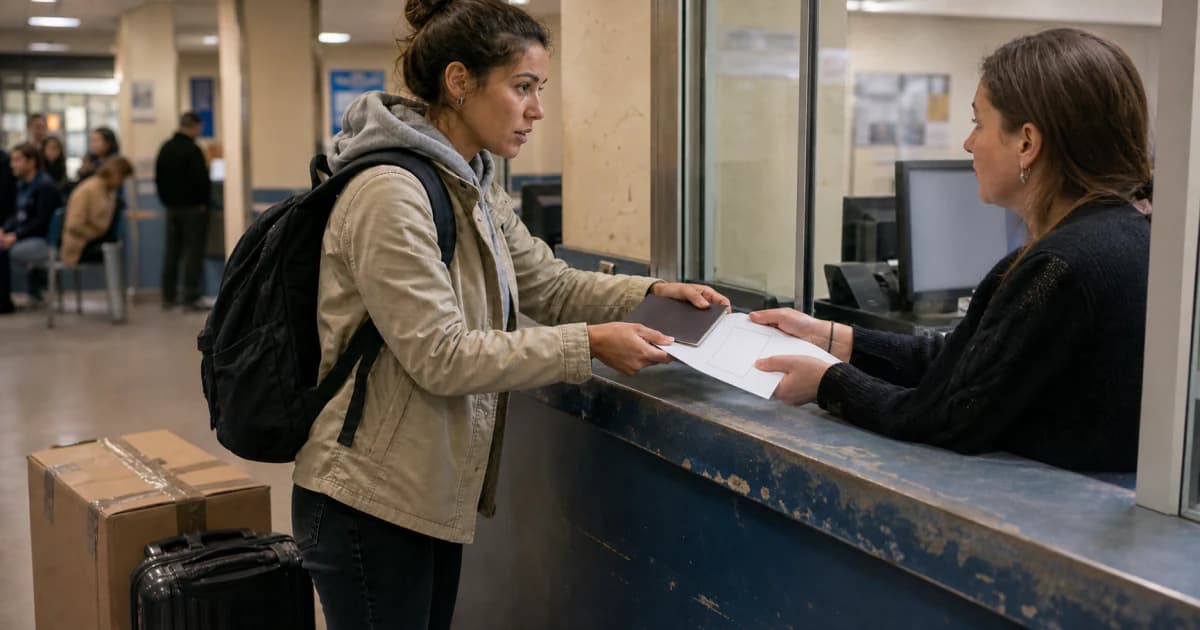
This guide covers moves by residents registered in the Basisregistratie Personen (BRP, Personal Records Database) (External site, opens in a new tab), and registration after returning from abroad. It also covers a briefadres (correspondence address) when you have no woonadres (residential address) or stay in a qualifying institution.
Your address route and deadline
The expected place and length of your stay determine the BRP route. Use the dates below before you book a municipal appointment.
You can scroll wide tables sideways.
| Situation | BRP action | Legal window | Main limit |
|---|---|---|---|
| Move to another address in the Netherlands | Report to the municipality where the new address is located | From 4 weeks before to 5 days after the move; weekend and holiday extensions apply | After the applicable reporting deadline, the municipality uses the date it received your report as the official move date. |
| No residential address, or a stay in a qualifying institution, while you remain a BRP resident | Ask the municipality for a correspondence address | The address-reporting window also applies to choosing a correspondence address | The municipality checks eligibility. A correspondence address is not a post office box. |
| Expect to spend at least 8 months abroad in a year | Deregister from your current municipality, except qualifying professional seafarers | From 5 days before departure until the departure day | The months need not be consecutive. Keeping a Dutch home alone does not remove the duty. Check the seafarer exception below. |
| Return and expect to spend at least 4 of the next 6 months in the Netherlands | Register as a resident in the municipality where you will live | Within 5 days after arrival | Book ahead. Later registration is allowed only in specific cases: awaiting a required permit without valid residence status, or awaiting an investigation because you cannot prove your identity. See the return guidance below. |
Reporting a move within the Netherlands
Report your move to the municipality of your new address, including a move within the same municipality. The new municipality transfers your BRP record. You do not need to deregister from your old Dutch address first. The Rijksoverheid (Dutch government) instructions for reporting a move (External site, opens in a new tab) explain the national route.
If the 5-day deadline ends on a Saturday, Sunday or recognised public holiday, it extends to the next working day. The 5-day period must also contain at least 2 working days: days other than Saturdays, Sundays or recognised public holidays. It extends if needed to include them. The RvIG (Rijksdienst voor Identiteitsgegevens, National Office for Identity Data) address-change instructions (External site, opens in a new tab) explain these rules under the Algemene termijnenwet (General Time Limits Act).
Follow these steps to report a move within the Netherlands:
- Check your new municipality’s “verhuizing doorgeven” (report a move) page. Choose an online, postal or desk route and a date within the reporting window above. Check whether it accepts reports before moving day.
- Prepare a valid passport, driving licence, Dutch identity card or residence document. For online reporting, follow its DigiD (Dutch digital identity) (External site, opens in a new tab) login instructions. Use the Get and use DigiD guide if you need to set it up.
- Prepare proof that you live at the new address: a rental contract, purchase deed or consent from the main resident. Check the municipality’s required pages, signatures and copies of identity documents.
- Submit the old address, new address and actual moving date. The municipality may ask questions or investigate if the documents and occupancy do not match.
- Save the online receipt, sent form or desk confirmation. Confirmation channels and processing times differ by municipality.
- Check the recorded moving date in MijnOverheid (your government account) (External site, opens in a new tab). A timely report uses your declared moving date. After the applicable reporting deadline, the municipality uses the date it received your report. That date can affect benefits or services. Contact the organisation if its decision uses a wrong date.
Who can report a move for you
Follow the municipality’s identity and authorisation requirements. Any one of these reporting routes can apply:
- A person aged 16 or older reports for themselves.
- Spouses and registered partners who live together may report for each other.
- A parent, guardian or carer reports for a child under 18.
- Parents may report for an adult child who lives with them.
- An adult child may report for a parent who lives with them.
- A curator (court-appointed guardian) reports for a person under curatorship.
- Another adult needs a written machtiging (authorisation).
A housemate or unmarried partner needs written authorisation to report for you.
Gemeente Rotterdam (Rotterdam municipality): report a move (External site, opens in a new tab) offers online and postal routes and sends confirmation after processing. If other people are already registered at the address, Rotterdam requires a verklaring van inwoning (occupancy declaration), including when you own the home. If you need a huisvestingsvergunning (housing permit), you must attend in person and cannot authorise someone else.
Your municipality may use another form, route or processing time. Check its own page before sending documents.
Address evidence and correspondence addresses
The BRP records where you actually live. A contract, ownership document or main-resident consent helps the municipality test that fact; it does not replace the fact itself.
You can scroll wide tables sideways.
| Living situation | Evidence or route | Limit |
|---|---|---|
| You rent the whole home or a room | Send the signed contract pages that show your name, the address, start date and signatures | The municipality may ask for more evidence if the use or occupancy is unclear. |
| You own the home | Use the purchase deed or the municipality’s stated ownership evidence | A local occupancy form may still be required when other people are registered there. |
| You move in with the main resident | Use that municipality’s signed consent form and any requested protected copy of an identity document | Consent requirements and forms differ; prepare them before your reporting deadline. |
| You have no residential address or stay in a qualifying institution | Ask for a briefadres under the national correspondence-address rules (External site, opens in a new tab) | The municipality assesses the situation. The provider must pass government post to you. |
| A landlord says “no registration” | Report where you actually live and ask the municipality how to prove it | The contract phrase does not remove the BRP duty. Use the address-registration problems guide for investigation and housing routes. |
A correspondence address can be provided by a person registered at a residential address or a municipality-approved institution in the Netherlands. It cannot be a post office box. Bring your own identity document, the provider’s signed consent and the provider’s identity document or a copy. The provider must pass government post to you. If you qualify but cannot find a provider, the municipality must arrange an address, for example at the town hall. The municipality can ask for information later to check the arrangement.
Deregistering before a long stay abroad
Except qualifying professional seafarers, you must deregister if you expect to spend at least two-thirds of a year abroad: 8 months or more. This is the test in article 2.43 of the Wet basisregistratie personen (External site, opens in a new tab). The months need not be consecutive. Keeping or owning a Dutch home alone does not remove the duty.
For example, you plan to spend 5 months abroad in winter and another 4 months abroad in summer within the same year. The total is 9 months, so you must deregister unless the professional-seafarer exception applies, even though you return between the two stays.
Professional seafarers are exempt from reporting departure if all three conditions apply:
- You sail professionally aboard a ship with a Dutch home port during your time abroad.
- You expect to spend no more than 2 years abroad.
- You keep a Dutch address throughout.
The RvIG emigration instructions (External site, opens in a new tab) confirm this exception. Article 29 of the Besluit basisregistratie personen (External site, opens in a new tab) sets the rule. For departures that require deregistration, check these tasks:
You can scroll wide tables sideways.
| Departure task | What to do | Boundary or evidence |
|---|---|---|
| Use the short window | Submit the departure declaration from 5 days before departure through the day you leave | For this window, NetherlandsWorldwide deregistration steps (External site, opens in a new tab) states that weekends and public holidays count. |
| Use your current municipality | Check its online, written or desk route | Routes vary. Do not assume another municipality’s digital form is available. |
| Only part of the family leaves | The family members leaving must attend in person, including minors, unless an attendance exception applies | Ask which consent documents your municipality needs. If health prevents personal attendance, ask about reporting through a representative. |
| Give the destination | State the destination country and foreign address; if unknown, add the address later | Keep your Registratie Niet-Ingezetenen (RNI, Non-residents Records Database) (External site, opens in a new tab) address current through MyRNI (non-resident details portal) (External site, opens in a new tab) or an RNI desk. The NetherlandsWorldwide instructions for changing your RNI address (External site, opens in a new tab) explain both routes. Updating is recommended so authorities can reach you. |
| Ask for proof | Ask at the desk for an international proof of deregistration if the destination needs it | The proof-of-deregistration rules (External site, opens in a new tab) say some municipalities do not issue it. The deregistration and emigration dates must match. A later RNI extract can serve as proof. |
| Keep your identifiers | The record moves to the RNI | Your burgerservicenummer (BSN, citizen service number) stays valid. Deregistration can affect benefits, insurance, pension and residence rights. |
Organisations you still need to tell
Which organisations receive your BRP data depends on your situation. The BRP data-sharing rules (External site, opens in a new tab) explain who receives it. In MijnOverheid, open “Identiteit” (Identity), then “Bekijk gedeelde gegevens” (View shared data). These government organisations may still need a direct notice.
You can scroll wide tables sideways.
| Organisation or contract | What the BRP does | What you still do |
|---|---|---|
| Belastingdienst (Tax Administration) (External site, opens in a new tab) and Dienst Toeslagen (Benefits Agency) (External site, opens in a new tab) | They receive the address from the municipality | For a Dutch move, report your new rent for huurtoeslag (rent benefit), or stop it if the new home does not qualify. Follow the moving-home instructions linked in this row. Abroad, huurtoeslag ends; check the separate conditions for other benefits in the Dienst Toeslagen moving-abroad instructions (External site, opens in a new tab). |
| IND (Immigratie- en Naturalisatiedienst, Immigration and Naturalisation Service) (External site, opens in a new tab), if you hold a residence permit | If you report a Dutch move on time, the municipality sends your new address to the IND | Report a late Dutch move to the IND yourself. Report a move abroad before departure, including affected children. Children aged 12 or older may report their own change. The IND address-reporting rules (External site, opens in a new tab) explain these duties. |
| DUO (Dienst Uitvoering Onderwijs, Dutch education service) (External site, opens in a new tab), if you have student debt | BRP or RNI sharing does not replace DUO’s direct-notice rule for student debt abroad | Give DUO your foreign address yourself, as its repayment instructions require. If you receive digital post, keep your email address correct too. |
| UWV (Uitvoeringsinstituut Werknemersverzekeringen, Employee Insurance Agency) (External site, opens in a new tab) or SVB (Sociale Verzekeringsbank, Social Insurance Bank) (External site, opens in a new tab), if either pays you | A BRP change may reach the organisation, but it does not decide whether payment may continue abroad | Rijksoverheid’s emigration checklist (External site, opens in a new tab) says to report departure directly to UWV or SVB. Check whether your payment can continue abroad. |
For insurance, pensions, municipal support and private records, check these separate actions.
You can scroll wide tables sideways.
| Organisation or contract | What the BRP does | What you still do |
|---|---|---|
| Health insurer | Health insurers can receive BRP data | Ask your insurer for the coverage end or continuation date. If your status is unclear, ask SVB for an assessment under the Wet langdurige zorg (Wlz, Long-term Care Act). The Wlz insurance questions (External site, opens in a new tab) explain the route. |
| Pension fund | Pension organisations can receive BRP data | Ask the fund what departure changes and make sure it can contact and pay you abroad. |
| Wet maatschappelijke ondersteuning (Wmo, Social Support Act) support or bijstand (social assistance) from a municipality | The new municipality decides eligibility for its support under separate rules | Ask the new municipality which support, if any, you must apply for again. |
| Private contracts and care providers | BRP sharing may update some care records; check each organisation’s own process | Tell your bank, employer, landlord, energy and internet companies, doctor, dentist and private insurers about the move. Keep their confirmations. |
Municipal support needs a separate check with your new municipality. If you are completing inburgering (civic integration), use Moving house during inburgering to check your new municipality, PIP (personal integration and participation plan), school and booked exams.
You can also check your contact details and DUO letters in Mijn Inburgering (your civic integration account). The official Mijn Inburgering login page (External site, opens in a new tab) lists the details you can change.
An organisation may receive your new address and still need information about rent, household, work, care or departure. Use the Toeslagen (benefits) overview before moving in with someone. Use the Municipal and water-board taxes guide to check local bills after a Dutch move.
Address dates, fines and residence rights
Start with the BRP date and the relevant organisation’s decision. Confirm insurance, benefit and residence status with the responsible organisation.
You can scroll wide tables sideways.
| Issue | Possible consequence | Action |
|---|---|---|
| Domestic move reported after the applicable reporting deadline | The municipality records the receipt date, which can change a period used for a benefit or service | Submit your report now, keep proof and ask the organisation that made the decision to explain its dates. |
| Address change reported late or incorrectly | In 2026, the municipality may impose a fine of up to €325 | Read the fine decision. The municipality decides whether to impose a fine; it is not automatic. |
| Municipality doubts who lives at an address | The municipality may start an address investigation, request evidence or visit the home, then correct wrong BRP data | Respond by the stated deadline and keep copies of occupancy evidence. |
| You move abroad | Benefit, pension and Dutch health-insurance outcomes depend on their own rules | Check each organisation. Use the health-insurance guide rather than treating deregistration as an insurance decision. |
| You have a Dutch residence permit or an EU (European Union) residence right | The IND checks your hoofdverblijf (main residence): where you live and spend most of your time. A long absence or moving it abroad can affect your residence right. | Use the IND main-residency rules linked above for your exact category and the residence-permit overview to identify it before booking a long stay. |
Checking and correcting your address record
A saved form proves what you sent; MijnOverheid shows what the BRP currently contains. Use both before contacting another organisation about a wrong address or date.
You can scroll wide tables sideways.
| Step | Action | Limit |
|---|---|---|
| Keep the receipt | Save the submitted form, attachments and confirmation | An appointment booking alone may not prove that the declaration was filed. |
| Check the BRP | After the move date, open MijnOverheid and check the registered address | Municipal processing times vary. Contact the municipality if the expected confirmation does not arrive. |
| Request a correction | If the address or date is wrong, ask the responsible municipality to correct it and attach evidence | For a declaration received after the applicable reporting deadline, the receipt date is the recorded move date. Evidence of an earlier physical move does not by itself make that date incorrect. |
| Respond to an investigation | Use the deadline and evidence route in the municipality’s letter | A phone call does not replace the requested written response. |
| Submit a bezwaar (objection) | The usual deadline is 6 weeks after the decision is announced. To dispute a correction refusal, address decision or fine, follow the written decision. The Rijksoverheid objection guide (External site, opens in a new tab) explains the route. | Include your name, address, date, the decision, your reasons and signature. Explain the outcome you want and attach evidence where useful. Submitting an objection is free. |
Common address problems
Choose the action that matches your current situation.
You can scroll wide tables sideways.
| Problem | First action | Do not assume |
|---|---|---|
| You already moved within the Netherlands and missed the applicable reporting deadline | Report to the destination municipality now and keep the receipt | The municipality records the date it receives a late report. |
| You already live abroad but remain registered as a resident | Contact your last Dutch municipality, explain when you left and ask what evidence and route it requires | A retroactive date is not guaranteed. Resolve benefits, insurance and IND duties separately. |
| Your foreign address changes after deregistration | Update the RNI through MyRNI or the RNI route | The old Dutch municipality does not know every later foreign move automatically. |
| You have no fixed home in the Netherlands | Ask the municipality of the proposed provider for a correspondence-address assessment | A stay abroad below the deregistration threshold does not by itself make you eligible. |
| You return and expect to spend at least 4 of the next 6 months here | Book resident registration in your new municipality. Everyone moving with you must attend in person unless a statutory exception applies. If health or imprisonment makes attendance impossible, ask the municipality how to report through a representative. | Register within 5 days after arrival unless one of the two delay exceptions below applies. For a shorter stay, check non-resident registration. Use the BSN and municipality-registration guide to check your route. |
You may register later than 5 days after arrival if you lack valid residence status and are waiting for a required residence permit. If you cannot prove your identity, you may wait for the identity investigation to finish. You must then register. The Rijksoverheid rules on later registration (External site, opens in a new tab) name these specific exceptions.
Health or imprisonment can prevent personal attendance. Ask your municipality which representative can report for you. For a health exception, it may request a written statement from your treating doctor. The RvIG guidance on reporting and personal attendance (External site, opens in a new tab) and article 30 of the Besluit basisregistratie personen explain the conditions.
For resident registration after returning, bring valid identification and proof of occupancy. Ask which extra documents your family needs. Resident registration is free. If you return from Aruba, Curaçao, Sint Maarten, Bonaire, Sint Eustatius or Saba, bring proof of deregistration there. The NetherlandsWorldwide return plan (External site, opens in a new tab) explains appointment planning and documents. Article 2.38 of the Wet basisregistratie personen sets the return test at at least two-thirds of the next 6 months.
If a landlord or main resident blocks registration, keep your contract and proof that you live there. Use the Address registration problems guide for the next action. While the municipality checks a wrong address, use the Berichtenbox (message box) in MijnOverheid for digital government post where available.
Submit your address report within the window for your situation. Save your evidence and check MijnOverheid after the municipality processes it. Tell organisations with separate reporting duties and read their decisions. Forms and processing times vary by municipality. Check your municipality’s current page before you submit your report. Use MijnOverheid and Berichtenbox: set up digital government post to check your records and receive government letters.
For registration problems or a move during inburgering, use these guides:
- Author
- By Inburgering.org team
- Reviewer
- Reviewed by Kirill Svavolia
Official Sources
- Rijksoverheid: How to report a move to the municipality (External site, opens in a new tab) - The destination municipality, ordinary domestic 4-week-before to 5-day-after window, official date for timely and late reports, valid ID, proof of occupancy, who may report and discretionary fine of up to €325. See RvIG for weekend and holiday deadline extensions.
- Wetten.overheid.nl (Dutch legislation database): Wet basisregistratie personen (External site, opens in a new tab) - Articles 2.38 and 2.43: at least two-thirds of 6 months in the Netherlands or a year abroad. Address-reporting windows, resident representatives, correspondence addresses, corrections and discretionary fines up to €325.
- Rijksoverheid: When to register as a BRP resident (External site, opens in a new tab) - Free resident registration within 5 days. Later registration is allowed while awaiting a required permit without valid residence status, or an investigation because identity cannot be proved; registration follows that investigation. Also covers accompanying family and shorter-stay non-resident registration.
- Rijksoverheid: Registering at a briefadres (External site, opens in a new tab) - Eligibility without a residential address or in an institution, no PO box, municipality assessment, possible providers, mandatory municipal fallback and required identity and consent documents.
- Rijksoverheid: When to deregister from the BRP (External site, opens in a new tab) - The public guidance on extended absence, keeping a Dutch home, non-resident status and later foreign-address updates. For the exact statutory threshold, see article 2.43 of the Wet basisregistratie personen.
- NetherlandsWorldwide: How to deregister when going abroad (External site, opens in a new tab) - The 5-day departure window, weekends and holidays, municipal variation, in-person rule when part of the family stays, already-abroad action, RNI transfer, valid BSN, later foreign address and notified organisations.
- NetherlandsWorldwide: Requesting proof of deregistration (External site, opens in a new tab) - The at-the-desk and same-date conditions, municipal variation, and the later RNI-extract route after deregistration.
- NetherlandsWorldwide: Changing RNI details (External site, opens in a new tab) - The routes for keeping a foreign address, email address and telephone number current through MyRNI or an RNI desk.
- Rijksoverheid: Who receives BRP data (External site, opens in a new tab) - That recipients and data depend on personal situation, example authorised organisations, the MijnOverheid shared-data view and the free municipality disclosure request.
- Rijksoverheid: Address investigations (External site, opens in a new tab) - Signals, possible investigation and home visit, correction of wrong records, government consequences and checking the registered address in MijnOverheid.
- Rijksoverheid: Objecting to a government decision (External site, opens in a new tab) - The usual 6-week objection period, required contents, free procedure and instruction to follow the decision for its exact route.
- Gemeente Rotterdam: Reporting a move (External site, opens in a new tab) - A Rotterdam example of online and postal routes, confirmation and an occupancy declaration when others are registered. A housing-permit applicant must attend personally and cannot authorise another person.
- Gemeente Den Haag: Reporting departure abroad (External site, opens in a new tab) - A named municipal example of digital, written and desk routes, attendance when part of a family leaves, destination details, processing, MijnOverheid checking and proof.
- Dienst Toeslagen: Moving home (External site, opens in a new tab) - That the address comes from the municipality, while a claimant reports new rent or stops rent benefit for a non-qualifying home.
- Dienst Toeslagen: Moving abroad (External site, opens in a new tab) - That the foreign address comes through the municipality, rent benefit ends abroad and healthcare, childcare and child-budget routes depend on separate conditions.
- Rijksoverheid: Residence-permit address reporting (External site, opens in a new tab) - Timely domestic address changes pass to the IND. A late domestic report and a move abroad need direct notice; children aged 12 or older may report their own change.
- IND: Main residency (External site, opens in a new tab) - Permit-specific absence standards, signals, exceptions and the possible withdrawal or non-extension of a residence right.
- Rijksoverheid: Emigration checklist (External site, opens in a new tab) - Departure details, DigiD preparation, health-insurance and pension checks, and direct reporting to UWV or SVB for a benefit.
- DUO: Repaying debt from abroad (External site, opens in a new tab) - The direct foreign-address duty for student debt, correct email for digital post, and the risk of unnoticed repayment arrears.
- SVB: Wlz insurance questions (External site, opens in a new tab) - That Dutch health-insurance status abroad depends on what the person does and may require an insurer check or an SVB Wlz assessment.
- NetherlandsWorldwide: Returning to the Netherlands (External site, opens in a new tab) - Appointment planning, the 5-day registration rule, core documents, accompanying-family attendance guidance, and proof needed when returning from the Caribbean parts of the Kingdom. Statutory attendance exceptions are covered by the Besluit and RvIG sources.
- DigiD: login methods (External site, opens in a new tab) - The official digital identity service and available login methods.
- MijnOverheid: personal records and government post (External site, opens in a new tab) - Viewing municipality registration and receiving digital post through the Berichtenbox.
- NetherlandsWorldwide: Changing your RNI address (External site, opens in a new tab) - Foreign-address updates through MyRNI with DigiD or an RNI desk; updating is recommended, not compulsory.
- Inburgeren.nl (official civic integration website): Mijn Inburgering login (External site, opens in a new tab) - Viewing and changing contact details and reading DUO letters in Mijn Inburgering.
- Gemeente Het Hogeland: Moving notification checklist (External site, opens in a new tab) - Practical examples of direct notice to banks, employers, utilities, care providers and insurers.
- RvIG: Emigration instructions (External site, opens in a new tab) - The inclusive two-thirds-of-a-year departure threshold, nonconsecutive absence and the professional-seafarer exception: Dutch home port, expected absence no more than 2 years and a Dutch address throughout.
- RvIG: Address reporting and personal attendance (External site, opens in a new tab) - Resident-registration and departure attendance, representatives, health and imprisonment exceptions, and possible medical evidence.
- Staatsblad (Dutch Bulletin of Acts and Decrees) 2013, 493: Besluit basisregistratie personen (External site, opens in a new tab) - Articles 29 and 30: the professional-seafarer departure exception and statutory representation and personal-attendance exceptions, checked against current RvIG instructions.
- NetherlandsWorldwide: Registratie Niet-Ingezetenen (External site, opens in a new tab) - The non-resident register, its relationship to the BRP and routes for registration, details and extracts.
- Belastingdienst: Official homepage (External site, opens in a new tab) - The official Tax Administration website and services.
- UWV: Official homepage (External site, opens in a new tab) - The official Employee Insurance Agency website.
- SVB: Official homepage (External site, opens in a new tab) - The official Social Insurance Bank website and benefit services.
- RvIG: Address-change deadlines and recorded moving dates (External site, opens in a new tab) - The usual domestic reporting window, weekend and recognised-holiday extensions, at least 2 working days in the 5-day period and the recorded date for reports received after the applicable deadline.