
A2 Speaking Summary and Examples
See how A2 speaking prompts work, try three original picture tasks, and use DUO's published assessment categories when you review a recording.
- Fact
- 35 minutes
- Fact
- 16 practice-format tasks
Spreken (speaking) A2 asks you to understand a short Dutch prompt and record a relevant answer. Start with the direct answer. Then cover every extra instruction with simple sentences that a listener can follow.
This summary uses still images and written Dutch prompts. It has no separate audio or video files, so you do not need an audio bundle.
Example
Take 15 seconds to look at the picture and plan. Then record for no more than 60 seconds. These times belong to this practice task; DUO gives 35 minutes for the whole exam.
Opgave 1: Mara verzorgt haar planten
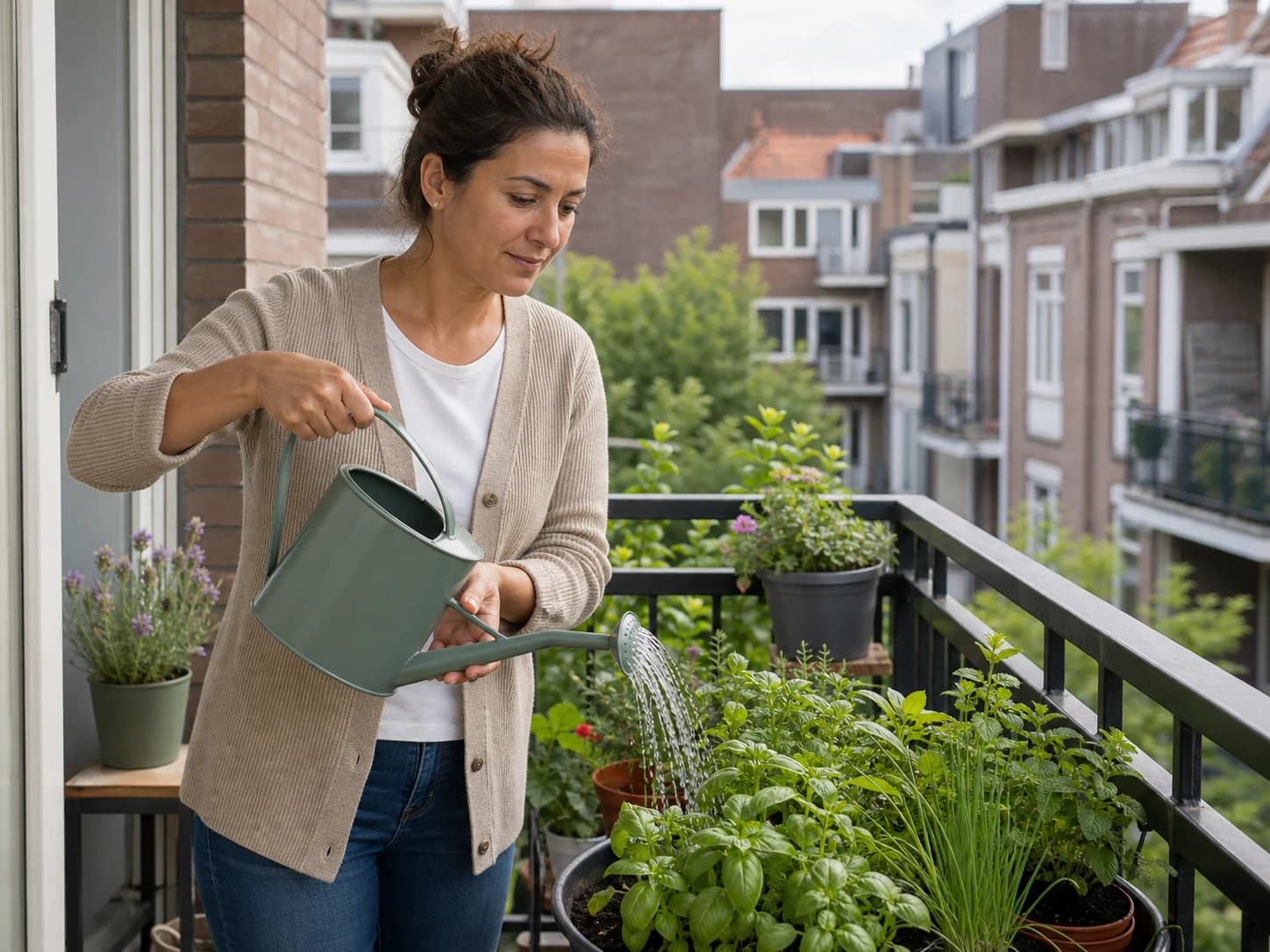
Mara verzorgt haar planten.
Mara verzorgt haar planten. Vertel wat zij doet. Vertel ook wanneer u dit werk doet.
Voorbereiding: 15 seconden. Spreektijd: maximaal 60 seconden.
Answer plan
- Name the visible action.
- Add one visible place or object.
- Answer when you do this work.
Example answer
Mara geeft water aan de planten op haar balkon. Er staan veel groene planten naast haar. Ik geef mijn planten meestal op woensdag en zaterdag water. Alternatief: Zij verzorgt de planten buiten. Ik doe dat vaak in de avond, omdat het dan koeler is.
Why this answer covers the prompt
The answer names the action, adds a detail from the picture, and responds to Vertel ook (also tell). The alternative uses different words to cover the same instructions. These are example answers, not official answers or a result prediction.
What happens in the exam
DUO states that you take A2 Speaking on a computer, watch short films, answer in Dutch, and have 35 minutes. This summary practises four common prompt forms with original still images and written prompts. DUO may change the tasks.
| Prompt form | What you receive | What your answer must do |
|---|---|---|
| 1. Video question | A short film and a spoken question | Answer about yourself and cover the second instruction |
| 2. Eén plaatje (one picture) | One situation image | Describe or use visible details, then answer the extra question |
| 3. Twee plaatjes (two pictures) | Two choices | Choose one in sentence one and explain why |
| 4. Drie plaatjes (three pictures) | Three related images | Say something about every image in a logical order |
A simple answer plan
First find every instruction. Hoe vaak (how often) and wanneer (when) need a time or frequency. Waarom (why) and wat vindt u (what do you think) need a reason or opinion.
For a picture, name the person and action before adding a visible detail. For a choice, start with Ik kies plaatje ... (I choose picture ...). For three pictures, use eerst (first), daarna (then), and ten slotte (finally).
Practice
Opgave 2: Een bedankje voor de buurman
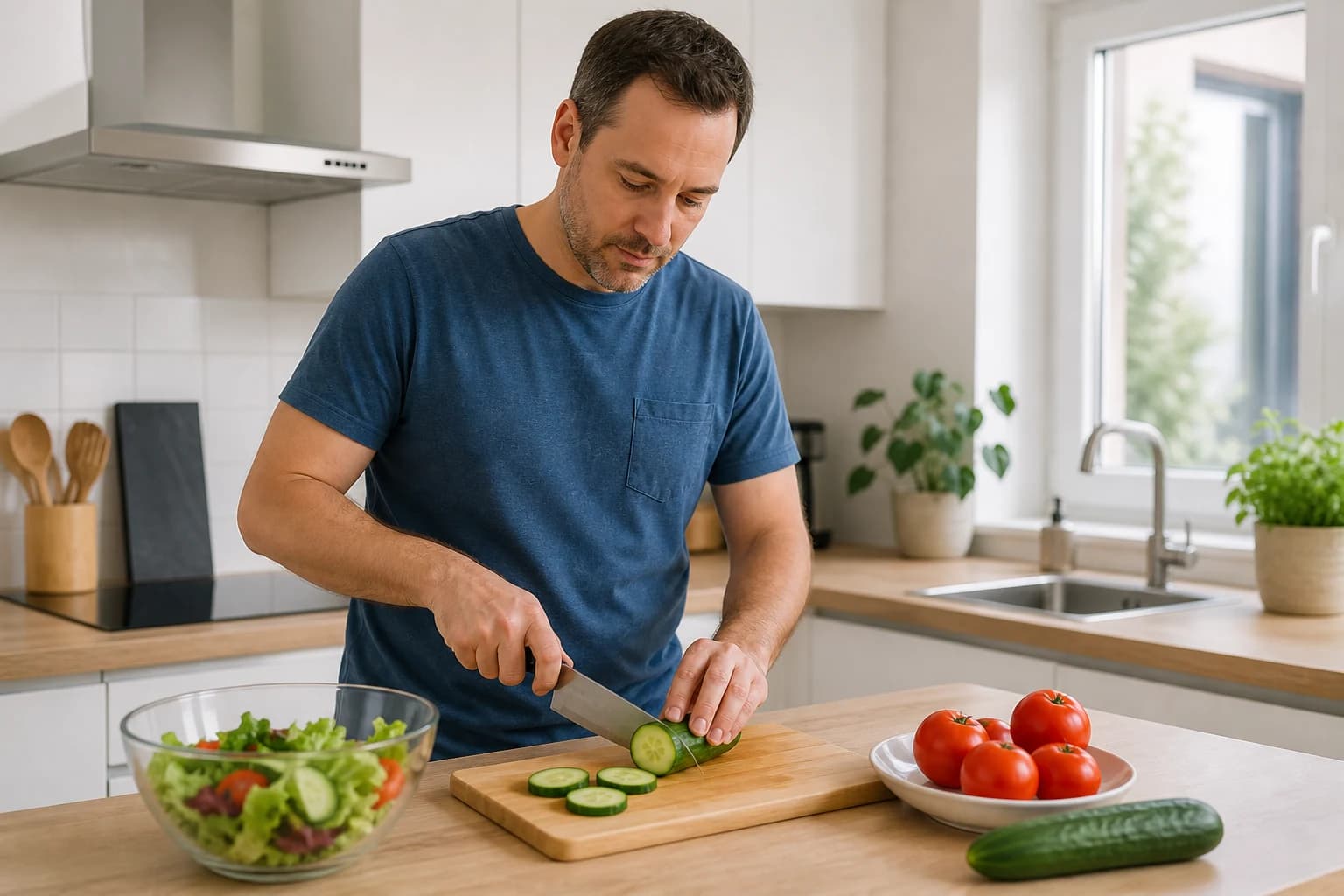
Plaatje 1

Plaatje 2
U wilt uw buurman bedanken. Welk cadeau kiest u? Vertel ook waarom.
Voorbereiding: 15 seconden. Spreektijd: maximaal 60 seconden.
Answer plan
- Choose the book or the flowers in sentence one.
- Name the recipient.
- Give one concrete reason.
Example answer
Ik kies plaatje 1. Ik geef mijn buurman een boek, omdat hij graag leest. Op de kaart schrijf ik dat ik blij ben met zijn hulp. Alternatief: Ik kies de bloemen. Ze zijn vrolijk en mijn buurman kan ze op tafel zetten.
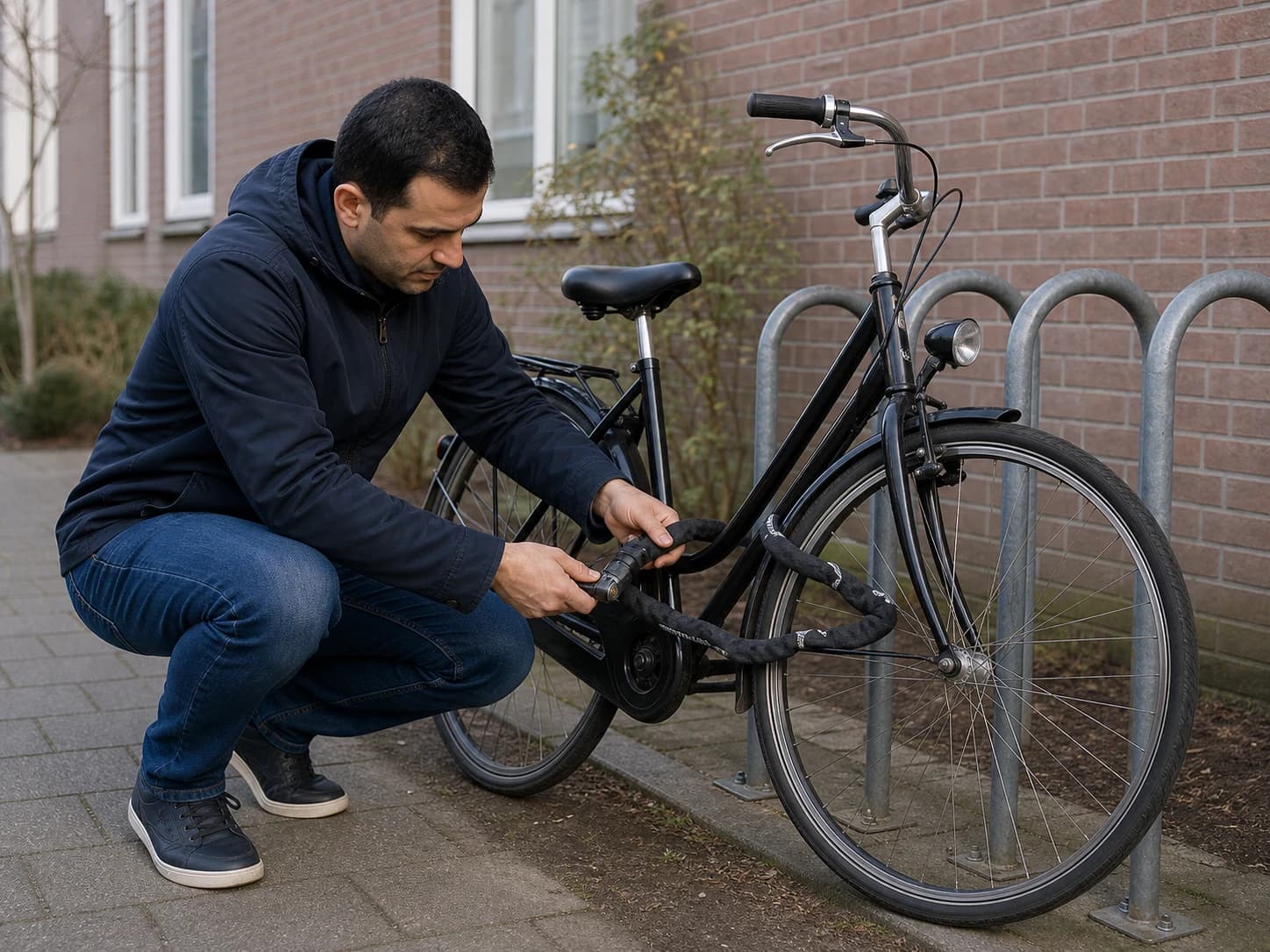
Opgave 3: Nordin maakt zijn fiets klaar
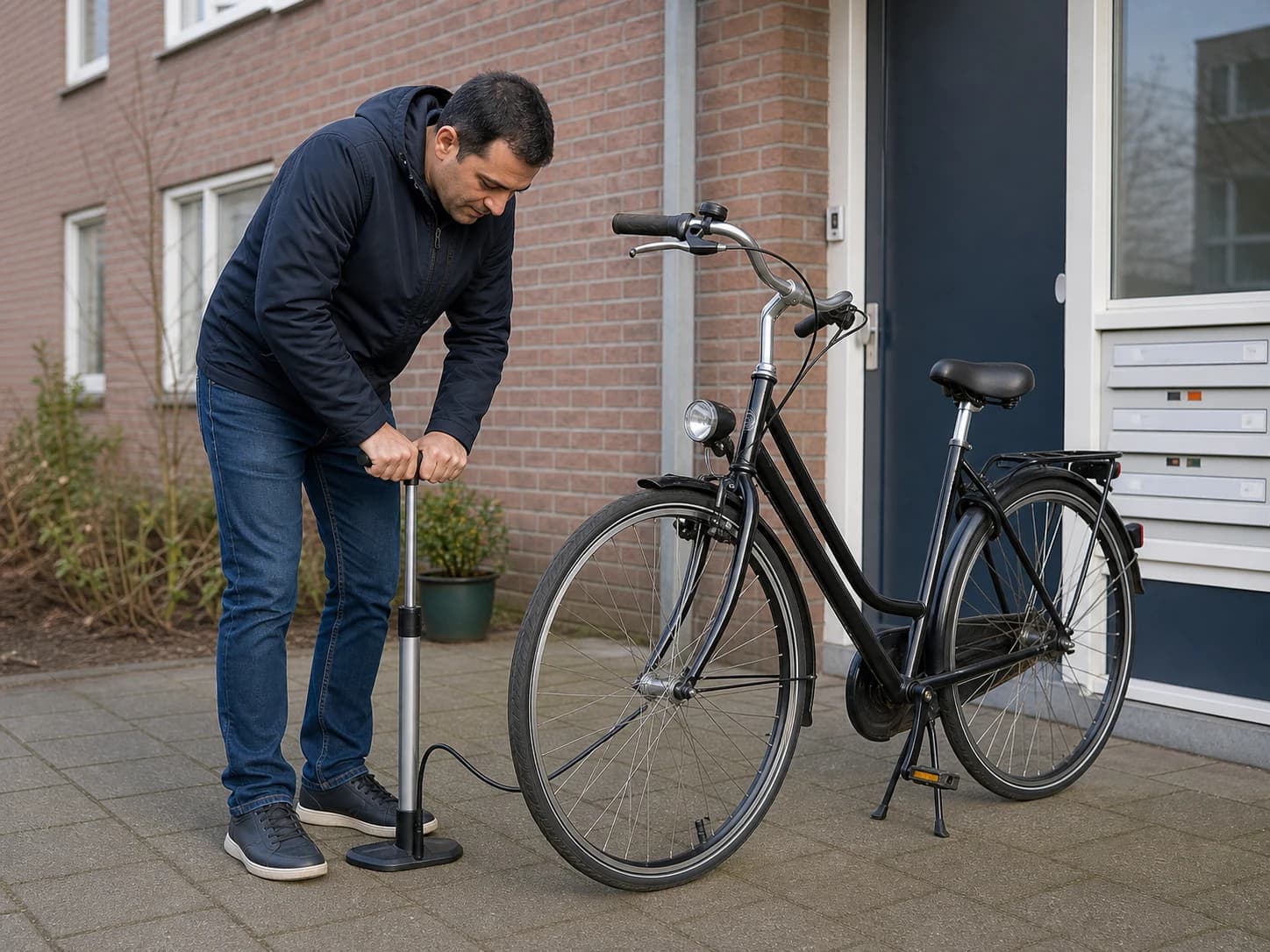
Plaatje 1
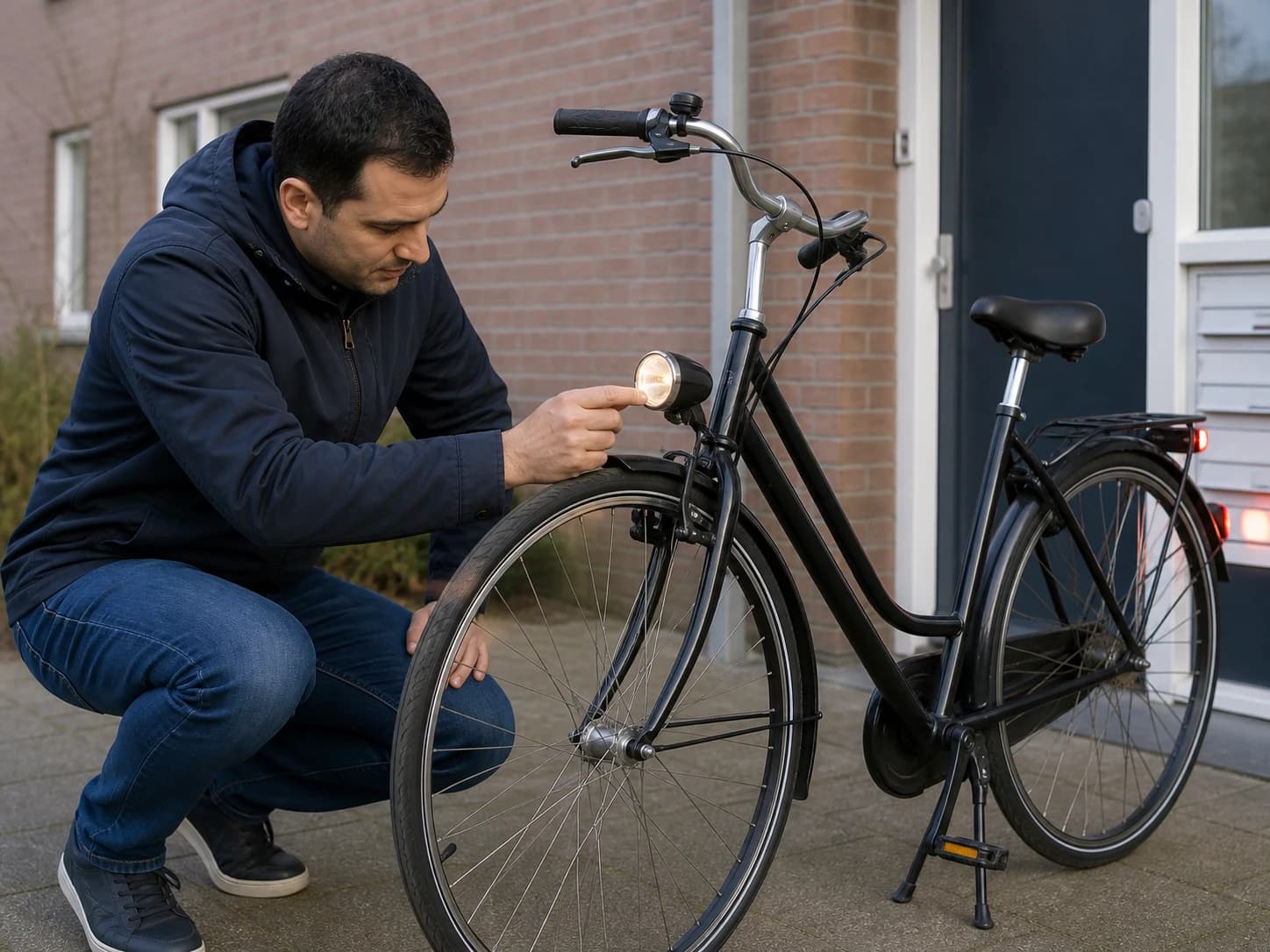
Plaatje 2
Plaatje 3
Nordin maakt zijn fiets klaar. Vertel wat hij doet. Vertel iets over alle plaatjes.
Voorbereiding: 15 seconden. Spreektijd: maximaal 60 seconden.
Answer plan
- Use one sentence for each picture.
- Keep the visible order.
- Use eerst, daarna, and ten slotte.
Example answer
Eerst pompt Nordin de band van zijn fiets op. Daarna controleert hij de lampen. Ten slotte zet hij de fiets bij een rek en doet hij hem op slot. Alternatief: Nordin maakt zijn fiets veilig. Hij geeft de band lucht, kijkt naar de lampen en sluit de fiets daarna goed af.
Timed practice
DUO gives 35 minutes for the whole exam. The 15-second planning step below belongs to this practice. Use DUO's online practice to experience the current computer format.
Prepare for 15 seconds. Find each instruction and write two or three cue words. Speak for 25 to 50 seconds: answer first, cover the extra instruction, add one useful detail, and stop.
A small mistake does not require a full restart. Say Sorry, ik bedoel ... (Sorry, I mean ...), correct the word, and continue.
How speaking is assessed
DUO's published Beoordelingsmodel Spreken A2 (A2 Speaking assessment model) uses six categories. The point range differs by category. The six maximums add to 12 possible points for one response.
| Published category | Points | What the range describes |
|---|---|---|
| Adequaatheid/begrijpelijkheid (answer fit and understandability) | 0-3 | From a missing, unintelligible, or off-question response to a clear and excellent answer |
| Woordgebruik (word use) | 0-2 | From repeating prompt words or using words incorrectly to varied, mostly correct word use |
| Grammatica (grammar) | 0-2 | From many grammatical errors to few or no grammatical errors |
| Vloeiendheid (fluency) | 0-2 | From many long pauses and restarts to fluent speech, with pauses mainly in longer answers |
| Coherentie (coherence) | 0-1 | Whether ideas connect, for example with en, maar, want, omdat, or clear pronouns |
| Uitspraak (pronunciation) | 0-2 | From speech that takes effort for a trained listener to speech an untrained listener can understand despite an accent |
Use these categories to notice what to practise. The example answers in this summary do not receive official points and cannot predict your exam result.
Fix one problem at a time
If you answer only the first question, circle Vertel ook and use it as your second cue. If an opinion is missing, add Ik vind ... want ... (I think ... because ...).
If you describe both choices without deciding, begin with Ik kies plaatje ... . If you skip one of three pictures, point to each picture while you say eerst, daarna, and ten slotte.
If one sentence is too short, add a place, time, person, reason, or visible object. If a mistake stops you, correct one word and continue.
Before you record
- I answered every instruction in the Dutch prompt.
- I used visible details instead of inventing a different situation.
- I chose one option before giving reasons.
- I covered all three pictures in order when the task required it.
- I used short linking words such as en, maar, want, omdat, eerst, and daarna.
- I corrected one word and continued instead of restarting the whole answer.
- I used DUO's six categories to choose one thing to practise next.
- I used DUO's current online practice to check the computer experience.
Edition 1.1 - 23 August 2026. Source check: DUO's language-exam page, practice page, Wi2021 assessment-model hub, and Beoordelingsmodel Spreken A2 on 23 August 2026. Check the official links above for later changes.
Practise this skill in the app
Download the PDF, then jump into interactive practice for grading and feedback.