
Bulunduğun ortamda ne beklendiğini sor
Hollanda'ya yeni geldiğinde ziyaret saatini önceden kararlaştır. Ortak masrafların nasıl paylaşılacağını sor. Selamlaşırken ev sahibini izle ve kendi tercihini söyle. Alışkanlıklar aileye, arkadaş grubuna, bölgeye, kuşağa ve iş yerine göre değişir. Bir ziyaret, doğum günü ikramı veya iş etkinliği hakkında emin değilsen ev sahibine, öğretmene ya da iş arkadaşına ne beklediklerini sor.
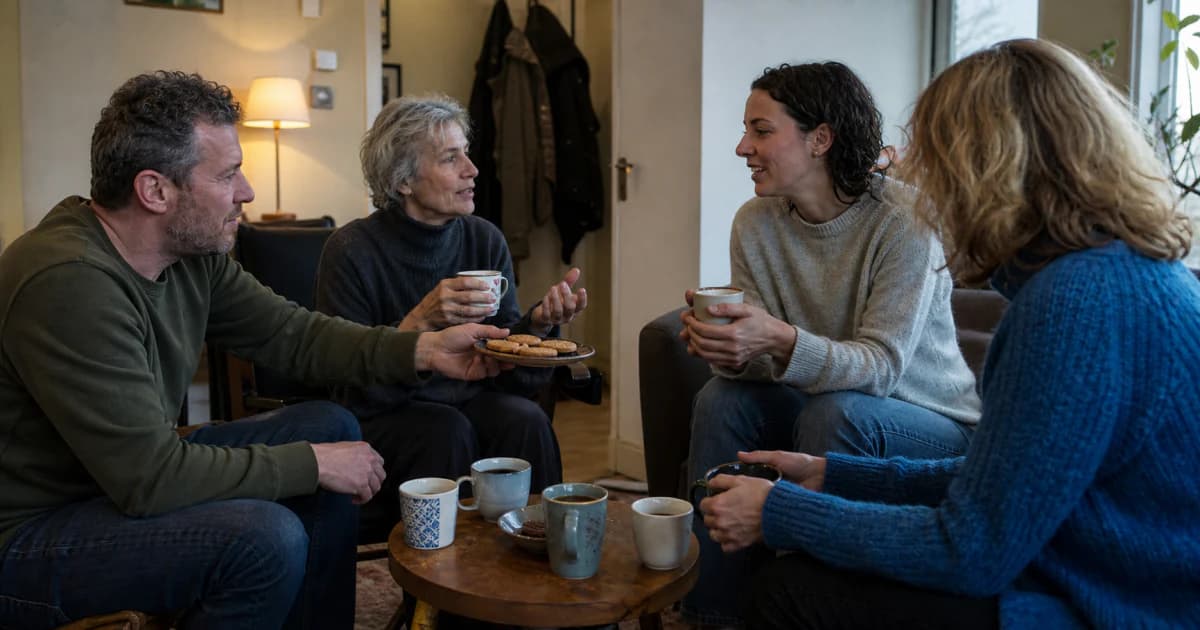
Sosyal alışkanlıklar sosyal gruba, bölgeye, kuşağa ve sosyal ya da ekonomik koşullara göre değişebilir. Resmî KNM (Kennis van de Nederlandse Maatschappij, Hollanda toplumu bilgisi) öğrenme hedefleri (Harici site, yeni sekmede açılır) bu konuyu omgangsvormen, waarden en normen (sosyal davranış biçimleri, değerler ve normlar) başlığı altında ele alır. Amaç, her durumda neyin geçerli olduğunu öğrenmektir. Sınavın kapsamı için KNM konuları makalesine bak.
Önce ortamın beklentilerini öğren
Yeni bir aileyle, grupla, ekiple veya okulla tanıştığında aşağıdaki noktaları kontrol et. Tablodaki alışkanlıklar birer örnektir. Bulunduğun yerde ne yapıldığını sor.
Geniş tabloları yatay olarak kaydırabilirsin.
| Durum | Karşılaşabileceğin alışkanlık | Ne yapabilirsin? |
|---|---|---|
| Ziyaret | Tarih ve saatin önceden kararlaştırılması | Başlangıç saatini doğrula. Davette yemek olup olmadığını ve belirli bir bitiş saati bulunup bulunmadığını sor. |
| Doğum günü | Akrabaları tebrik etme, daire şeklinde oturma veya farklı selamlaşma biçimleri | Ev sahibini ve doğum günü olan kişiyi selamla. Onların nasıl davrandığını izle. Sarılmadan veya öpmeden önce sor. |
| Ortak hesap | Bir kişinin ödeyip betaalverzoek (ödeme talebi) göndermesi | Payını doğrula. Alıcıyı ve tutarı kontrol et. Ne zaman ödeme beklendiğini sor. |
| İş etkinliği | borrel (içecekler eşliğinde gayriresmî buluşma), doğrudan geri bildirim veya kısa cevap | Ekibin genelde ne yaptığını sor. Konuşanın hangi işi veya son tarihi kastettiğini öğren. |
| Okulda doğum günü | traktatie (doğum günü ikramı) veya yiyeceksiz kutlama | Bir şey satın almadan önce okulun kurallarını ve alerjileri kontrol et. |
Ziyaret ve doğum günü planını netleştir
Ziyaret saatini ve davetin kapsamını konuş
KNM öğrenme hedefleri, birçok kişinin önceden randevulaşmaya, zamanında gelmeye ve zamanında iptal etmeye önem verdiğini belirtir. Kesin bir saat kararlaştır. Geç kalacaksan veya gelemeyeceksen mesaj gönder. Ne kadar önceden plan yapılacağı ve kısa bir gecikmenin sorun olup olmayacağı, aranızdaki ilişkiye ve buluşmanın türüne bağlıdır. Karşındaki kişiye hangi saatin uygun olduğunu sor.
Kahve davetinde yemek olup olmadığı veya ziyaretin ne zaman biteceği belli olmayabilir. “Gelmeden önce yemek yemeli miyim?” ya da “Saat kaça kadar kalmam senin için uygun?” diye sor. Davet eden sensen kahve, öğle yemeği veya akşam yemeği sunacağını belirt. Beslenmeyle ilgili ihtiyaçları da sor.
Habersiz uğramaya alışkınsan, bu ziyaret için önce mesaj atıp uygun bir saat sor.
Doğum günü olan kişiyi selamla, sonra ev sahibini izle
Bazı doğum günü ziyaretlerinde konuklar, doğum günü olan kişinin yanı sıra akrabalarını veya diğer konukları da tebrik eder. Herkes daire şeklinde oturabilir. The Hague International Centre (Lahey Uluslararası Merkezi) tarafından hazırlanan sosyal alışkanlıklar rehberi (Harici site, yeni sekmede açılır) bu örnekleri anlatır. Başka evlerde farklı alışkanlıklar vardır. Önce ev sahibini ve doğum günü olan kişiyi selamla, sonra onların nasıl davrandığını izle. Biri sarılmak veya yanaktan öpmek isteyebilir. El sallamayı veya el sıkışmayı tercih ediyorsan söyle. Karşındaki kişinin tercihi belli değilse fiziksel temastan önce sor.
Okulda ve işte doğum günü ikramları da değişir. Voedingscentrum (Hollanda Beslenme Merkezi) (Harici site, yeni sekmede açılır), okulların yiyeceklerle ilgili bir politikası olabileceğini belirtir. Bazıları ikram olmadan kutlama yapar. Yiyecek getirmeden önce öğretmene veya ekibe sor. Kuralları, alerjileri, beslenme tercihlerini, dinî beslenme kurallarını ve maliyeti kontrol et. Hollanda okul sistemi rehberi, okulun kendi kurallarını nerede bulacağını açıklar.
Masraf paylaşımını konuş, doğrudan cevapları netleştir
Restoranda herkes kendi hesabını ödeyebilir. Bir kişi tüm hesabı ödeyip daha sonra ödeme bağlantıları da gönderebilir. Sipariş vermeden önce veya hemen sonra grupla nasıl ödeme yapacağınızı konuş. “Ayrı ayrı mı ödüyoruz?” diye sor. Ödeme talebi gelirse göndereni ve tutarı kontrol et. Hangi masraf için gönderildiğini doğrula. Kararlaştırdığınız tarihe kadar öde. Ödeme tarihi belirlemediysen gönderen kişiye ne zaman ödeme beklediğini sor veya ne zaman ödeyebileceğini söyle.
Davet edenin hesabı ödediği bir ortama alışkınsan, bu buluşmada da öyle olacağını varsayma. Sipariş vermeden önce masrafın nasıl paylaşılacağını sor.
Kısa ya da doğrudan bir cevabın anlamını sor
KNM hedeflerine göre Hollanda’da birçok kişi kendini doğrudan ifade edebilir. Yine de konuşanın tonu, görevi ve konuşmanın geçtiği durum önemlidir. Kısa bir “hayır” tarafsız da olabilir, sert de gelebilir. İşte neyin değişmesi gerektiğini ve bunu kimin yapacağını sor. Son tarihi doğrula. Saygısız bulduğun ifadeye itiraz edebilirsin. Örneğin: “Geri bildirimi anlıyorum ama bu ifadeyi fazla sert buldum.”
İnsanların isteklerini dolaylı söylediği bir ortama alışkınsan, kısa cevabı yorumlamak yerine hangi işin ne zamana kadar yapılacağını sor.
Komşu gürültüsünü güvenli biçimde çöz
Komşu gürültüsüyle ilgili olarak kira sözleşmeni, bina kurallarını ve gemeente (belediye) bilgilerini kontrol et. Yerel sessizlik saatlerini ve şikâyet yollarını öğren. Parti veya gürültülü bir çalışma öncesinde komşularına tarihi, beklenen bitiş saatini ve sana nasıl ulaşacaklarını söyle. Biriyle konuşmak seni tehlikeye atacaksa aşağıdaki hizmetlerden birine başvur.
Yakın komşularına kendini tanıtabilirsin.
Süren bir rahatsızlıkta Rijksoverheid (Hollanda hükûmeti) komşu şikâyeti önerilerini (Harici site, yeni sekmede açılır) izle. İlk adımı yalnızca komşuyla konuşman güvenliyse uygula.
- Komşunla neyin değişmesi gerektiğini konuşup anlaşmaya çalış. Örneğin yüksek sesli müziğin kaçta duracağını kararlaştır.
- Anlaşma işe yaramazsa ciddi rahatsızlık için ev sahibinden veya konut kuruluşundan yardım iste. Dairen sana aitse vereniging van eigenaars (VvE, kat malikleri birliği) ile görüş.
- Rahatsızlık sürerse gemeente, buurtbemiddeling (komşuluk arabuluculuğu) veya polisle iletişime geç.
Acil tehlike veya devam eden suç için 112'yi ara (Harici site, yeni sekmede açılır). Acil olmayan polis yardımı için 0900-8844'ü ara.
Tatil tarihlerini ve izin durumunu kontrol et
Resmî tatilde izinli olup olmadığını collectieve arbeidsovereenkomst (CAO, toplu iş sözleşmesi) veya iş sözleşmen belirler. Rijksoverheid’ın resmî tatil listesi (Harici site, yeni sekmede açılır), otomatik bir yasal izin hakkı olmadığını açıklar. Sözleşmeni ve vardiya çizelgeni kontrol et.
Geniş tabloları yatay olarak kaydırabilirsin.
| Gün | Resmî tatil mi? | Ne yapmalısın? |
|---|---|---|
| Koningsdag (Kral Günü), normalde 27 Nisan | Resmî tatil | Belediye etkinliklerini, ulaşım değişikliklerini ve vrijmarkt (sokak pazarı) kurallarını kontrol et. Katılmak isteğe bağlıdır. |
| Dodenherdenking (Anma Günü), 4 Mayıs | Resmî tatil değil | Ulusal ve yerel törenlerde saat 20.00'de iki dakika sessizlik olur. Yakındaysan veya katılıyorsan sessiz ol. |
| Bevrijdingsdag (Kurtuluş Günü), 5 Mayıs | Resmî tatil | İzin için CAO veya iş sözleşmeni, yerel etkinlikler için belediyenin bilgilerini kontrol et. |
| Pakjesavond (hediye akşamı), 5 Aralık, Sinterklaas (Hollanda'nın Aziz Nikola kutlaması) döneminde | Resmî tatil değil | Aile ve okul alışkanlıkları değişir. Hediye, yiyecek ve programı tahmin etmek yerine sor. |
Koningsdag'ın tarihi ve kraliyet ziyaretleri (Harici site, yeni sekmede açılır) belirli bir düzene göre planlanır. Koningsdag normalde 27 Nisan'dadır. Ayın 27'si pazara denk gelirse kutlamalar 26 Nisan'a alınır. Kraliyet ailesi bir belediyeyi ziyaret eder. Seyahat etmeden veya bir şey satmadan önce belediyenin güncel etkinliklerini, yol kapanışlarını ve pazar kurallarını kontrol et. Partilere katılmak, sokak pazarlarına gitmek veya turuncu giymek senin seçimindir.
4 Mayıs'ta ulusal ve yerel anma törenlerinde saat 20.00'de iki dakika sessizlik (Harici site, yeni sekmede açılır) yapılır. Bir törenin yakınındaysan konuşmayı bırak ve görevlilerin yönlendirmesine uy.
5 Mayıs'taki Bevrijdingsdag kutlamaları (Harici site, yeni sekmede açılır) özgürlük, demokrasi ve insan haklarına odaklanır.
Bazı aileler 5 Aralık civarında Sinterklaas'ı geliş töreni, ayakkabı bırakma, hediyeler veya şiirlerle kutlar. The Hague International Centre'ın Sinterklaas örnekleri (Harici site, yeni sekmede açılır) bu gelenekleri anlatır. Başka aileler daha azını yapar, farklı kutlar veya katılmaz. Ev sahibine ne planladığını sor. Okulun bu günü kutluyorsa etkinliklerini de öğren. İş ve okul programı için sözleşmeni, vardiya çizelgeni veya okul takvimini kontrol et. 5 Aralık resmî tatil değildir.
Ekibinin nasıl çalıştığını sor
Çalışma saatleri, iletişim ve davranış kurallarını iş yerin belirler. Yöneticiye veya bir iş arkadaşına ilk adla hitap edilip edilmediğini sor. Öğle arasının süresini, geri bildirim tarzını ve sosyal etkinlikleri de öğren. Bir borrel, iş arkadaşlarınla tanışmana yardımcı olabilir. Etkinliğin isteğe bağlı mı yoksa işin bir parçası mı olduğunu öğren. Alkolsüz içecek tercih ediyorsan belirt. Ortam rahat görünse de iş yerinin davranış kurallarına uy.
Toplantı planlamadan önce iş arkadaşlarının hangi günlerde çalıştığını kontrol et. Centraal Bureau voor de Statistiek (CBS, Hollanda İstatistik Kurumu) (Harici site, yeni sekmede açılır), 2026'nın ikinci çeyreğinde Hollanda'da yaşayan, ücretli bir işte çalışan 15–74 yaş arası 9,8 milyon kişinin 4,8 milyonunun yarı zamanlı çalıştığını bildirdi. İş arkadaşının izinli günleri değişebilir. Cuma günü çalışmadığını varsaymak yerine sor. Mesajlara ne zaman cevap beklendiğini ve toplantı için uygun saatleri de öğren. Çalışma koşulları için Hollanda iş sözleşmeleri rehberine bak.
Konuşma dilini sor, ortak alanı paylaş
Resmî, tıbbi veya hukuki bir görüşmeden önce konuşma dilini sor: “İngilizce konuşabilir miyiz?” Hollandaca pratik yapmak istiyorsan “Ik wil graag Nederlands oefenen” (Hollandaca pratik yapmak istiyorum) de. İngilizceye geçen kişi yardım etmeye çalışıyor olabilir. Hollandaca devam etmeyi isteyebilirsin. Doğru iletişim kurmak veya hizmete erişmek için tercüman gerekiyorsa ayarla. İlgili kuruma bunun nasıl yapılacağını sor.
Kamusal alanda işaret ve çizgilere uy. Yayaların yolu kullanma kurallarına (Harici site, yeni sekmede açılır) göre kaldırım veya yaya yolu varsa onu kullanman gerekir. İkisi de yoksa ve bisiklet yolu varsa onu kullan. Bisiklet yolundan karşıya geçmeden önce iki yöne bak. Bisiklet rehberi, işaretleri ve kuralları açıklar.
Trene, tramvaya veya metroya binmeden önce inen yolculara yer ver. NS (Hollanda Demiryolları) biniş önerileri (Harici site, yeni sekmede açılır) bunu trenler için belirtir. HTM (Lahey tramvay ve otobüs işletmesi) yolculuk önerileri (Harici site, yeni sekmede açılır) aynı uygulamayı Lahey bölgesindeki tramvay ve otobüsler için önerir. Toplu taşıma rehberi, ödeme ve yolculuk bilgilerini açıklar.
Yanlış anlaşılmayı netleştir
Plan, selamlaşma, hesap veya cevap belirsizse o ayrıntıyı sor. Aşağıdaki cümleleri kendi durumuna uyarlayabilirsin.
Geniş tabloları yatay olarak kaydırabilirsin.
| Durum | Ne söyleyebilir veya yapabilirsin? | Nasıl yardımcı olur? |
|---|---|---|
| Önceden sormadan geldin | “Kusura bakma, önce sormalıydım. Ne zaman uygun olur?” | Karşındaki kişinin uygun bir saat önermesini sağlar. |
| Nasıl selamlaşacağın belli değil | El salla veya elini uzatıp “Burada nasıl selamlaşılıyor?” diye sor. | Herkese fiziksel temas konusunda seçim sunar. |
| Hesap belli değil | “Ne kadar borçluyum ve ne zamana kadar ödememi istersin?” | Hem tutarı hem son tarihi doğrular. |
| Geri bildirim sert geldi | Görevi doğrula. Bir örnek iste. Kullanılan sözler sınırını aştıysa söyle. | Yararlı bilgiyi kabul edilemez tondan ayırır. |
| Geç kalacaksın | Yeni varış saatini gönder. Başka bir saatin daha uygun olup olmadığını sor. | Karşındaki kişiye planı değiştirme seçeneği verir. |
Ziyaret veya doğum günü için saati doğrula; yemek ve selamlaşma hakkında sor. Ortak hesapta tutarı ve ödeme tarihini netleştir. İşte görevi, son tarihi ve ekip kurallarını öğren. Yanlış anlaşılma sürerse hangi ayrıntının belirsiz olduğunu belirt ve neye ihtiyaç duyduğunu söyle.
İlgili konular için bu sayfalara bak:
- Yazar
- Yazan Inburgering.org team
- İnceleyen
- İnceleyen Kirill Svavolia
Resmi Kaynaklar
- Staatscourant (Hollanda Resmî Gazetesi) 2024, 15802: KNM öğrenme hedefleri (Harici site, yeni sekmede açılır) - Sosyal alışkanlıkların sosyal gruba, bölgeye, kuşağa ve sosyoekonomik gruba göre değişebildiğini; birçok kişinin önceden randevulaşmaya, zamanında gelmeye ve zamanında iptal etmeye önem verdiğini belirtir.
- Rijksoverheid: Hollanda'daki resmî tatiller (Harici site, yeni sekmede açılır) - 2026 ve 2027 resmî tatil tarihlerini ve resmî tatilin çalışanlara otomatik olarak yasal izin hakkı vermediğini açıklar.
- Koninklijk Huis (Hollanda Kraliyet Hanedanı): Koningsdag (Harici site, yeni sekmede açılır) - Koningsdag'ın normalde 27 Nisan'da olduğunu, 27'si pazara denk gelirse 26 Nisan'a alındığını ve kraliyet ailesinin bir belediyeyi ziyaret ettiğini açıklar.
- The Hague International Centre: Important dates and holidays in 2026 (Harici site, yeni sekmede açılır) - Bazı ailelerin 5 Aralık civarında uyguladığı Sinterklaas geleneklerine örnekler verir: geliş töreni, ayakkabı, hediyeler ve şiirler.
- Nationaal Comité 4 en 5 mei (4 ve 5 Mayıs Ulusal Komitesi): 4 Mayıs (Harici site, yeni sekmede açılır) - 4 Mayıs'taki ulusal ve yerel anma törenlerini ve saat 20.00'deki iki dakikalık sessizliği açıklar.
- Rijksoverheid: 5 Mayıs Bevrijdingsdag (Harici site, yeni sekmede açılır) - Bevrijdingsdag'ın her zaman 5 Mayıs'ta olduğunu ve özgürlük, demokrasi ve insan haklarına odaklandığını açıklar.
- Rijksoverheid: komşudan kaynaklanan rahatsızlıkta ne yapmalıyım? (Harici site, yeni sekmede açılır) - Komşuyla anlaşmayı denemekten ev sahibine, kat malikleri birliğine, belediyeye, arabulucuya veya polise başvurmaya uzanan yolu açıklar.
- Rijksoverheid: 112'yi ne zaman arayabilirim? (Harici site, yeni sekmede açılır) - 112'nin acil tehlike ve devam eden suçlar için, 0900-8844'ün ise acil olmayan polis yardımı için olduğunu açıklar.
- Centraal Bureau voor de Statistiek: çalışan nüfus (Harici site, yeni sekmede açılır) - 2026'nın ikinci çeyreğinde Hollanda'da yaşayan, ücretli bir işte çalışan 15–74 yaş arası 9,8 milyon kişinin 4,8 milyonunun yarı zamanlı çalıştığını bildirir.
- Voedingscentrum: ilkokulda doğum günü ikramından kutlama politikasına (Harici site, yeni sekmede açılır) - Okulların doğum günü yiyecekleri için kendi politikasını belirleyebildiğini ve bazılarının ikram yerine yiyeceksiz kutlama yaptığını açıklar.
- The Hague International Centre: Dutch way of living (Harici site, yeni sekmede açılır) - Doğum günlerinde daire şeklinde oturmaya, tebrik etmeye ve selamlaşmaya örnekler verir; borrel sözcüğünü ve konuşmaya Hollandaca devam etmeyi istemeyi açıklar.
- Staatscourant 2025, 1667: yayaların yolu kullanma kuralları (Harici site, yeni sekmede açılır) - Trafik kurallarının 4. maddesindeki kaldırım ve yaya yolu kuralını, ikisi de yoksa bisiklet yolunu kullanma hükmünü aktarır.
- NS: inen yolculara yer ver (Harici site, yeni sekmede açılır) - Trene binmeden önce yolcuların inmesini beklemeyi önerir.
- HTM: ilk kez tramvay veya otobüsle seyahat etmek (Harici site, yeni sekmede açılır) - Lahey bölgesinde tramvay veya otobüse binmeden önce yolcuların inmesini beklemeyi önerir.
- Reglement verkeersregels en verkeerstekens 1990 (RVV 1990, trafik kuralları): 4. madde (kanun metni dosyası) (Harici site, yeni sekmede açılır) - Güncel kaldırım ve yaya yolu kuralını, ikisi de yoksa bisiklet yolunu kullanma hükmünü içerir.
- Nationaal Comité 4 en 5 mei: Dam Meydanı ulusal anma töreni (Harici site, yeni sekmede açılır) - Anma töreninin saat 20.00'deki iki dakikalık sessizlikten önce başladığını açıklar.
- CBS: işgücü nüfusunun tanımı (Harici site, yeni sekmede açılır) - İşgücü verilerinin kurumlarda yaşayanlar hariç, Hollanda’da yaşayan 15–74 yaş arası kişileri kapsadığını açıklar.