
Seu filho pode começar a escola primária aos 4 anos
Seu filho pode começar a basisschool (escola primária) aos 4 anos. A frequência se torna obrigatória no mês seguinte ao quinto aniversário. Peça uma vaga a partir dos 3 anos, pelo menos 10 semanas antes do início previsto. Se ele fala pouco holandês, pergunte à escola ou à gemeente (município) sobre apoio para aprender holandês ou turmas para recém-chegados. Escolas primárias e secundárias financiadas pelo governo não cobram mensalidade.
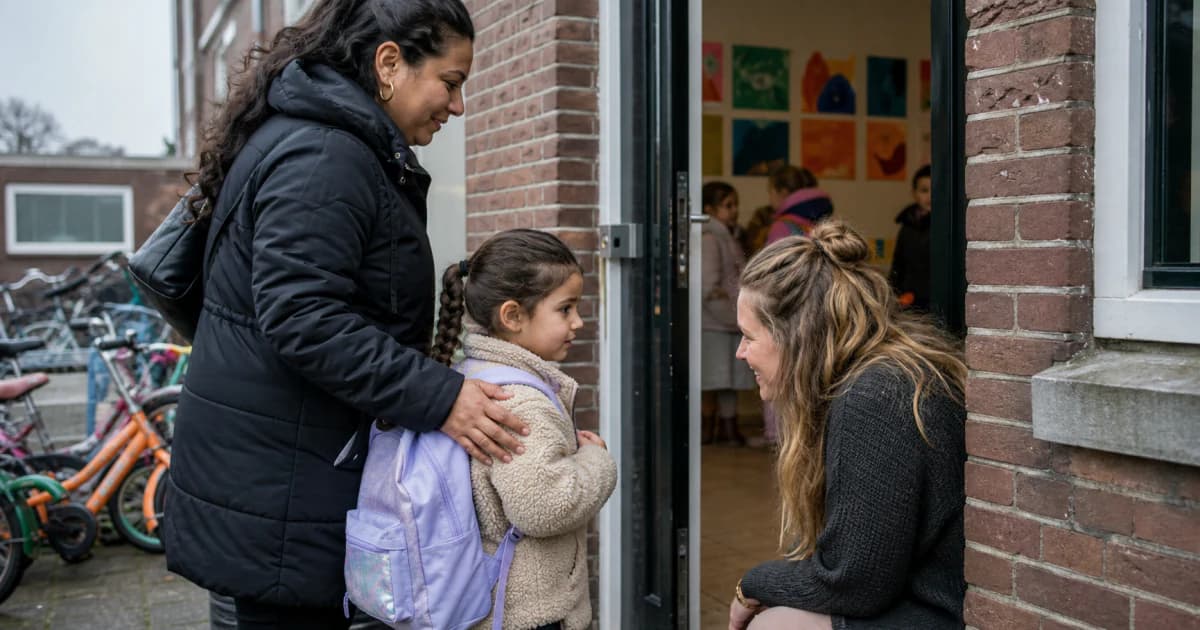
Este guia ajuda você a escolher ou trocar de escola nos Países Baixos, mesmo se o processo de residência da família ainda estiver em andamento. Antes dos 3 anos, compare escolas e regras locais de admissão. A partir dos 3 anos, solicite uma vaga por escrito e informe o apoio extra de que seu filho precisa.
Se seu filho já mora nos Países Baixos e está em idade de frequência obrigatória, fale agora com a gemeente e com escolas adequadas. Entre em contato mesmo durante as férias escolares ou enquanto o processo de residência estiver em andamento. Se ele fala pouco holandês, peça apoio para aprender holandês.
Quando seu filho deve frequentar a escola?
Leerplicht (frequência escolar obrigatória) vale para crianças que moram nos Países Baixos, qualquer que seja sua nacionalidade ou situação de residência. O Rijksoverheid (governo central dos Países Baixos) (Site externo, abre em uma nova aba) explica as regras de idade abaixo. Você deve matricular seu filho e garantir que ele frequente a escola. O ano letivo vai de 1º de agosto a 31 de julho.
Você pode rolar as tabelas largas na horizontal.
| Idade ou etapa | Regra escolar | O que você faz |
|---|---|---|
| 4 anos | A criança pode frequentar a escola primária; a maioria começa nessa idade. | Matricule antes da data de início. Pergunte se a escola oferece até 5 wendagen (dias de adaptação) a partir dos 3 anos e 10 meses. |
| A partir do primeiro dia do mês seguinte ao quinto aniversário | A leerplicht passa a valer. | Garanta que seu filho esteja matriculado e frequente a escola. |
| Até o fim do ano letivo em que a criança faz 16 anos | A frequência integral continua obrigatória, salvo se a criança já completou 12 anos letivos inteiros. Um ano pulado no primário conta. | Consulte a escola antes de qualquer ausência planejada. |
| Dos 16 aos 18 anos sem uma startkwalificatie (qualificação escolar básica) | A kwalificatieplicht (obrigação de obter uma qualificação) vale até os 18 anos ou um diploma válido: havo (ensino secundário geral avançado), vwo (ensino pré-universitário) ou mbo (ensino profissional secundário) de nível 2 ou superior. | Mantenha seu filho em um curso que permita obter essa qualificação. Confira as isenções abaixo com a escola ou a gemeente. |
Se você vem do Brasil ou de Portugal, observe a diferença: a educação obrigatória começa aos 4 anos no Brasil e aos 6 em Portugal. Nos Países Baixos, a frequência só se torna obrigatória no mês seguinte ao quinto aniversário.
A obrigação de obter uma qualificação não se aplica depois que seu filho cursou praktijkonderwijs (ensino prático). Também não se aplica a alunos que seguiram a modalidade arbeidsmarktgericht (voltada ao trabalho) ou dagbesteding (atividades diurnas) no voortgezet speciaal onderwijs (VSO, ensino secundário especial). Uma isenção formal da matrícula também pode ser possível. Pergunte à gemeente sobre esse procedimento separado.
Quando seu filho pode faltar à escola?
Avise a escola sobre doença em até 2 dias. Informe com antecedência a ausência por obrigação religiosa, como uma celebração religiosa. Para um casamento ou funeral, peça autorização prévia ao diretor. Ele decide pedidos de 2 a 10 dias letivos. O leerplichtambtenaar (agente municipal de frequência escolar) decide pedidos de mais de 10 dias. Outras licenças especiais cobrem acontecimentos fora do seu controle que não podem ocorrer em outro momento.
Se uma semana inteira de aulas deixa seu filho de 5 anos muito cansado, ele pode ficar em casa até 5 horas por semana. Avise o diretor antes. Se ele precisa de mais descanso, o diretor pode autorizar até mais 5 horas. Essa redução termina aos 6 anos.
Se você discordar da decisão sobre a licença de férias, envie uma contestação por escrito ao diretor.
Como escolher uma escola e solicitar uma vaga?
Openbare scholen (escolas públicas) e bijzondere scholen (escolas baseadas em religião, crença ou método de ensino) recebem financiamento do governo. As públicas aceitam crianças de qualquer religião ou crença. Lotação e regras locais de distribuição de vagas ainda podem valer. As bijzondere só podem impor condições de religião ou crença necessárias e adequadas para colocar sua base religiosa ou de crença em prática. Essa base deve constar nas regras de fundação. As regras de admissão devem ser claras e aplicadas de forma consistente. A exceção por distância de uma escola pública, explicada abaixo, também vale.
Montessori, Dalton e Jenaplan (métodos de ensino), assim como a vrijeschool (escola Waldorf), são abordagens de ensino. Escolas públicas e bijzondere podem usá-las. Uma particuliere school (escola particular) não recebe financiamento do governo e pode cobrar mensalidade. Faça estas quatro verificações antes de solicitar uma vaga:
- Encontre escolas próximas no Scholen op de kaart (Escolas no mapa) (Site externo, abre em uma nova aba) e veja se a gemeente usa um sistema central de inscrições.
- Visite a escola e leia a schoolgids (guia escolar) e as regras de admissão. A schoolgids também contém o ondersteuningsaanbod (oferta de apoio da escola).
- Pergunte sobre o apoio para quem aprende holandês e para crianças com deficiência ou outras necessidades de aprendizagem. Pergunte como a escola mantém as crianças seguras.
- Confira o calendário real de férias, horários diários, almoço e contribuição voluntária.
O momento de solicitar uma vaga depende da idade do seu filho, de uma mudança e das necessidades de apoio. Siga todas as linhas que se aplicam a ele.
Você pode rolar as tabelas largas na horizontal.
| Quando | Etapa da solicitação | Documento ou detalhe |
|---|---|---|
| A partir dos 3 anos | Solicite por escrito uma vaga em uma ou mais escolas primárias. | Siga o sistema municipal de preferências, se houver. Para matricular, informe o BSN (burgerservicenummer, número de serviço do cidadão) do seu filho e apresente certidão de nascimento, passaporte ou documento de identidade. Se ele não tiver BSN, peça à escola que organize um onderwijsnummer (número de educação). |
| Pelo menos 10 semanas antes do quarto aniversário | Conclua o pedido se quiser que ele comece aos 4 anos. | Peça confirmação por escrito e o cronograma de decisão da escola. |
| Ao trocar de escola | Avise a antiga e solicite uma vaga na nova. | A nova escola precisa de um bewijs van uitschrijving (comprovante de cancelamento de matrícula) emitido pela antiga há no máximo 6 meses. |
| Se houver possível necessidade de apoio extra | Descreva a necessidade no pedido escrito. | Compartilhe relatórios relevantes. O pedido escrito inicia a avaliação da escola para o passend onderwijs (educação adequada às necessidades da criança) e sua zorgplicht (dever de cuidado). |
Uma escola pode recusar a matrícula por falta de vagas ou por uma regra local de distribuição de vagas. Uma bijzondere pode aplicar condições de religião ou crença. Se não houver escola pública a uma distância razoável, ela deve aceitar seu filho mesmo que ele não cumpra essas condições. Ela não pode obrigá-lo a participar de ensino religioso ou baseado em crenças.
Uma escola não pode recusar seu filho só porque você não pagará a vrijwillige ouderbijdrage (contribuição voluntária dos responsáveis). Uma escola primária ou secundária não pode recusá-lo apenas por precisar de apoio extra. Se ela não puder oferecer esse apoio, deve oferecer uma vaga adequada em outra escola, em consulta com você. Peça a recusa por escrito. Conteste por carta ou e-mail em até 6 semanas após recebê-la. A escola deve responder em 4 semanas. Depois, você pode levar a recusa à Justiça.
Como funciona a admissão na escola primária em Amsterdã?
Amsterdã usa um sistema local de distribuição de vagas. A cidade envia um formulário de preferências perto do terceiro aniversário do seu filho. O endereço registrado dá prioridade nas 8 escolas participantes mais próximas. A cidade recomenda listar pelo menos 5 preferências.
Uma rodada central distribui as vagas. Se houver mais pedidos do que vagas, a escola pode fazer um sorteio. Pedidos atrasados só concorrem às vagas restantes. Se você mora em Amsterdã, consulte o procedimento para escolas primárias do Schoolwijzer Amsterdam (buscador de escolas de Amsterdã) (Site externo, abre em uma nova aba). Outros municípios têm regras próprias.
Qual escola pode ajudar se seu filho fala pouco holandês?
Peça à escola e à gemeente que avaliem a idade, os estudos anteriores, o nível de holandês, o apoio necessário e as vagas disponíveis para seu filho. Leve os registros escolares do país anterior. Compare a situação dele com as opções abaixo.
Você pode rolar as tabelas largas na horizontal.
| Situação da criança | Opção possível | Próxima ação |
|---|---|---|
| Idade de escola primária | Escola primária regular com aulas extras de holandês, ou nieuwkomersschool (escola para recém-chegados), taalschool (escola de língua) ou taalklas (turma de língua). | Pergunte à gemeente e às escolas próximas qual opção atende seu endereço e quando a criança pode começar. |
| De 12 a 18 anos e começando a aprender holandês | A internationale schakelklas (ISK, turma internacional de transição) prepara alunos para a escola secundária regular ou o mbo. Outras opções são uma escola secundária regular com apoio ou uma modalidade baseada nos estudos anteriores. | Use o banco de escolas da LOWAN (organização de apoio à educação de recém-chegados) (Site externo, abre em uma nova aba) e pergunte à gemeente ou à escola sobre a admissão. |
| Aluno mais velho se preparando para trabalho ou estudo profissional | Uma modalidade da ISK pode levar ao praktijkonderwijs, à escola secundária regular ou ao mbo. | Leve registros escolares do país anterior e pergunte como avaliarão o nível de destino. |
Uma modalidade da ISK também pode preparar o aluno para trabalhar ou fazer inburgering (integração cívica). Se a escola sugerir integração, consulte Quem deve fazer a integração nos Países Baixos? antes de escolher essa opção.
Uma tijdelijke nieuwkomersvoorziening (estrutura temporária de ensino para recém-chegados) é uma medida de emergência quando a região não consegue oferecer uma vaga adequada. Ela só atende recém-chegados em idade de frequência obrigatória que falam pouco holandês e nunca foram matriculados em uma escola dos Países Baixos. O aluno pode permanecer ali por no máximo 2 anos.
Toda criança que mora nos Países Baixos tem direito à educação. Pelas regras de asilo em vigor desde 12 de junho de 2026, crianças que pedem asilo devem ter acesso à escola em até 2 meses após o pedido. Fale o quanto antes com a unidade do COA (Centraal Orgaan opvang asielzoekers, agência de acolhimento de solicitantes de asilo) (Site externo, abre em uma nova aba), a gemeente e a escola. Pergunte quem cuidará da vaga.
Para outras tarefas da chegada, use a lista dos primeiros 90 dias nos Países Baixos. Para consultas de saúde infantil, use o guia do GGD (serviço regional de saúde pública) e consultatiebureau (clínica de saúde infantil).
Como a escola define o nível de ensino secundário do seu filho?
No groep 8 (último ano da escola primária), a escola dá o schooladvies (recomendação escolar) com base no desenvolvimento do seu filho ao longo de vários anos. A maioria dos alunos faz a doorstroomtoets (prova de progressão). Ela avalia língua e matemática. Não há aprovação ou reprovação nessa prova.
Após consultar os responsáveis, o conselho escolar pode isentar um aluno se uma destas condições se aplicar:
- O ontwikkelingsperspectief (plano de educação e apoio) prevê que ele seguirá a modalidade de trabalho ou atividades diurnas no VSO.
- Seu QI (quociente de inteligência) é inferior a 75.
- Ele mora nos Países Baixos há no máximo 4 anos e ainda não sabe holandês suficiente.
Um aluno isento ainda pode fazer a prova se ele e seu responsável quiserem. Na transição de 2026–2027, as etapas seguem estas datas, nesta ordem.
Você pode rolar as tabelas largas na horizontal.
| Data de 2026–2027 | O que acontece |
|---|---|
| 10 a 31 de janeiro de 2027 | A escola fornece o voorlopig schooladvies (recomendação escolar provisória). |
| 25 de janeiro a 12 de fevereiro de 2027 | O aluno faz a doorstroomtoets em 1 ou 2 meios períodos, salvo isenção. |
| Até 24 de março de 2027 | A escola fornece o definitief schooladvies (recomendação escolar final). |
| 25 a 31 de março de 2027 | É a semana central de inscrições. Em algumas regiões, você pode se inscrever antes, mas só depois que a recomendação final estiver disponível. Todos os pedidos feitos antes de 1º de abril contam como enviados juntos em 31 de março. |
| Depois do pedido | A escola secundária normalmente decide em até 6 semanas. Se adiar, deve avisar você e decidir até 9 de junho de 2027. Se circunstâncias especiais, como uma mudança, fizerem seu filho solicitar depois de 31 de março de 2027, a escola pode oferecer uma segunda oportunidade. |
Quando a escola deve elevar a recomendação?
Se o toetsadvies (recomendação da prova) for mais alto que a recomendação escolar provisória, a escola deve elevar a recomendação provisória ao nível da prova. Só pode mantê-la mais baixa se explicar por que o nível mais alto não atende ao interesse do seu filho. Se a diferença for maior que meio nível, a escola pode escolher um nível intermediário. Ela deve explicar essa decisão. Um resultado mais baixo na prova nunca reduz a recomendação provisória.
Por exemplo, uma recomendação provisória de havo e um resultado de vwo na prova normalmente levam à recomendação de vwo. A escola só pode recomendar havo ou uma combinação de havo e vwo se explicar por que isso atende ao interesse do seu filho.
O praktijkonderwijs tem uma regra própria. Um resultado combinado de praktijkonderwijs e vmbo-bb (modalidade profissional básica do ensino secundário pré-profissional) não obriga a escola a elevar sua recomendação provisória de praktijkonderwijs. Um resultado combinado de vmbo-bb e vmbo-kb (modalidade profissional para funções intermediárias), ou superior, exige a elevação. A exceção é se a escola explicar por que elevar não atende ao interesse do seu filho.
A escola secundária deve colocar seu filho pelo menos no nível da recomendação final. O praktijkonderwijs também exige uma toelaatbaarheidsverklaring (declaração de elegibilidade para admissão) do samenwerkingsverband (parceria regional de escolas). A escola não pode usar testes extras de admissão para definir o nível nem recusar por resultados baixos nas provas do primário. Um programa especial, como esporte de alto rendimento ou ensino bilíngue, pode avaliar a habilidade específica exigida. Lotação, distribuição local de vagas e condições de religião ou crença ainda podem afetar a admissão. A exceção por distância da escola pública também vale.
A Inspectie van het Onderwijs (Inspeção da Educação) (Site externo, abre em uma nova aba) registra preocupações para suas inspeções nas escolas. Ela não decide reclamações individuais.
Aonde levam as modalidades do ensino secundário?
As quatro modalidades têm durações diferentes e preparam seu filho para diferentes estudos ou trabalhos.
Você pode rolar as tabelas largas na horizontal.
| Modalidade | Duração comum | Principal destino |
|---|---|---|
| Praktijkonderwijs | Normalmente 5 anos | Trabalho ou, para alguns alunos, mbo. |
| Vmbo (ensino secundário pré-profissional) | 4 anos | Mbo. O vmbo tem 4 percursos, do mais prático ao teórico. |
| Havo | 5 anos | Hbo (ensino superior profissional). |
| Vwo | 6 anos | Universidade. |
Para o praktijkonderwijs, pergunte à escola como ela solicita a toelaatbaarheidsverklaring com o samenwerkingsverband. Só a recomendação escolar não garante a admissão.
Um diploma vmbo-g/t (modalidade mista ou teórica), com uma disciplina de formação geral a mais no exame, além das obrigatórias, dá ao seu filho o direito legal de entrar no havo 4 sem condições extras de notas. Disciplinas profissionais ou específicas da escola não contam. Sem uma disciplina extra que cumpra a regra, a escola havo pode aplicar suas próprias condições. Um diploma havo dá ao seu filho o direito legal de entrar no vwo 5 sem condições extras de admissão.
Antes da transferência, pergunte à nova escola sobre perfis de disciplinas, matérias que faltam e isenções.
Como organizar apoio extra e transporte escolar?
Informe o apoio extra necessário ao solicitar uma vaga por escrito. Pela zorgplicht, a escola deve avaliar o que pode oferecer. Ela tem 6 semanas para decidir e pode prorrogar esse prazo uma vez, por no máximo 4 semanas.
Se passarem 10 semanas sem decisão e seu filho não estiver matriculado em outra escola, a escola à qual você solicitou a vaga deve oferecer uma vaga temporária. Se ela não puder dar o apoio necessário, deve organizar com você uma vaga em escola regular ou especial adequada.
Peça por escrito a oferta de apoio e qualquer ontwikkelingsperspectief. Discuta divergências sobre admissão, vaga ou apoio com a escola e o samenwerkingsverband. Um onderwijsconsulent (consultor educacional) (Site externo, abre em uma nova aba) pode ajudar. Depois, você pode procurar a Geschillencommissie passend onderwijs (comissão de disputas sobre educação adequada) (Site externo, abre em uma nova aba) para três tipos de disputa: admissão de aluno que precisa de apoio extra, exclusão da escola ou elaboração ou revisão do ontwikkelingsperspectief.
Leerlingenvervoer (transporte escolar) depende de uma decisão separada da gemeente. Pode valer se doença, deficiência ou dificuldades de comportamento impedirem a criança de viajar sozinha. Em alguns casos, a distância da escola adequada também dá direito ao transporte. No VSO, ele só vale se uma deficiência impedir a viagem independente. Pergunte à gemeente sobre as condições e solicite novamente a cada ano letivo.
Quais custos escolares você precisa pagar?
Escolas primárias e secundárias financiadas pelo governo não cobram mensalidade e fornecem gratuitamente a maior parte dos materiais de estudo. Ainda pode haver custos para itens pessoais, cuidados e atividades extras voluntárias.
Você pode rolar as tabelas largas na horizontal.
| Custo | O que a regra significa |
|---|---|
| Mensalidade | Escolas primárias e secundárias financiadas pelo governo não cobram mensalidade. Particulares podem cobrar porque não recebem financiamento público. |
| Materiais do ensino secundário | A escola fornece gratuitamente a maioria dos livros, cadernos de atividades e licenças digitais. Você normalmente compra itens como atlas, dicionário, calculadora e roupa para educação física. |
| Notebook ou tablet | A escola pode pedir que você compre um. Se você não puder ou não quiser pagar, ela deve oferecer uma alternativa completa, como um notebook emprestado. |
| Vrijwillige ouderbijdrage | O pagamento é voluntário. Você não precisa explicar por que não paga. Seu filho pode participar de toda atividade extra organizada pela escola. A escola não pode dar uma atividade substituta. A schoolgids informa valor, uso, caráter voluntário e direito de participar. O medezeggenschapsraad (conselho de participação) aprova valor e uso. |
| Almoço e buitenschoolse opvang (BSO, cuidados fora do horário escolar) | A escola primária pode cobrar supervisão durante o almoço. A BSO é um serviço pago antes ou depois das aulas e em dias livres ou férias. A kinderopvangtoeslag (benefício para cuidados infantis) pode cobrir parte do custo. |
Uma atividade extra prevista pode mudar para todos ou ser cancelada se a escola não conseguir financiá-la. Por exemplo, mesmo sem pagar a contribuição voluntária para uma excursão escolar, seu filho pode participar se a excursão acontecer.
Se os custos escolares não cabem no seu orçamento, pergunte à gemeente sobre o kindpakket (pacote de apoio infantil) ou outras ajudas para crianças. As condições locais variam. A Stichting Leergeld (fundação de apoio aos custos escolares) (Site externo, abre em uma nova aba) pode ajudar com materiais, notebook, bicicleta, esporte ou aulas. O serviço de solicitação Sam& voor alle kinderen (Juntos por todas as crianças) (Site externo, abre em uma nova aba) reúne várias fundações de apoio.
Onde conferir as férias escolares do seu filho?
Confira o calendário da schoolgids ou do site da escola. O calendário oficial de férias escolares 2026–2027 (Site externo, abre em uma nova aba) divide o país em três regiões: Noord (Norte), Midden (Centro) e Zuid (Sul). As datas de outono e primavera são recomendações, então as escolas podem escolher outras. A escola pode ampliar as férias de maio em uma semana.
Desde 1º de agosto de 2026, escolas primárias participantes do experimento de horários flexíveis podem marcar férias fora dos períodos do governo. Confirme cada data com a escola antes de reservar uma viagem.
Como contestar uma decisão da escola?
A pessoa responsável e o prazo dependem do problema. Encontre na tabela o caminho que corresponde à decisão escrita ou à sua reclamação.
Você pode rolar as tabelas largas na horizontal.
| Problema | Primeiro caminho | Prazo ou próximo caminho |
|---|---|---|
| Recusa de admissão por escrito | Conteste ao conselho escolar por carta ou e-mail. | Envie em até 6 semanas após receber a recusa. A escola deve responder em 4 semanas. Depois, pode haver uma via judicial. |
| Recomendação escolar | Fale com o professor e depois com o diretor. | Use a comissão de reclamações indicada na schoolgids se a divergência continuar. |
| Admissão de aluno que precisa de apoio extra; exclusão da escola; elaboração ou revisão do ontwikkelingsperspectief | Fale com a escola e o samenwerkingsverband; peça ajuda a um consultor educacional. | Solicite à Geschillencommissie passend onderwijs em até 6 semanas após o início da disputa ou a proposta de decisão. |
| Reclamação geral sobre a escola | Comece pela pessoa envolvida ou pela direção e siga o procedimento de reclamação do conselho. | A comissão de reclamações deve responder em 4 semanas. Sua recomendação não é obrigatória. |
| Violência psicológica ou física, incluindo bullying grave, abuso ou assédio sexual, discriminação ou radicalização | Fale com o vertrouwensinspecteur (inspetor confidencial). | A Inspeção pode receber um relato, mas não decide uma reclamação individual. |
Ao trocar de escola, avise a antiga. Ela cancela a matrícula do seu filho e fornece o comprovante para a nova escola. Confira as regras de distribuição de vagas do novo município, o calendário da nova escola e se você precisa solicitar transporte escolar outra vez.
Para consultas de saúde infantil e outras tarefas da chegada, use estes guias:
- Autor
- Por Inburgering.org team
- Revisor
- Revisado por Kirill Svavolia
Fontes oficiais
- Rijksoverheid: frequência obrigatória e obrigação de qualificação (Site externo, abre em uma nova aba) - Idades da frequência obrigatória, obrigação de qualificação, startkwalificatie, isenções, ano letivo e dever para toda criança que mora nos Países Baixos.
- Rijksoverheid: faltas escolares autorizadas (Site externo, abre em uma nova aba) - Faltas autorizadas, aviso de doença, licenças especiais e horas reduzidas para crianças de 5 anos.
- Rijksoverheid: férias fora das pausas escolares (Site externo, abre em uma nova aba) - Exceção restrita por motivo de trabalho, limite de 10 dias, datas, prazo de solicitação e contestação.
- Rijksoverheid: idade de início da escola primária (Site externo, abre em uma nova aba) - Início aos 4 anos e dias opcionais de adaptação a partir dos 3 anos e 10 meses.
- Government.nl: matrícula de uma criança na escola primária (Site externo, abre em uma nova aba) - Documentos de matrícula, regras locais de vagas, dias de adaptação e dever de cuidado quando há necessidade de apoio extra.
- Rijksoverheid: tipos de escola primária (Site externo, abre em uma nova aba) - Escolas públicas, especiais, religiosas e com métodos de ensino, visitas e ferramenta nacional de comparação Scholen op de kaart.
- Rijksoverheid: escolas públicas e bijzondere (Site externo, abre em uma nova aba) - Financiamento público dos dois tipos de escola e regras de identidade que uma bijzondere pode aplicar.
- Rijksoverheid: financiamento de escolas particulares (Site externo, abre em uma nova aba) - Diferença entre escolas financiadas pelo governo e escolas particulares sem financiamento público.
- Rijksoverheid: recusa de admissão na escola primária (Site externo, abre em uma nova aba) - Motivos de recusa, decisões por escrito, dever de cuidado e prazo de seis semanas para contestar.
- Rijksoverheid: cancelamento de matrícula na escola primária (Site externo, abre em uma nova aba) - Cancelamento ao trocar de escola e certificado de transferência com no máximo seis meses.
- Schoolwijzer Amsterdam: solicitação de vaga na escola primária (Site externo, abre em uma nova aba) - Formulário de preferências, prioridade por proximidade, lista de escolhas, distribuição central e pedidos atrasados em Amsterdã.
- Rijksoverheid: educação para recém-chegados (Site externo, abre em uma nova aba) - Apoio em escola regular, escolas e turmas para recém-chegados, modalidades ISK e estrutura temporária de emergência.
- Rijksoverheid: regras europeias de asilo desde junho de 2026 (Site externo, abre em uma nova aba) - Prazo de acesso à educação para crianças cujos pedidos de asilo seguem as regras em vigor desde 12 de junho de 2026.
- Rijksoverheid: prova de progressão da escola primária (Site externo, abre em uma nova aba) - Finalidade da prova do groep 8 e sua relação com a recomendação escolar.
- Rijksoverheid: isenções da prova de progressão (Site externo, abre em uma nova aba) - As três categorias de isenção, consulta aos responsáveis e opção de um aluno isento fazer a prova.
- Rijksoverheid: admissão no secundário e recomendação final (Site externo, abre em uma nova aba) - Revisão da recomendação, exceção do praktijkonderwijs, colocação no nível final, testes extras de nível proibidos e via de reclamação.
- Rijksoverheid: cronograma da recomendação escolar em 2027 (Site externo, abre em uma nova aba) - Datas de 2026–2027 para recomendação provisória, prova, recomendação final, solicitação e decisão da escola secundária.
- Rijksoverheid: recusa de admissão no ensino secundário (Site externo, abre em uma nova aba) - Motivos de admissão, recusa por escrito, seis semanas para contestar e quatro semanas para responder.
- Rijksoverheid: percursos do vmbo (Site externo, abre em uma nova aba) - Percursos de quatro anos, passagem ao mbo e direito legal de transferência do vmbo-g/t com disciplina extra de exame.
- Rijksoverheid: igualdade nas oportunidades de transferência (Site externo, abre em uma nova aba) - Direitos legais de transferência do vmbo-g/t para o havo 4 e do diploma havo para o vwo 5.
- Rijksoverheid: organização do passend onderwijs (Site externo, abre em uma nova aba) - Pedido escrito, informação sobre apoio necessário, prazos, vaga temporária e dever de organizar uma vaga adequada.
- Rijksoverheid: dever de cuidado e parcerias regionais de escolas (Site externo, abre em uma nova aba) - Dever da escola, parcerias regionais e caminhos para divergências de admissão, apoio e perspectiva de desenvolvimento.
- Rijksoverheid: transporte escolar (Site externo, abre em uma nova aba) - Decisões municipais, condições de deficiência e distância e solicitações anuais.
- Rijksoverheid: custos da escola primária (Site externo, abre em uma nova aba) - Sem mensalidade nas escolas primárias financiadas pelo governo, custos de supervisão no almoço e cuidados pagos fora do horário escolar.
- Rijksoverheid: custos da escola secundária (Site externo, abre em uma nova aba) - Sem mensalidade nas escolas secundárias financiadas pelo governo, materiais gratuitos, itens pagos pela família e alternativas ao notebook.
- Rijksoverheid: contribuições voluntárias dos responsáveis (Site externo, abre em uma nova aba) - Contribuição voluntária, participação integral, informação no guia escolar e aprovação do conselho de participação.
- Rijksoverheid: apoio infantil para famílias de baixa renda (Site externo, abre em uma nova aba) - Pacotes municipais de apoio e solicitação conjunta pelo Sam&.
- Rijksoverheid: férias escolares em 2026–2027 (Site externo, abre em uma nova aba) - Regiões, datas fixas ou recomendadas e possível extensão das férias de maio.
- Rijksoverheid: experimento de horários escolares flexíveis (Site externo, abre em uma nova aba) - Experimento para escolas primárias participantes desde 1º de agosto de 2026.
- Rijksoverheid: como reclamar sobre a escola (Site externo, abre em uma nova aba) - Caminho pelo professor, direção, conselho e comissão de reclamações; prazo de quatro semanas para a resposta.
- Inspectie van het Onderwijs: reclamações sobre escolas (Site externo, abre em uma nova aba) - Papel de registrar relatos, limites para reclamações individuais e inspetor confidencial para questões graves de segurança.
- Carta ministerial: regras para solicitar vaga no primário (Site externo, abre em uma nova aba) - Pedidos escritos a partir dos 3 anos, pelo menos 10 semanas antes da data de admissão solicitada.
- DUO (Dienst Uitvoering Onderwijs, serviço de educação dos Países Baixos): matrícula de recém-chegados (Site externo, abre em uma nova aba) - Matrícula sem BSN usando um número de educação e contato de matrícula entre COA e escolas.
- Inspectie van het Onderwijs: informações sobre apoio escolar (Site externo, abre em uma nova aba) - Oferta de apoio na schoolgids desde 1º de agosto de 2025, substituindo o schoolondersteuningsprofiel (perfil de apoio da escola).
- Rijksoverheid: ensino prático (Site externo, abre em uma nova aba) - Duração habitual de cinco anos e passagem ao trabalho ou mbo.
- Government.nl: havo e vwo (Site externo, abre em uma nova aba) - Havo dura cinco anos e prepara para o hbo; vwo dura seis anos e prepara para a universidade.
- Ministerie van Onderwijs, Cultuur en Wetenschap (Ministério da Educação, Cultura e Ciência): direitos de transferência (Site externo, abre em uma nova aba) - Condição de disciplina extra para o vmbo-g/t e acesso ao vwo sem condições adicionais depois do diploma havo.
- Staatsblad (diário oficial): igualdade de direitos de transferência para havo e vwo (Site externo, abre em uma nova aba) - Transferência legal ao havo 4 ou vwo 5 sem condições específicas da escola sobre conhecimentos, habilidades ou atitude de estudo, sujeita às condições nacionais.
- Rijksoverheid: livros e materiais de estudo gratuitos (Site externo, abre em uma nova aba) - Livros, cadernos de atividades e licenças digitais gratuitas no secundário; alternativas de aparelhos para quem não pode ou não quer pagar.
- Rijksoverheid: manual de recomendação escolar (dezembro de 2025) (Site externo, abre em uma nova aba) - Recomendação baseada no desenvolvimento, revisão, exceção do praktijkonderwijs e proteção contra redução após resultado mais baixo.
- Stichting Leergeld: apoio aos custos escolares (Site externo, abre em uma nova aba) - Apoio local para materiais, notebooks, bicicletas, esporte e aulas; os pacotes variam por local.
- Sam& voor alle kinderen: solicitação de apoio (Site externo, abre em uma nova aba) - Serviço conjunto de solicitação às fundações que apoiam crianças em famílias com pouco dinheiro.
- LOWAN: escolas secundárias para recém-chegados (Site externo, abre em uma nova aba) - Banco de escolas e contatos para turmas internacionais de transição.
- Scholen op de kaart: encontre e compare escolas (Site externo, abre em uma nova aba) - Perfis de escolas próximas e informações para comparação.
- COA: educação para crianças (Site externo, abre em uma nova aba) - Apoio à matrícula e coordenação com municípios; educação ISK para recém-chegados de 12 a 18 anos.
- LOWAN: modalidades de aprendizagem da ISK (Site externo, abre em uma nova aba) - Modalidades para ensino prático, secundário regular, mbo e trabalho, conforme avaliação inicial e estudos anteriores.
- Onderwijsconsulenten: contato e orientação (Site externo, abre em uma nova aba) - Ajuda independente a responsáveis, escolas e parcerias regionais quando uma criança não encontra educação adequada.
- Geschillencommissie passend onderwijs: disputas e prazos (Site externo, abre em uma nova aba) - Admissão de alunos que precisam de apoio extra, exclusão da escola e elaboração ou revisão do ontwikkelingsperspectief; pedidos em seis semanas após a disputa ou proposta de decisão.
- Onderwijsraad (Conselho de Educação): religião e admissão escolar (Site externo, abre em uma nova aba) - Condições para regras de admissão por crença: necessidade e adequação à base da escola, política clara e consistente e exceção por escola pública próxima.
- College voor de Rechten van de Mens (Instituto de Direitos Humanos dos Países Baixos): decisão sobre admissão escolar (Site externo, abre em uma nova aba) - Uma escola religiosa não pôde usar regras de admissão pouco claras e aplicadas de forma inconsistente para recusar um aluno.
- Carta ministerial: recomendação para ensino prático (17 de abril de 2026) (Site externo, abre em uma nova aba) - Resultado combinado de praktijkonderwijs e vmbo-bb não exige elevar a recomendação provisória de ensino prático; a elevação continua possível.
- Rijksoverheid: custos escolares no primário e secundário (Site externo, abre em uma nova aba) - A orientação explica que materiais obrigatórios são gratuitos por financiamento do governo, com regras separadas para itens pessoais e adicionais.
- Presidência da República do Brasil: Emenda Constitucional nº 59 (Site externo, abre em uma nova aba) - Confirma que a educação básica obrigatória no Brasil começa aos 4 anos, para a comparação de idades na seção de frequência.
- Diário da República de Portugal: Decreto-Lei nº 176/2012 (Site externo, abre em uma nova aba) - Confirma a escolaridade obrigatória em Portugal a partir dos 6 anos, para a comparação de idades na seção de frequência.