
Check the bike, seller and rules before riding
Before buying a used bike in the Netherlands, check its framenummer (frame number) in the theft registers. Test its brakes, tyres, wheels, lights and bell, and get a receipt. Follow the rules for your bike type, use two locks where possible and park in a designated place. If it disappears, check the municipal depot before reporting theft.
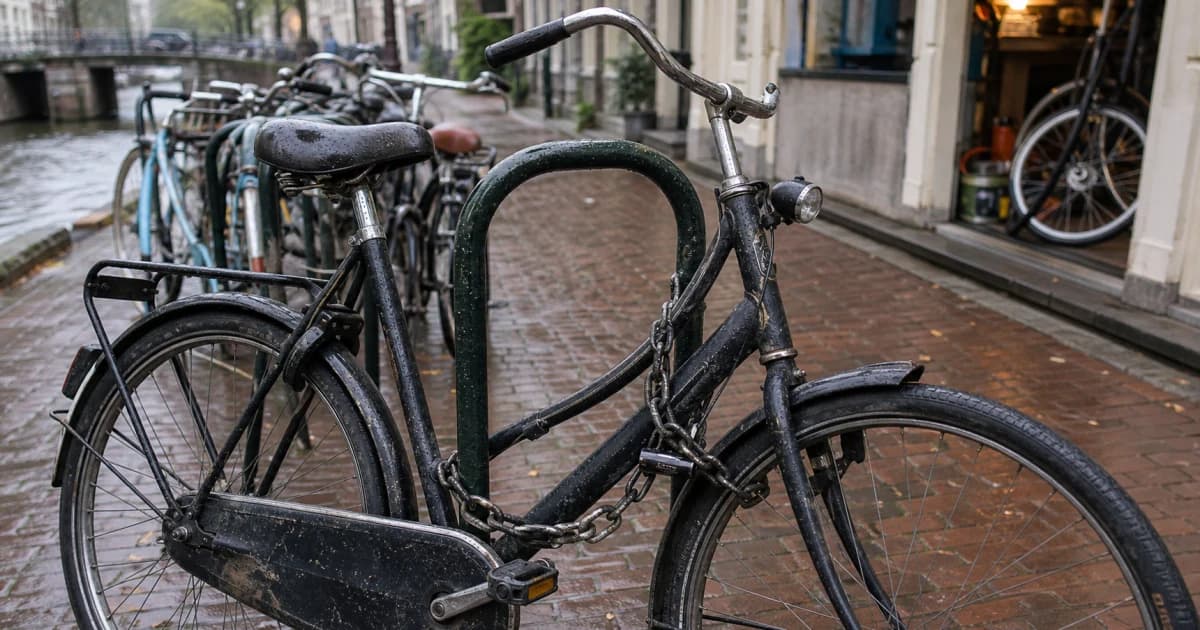
Choose a shop, private sale or subscription
A fietsenwinkel (bike shop) can advise you on fit and sell a serviced used bike. Compare its price with private offers. For a private sale, check the bike and seller yourself. With a subscription, you pay a monthly fee to use a bike that the provider owns. Check which repairs the fee covers, the full contract term, cancellation rules and theft conditions before signing.
For an e-bike (electric bike), also test the battery, charger, display and assistance. Ask for the battery age, key, original charger and service history. A worn battery can mean an extra replacement cost. ANWB (Dutch road users’ association) checks for buying a used e-bike (External site, opens in a new tab) include a battery test and checking whether a replacement is available.
Check a used bike before you pay
Follow these checks in order. Take a test ride, as described in ANWB’s second-hand bike checklist (External site, opens in a new tab).
- Ask for the brand and frame number before meeting.
- At the viewing, check that the number on the bike matches the one you were given and has not been covered, altered or damaged.
- Search the brand and frame number in the RDW (Dutch vehicle authority) stolen-bike register (External site, opens in a new tab). If the bike is listed as stolen, stop the purchase.
- Check the frame number through the politie (police) Stop Heling (stolen-goods check) (External site, opens in a new tab). If the result shows that the bike is stolen, do not buy it.
- If Stop Heling shows a stolen result, use the report button in that result.
- Check the seller’s explanation and working keys. A price far below similar offers, missing keys, an unclear history or pressure to pay quickly are reasons to stop and check further.
- Test the brake or brakes, steering, tyres, wheels, chain, gears, lights and bell.
- Inspect the bike for cracks, a bent frame and loose parts.
- For an e-bike, test the battery and charger.
- Ask for the original receipt or service records when available.
- Get a written receipt with the date, price, bike description, frame number, and buyer and seller details.
- Check that the frame number on the bike matches the receipt.
- Pay only after you have seen the bike and completed these checks.
Heling (handling stolen goods) can include acquiring, possessing or selling stolen goods. For a purchase, criminal liability depends on whether you knew or reasonably should have suspected theft when acquiring or receiving the bike. A register check alone does not settle that question.
Check which bike rules apply
The legal category decides which documents and equipment you need. Rijksoverheid (Dutch government) (External site, opens in a new tab) gives the rules below for electric bikes.
You can scroll wide tables sideways.
| Bike type | Motor assistance | Requirements before riding |
|---|---|---|
| Ordinary bike | None | No driving licence, number plate, compulsory helmet or compulsory motor liability insurance. |
| Standard e-bike | You must pedal; assistance stops at 25 km/h; motor up to 250 watts. | Ordinary cycling rules apply. No driving licence, number plate, compulsory helmet, minimum age or compulsory motor liability insurance. |
| Speed-pedelec (fast electric bike) | Pedal assistance up to 45 km/h; legally a bromfiets (moped). | Age 16 or older; AM (moped), B (car) or A (motorcycle) driving licence; yellow number plate; wettelijke aansprakelijkheid (WA, third-party liability) insurance; approved helmet. |
A speed-pedelec follows moped route and speed rules. Use the shared bicycle and moped path where one is present; otherwise use the carriageway. The limits are 30 km/h on shared paths inside built-up areas, 40 km/h outside them and 45 km/h on the carriageway. Check the speed-pedelec rules (External site, opens in a new tab) before riding.
A throttle may move a standard e-bike without pedalling only up to 6 km/h. Assistance above 25 km/h or throttle power above 6 km/h requires approval in another motor-vehicle category. Without that approval, you may not ride it on public roads. Check the bike’s category with the seller before buying.
Check the required equipment
The following checks cover ordinary two-wheeled bikes and standard e-bikes. Cargo bikes with more wheels can need extra lights or reflectors; check the government’s lights and reflectors rules (External site, opens in a new tab).
- Your bike must have a working brake and bell. A bike with rim brakes only must have two separate working brakes acting on two wheels. The Regeling voertuigen (Vehicle Regulations) (External site, opens in a new tab) sets these requirements.
- At night and in poor visibility, use a steady white or yellow front light and a steady red rear light. Keep the lights visible. They must not blink or dazzle others.
- Fit a red, non-triangular rear reflector, white or yellow reflectors on the wheels or tyres, and four amber or yellow pedal reflectors.
- Attach loose lights to the bike, bag, chest or back, facing directly forwards or backwards. You may not wear them on your head, arms or legs.
For maintenance, adjust the saddle and check tyre pressure, steering, chain, lights, brakes and loose parts before regular use.
Carry a small spare light. Attach it in a permitted position and keep it visible when you use it.
Follow the traffic rules and check the 2026 fines
These are four administrative fines for cyclists in 2026. The Openbaar Ministerie (OM, Public Prosecution Service) Boetebase (fine lookup) (External site, opens in a new tab) gives the exact offence and amount. Each listed amount excludes €9 administration costs.
You can scroll wide tables sideways.
| Offence | 2026 fine, excluding administration costs |
|---|---|
| No required lights, or faulty lights, in darkness or poor visibility | €75 |
| Passing a red light | €120 |
| Holding a phone or other mobile electronic device while riding | €170 |
| Not using a mandatory bicycle path or shared bicycle and moped path | €75 |
For example, a €75 lighting fine in 2026 comes to €84 with the €9 administration costs. These are cyclist amounts; other vehicle categories can have different fines.
You may not hold a phone, tablet or music player while riding. Hands-free use or a device in a holder is allowed only if it creates no danger. You may hold and use the device when you are stationary.
For an ordinary bike or standard e-bike, the alcohol limit is 0.5 promille (parts per thousand) in your blood. Alcohol offences go through criminal law and have no single fixed administrative fine. The table above covers different offences; it does not tell you whether alcohol use is safe.
Use a mandatory fietspad (bicycle path) or fiets/bromfietspad (shared bicycle and moped path) when one is present. Use the carriageway when neither is present. A bike with more than two wheels, or a bike towing a trailer, may use the carriageway if it exceeds 0.75 metres wide including the load. On the pavement, walk your bike.
A helmet is recommended for an ordinary bike or standard e-bike. It is compulsory on a speed-pedelec: use an approved moped or speed-pedelec helmet. The approved-helmet rules (External site, opens in a new tab) explain which types qualify.
Lock the bike and record its details
Use these theft-prevention checks when parking. The police bicycle-security advice (External site, opens in a new tab) recommends securing the frame to a fixed object and using two different locks where possible.
- Use the frame lock and a separate strong chain or U-lock when possible. Verify an ART (lock approval mark) rating in the Stichting ART (lock certification foundation) database (External site, opens in a new tab).
- Put the second lock through the frame and attach it to a bicycle rack or another fixed object where this is allowed. Keep pavements, exits and emergency routes clear.
- Use a guarded bicycle parking facility for a valuable bike when available. Remove an e-bike display or battery key if practical.
- Photograph the bike and frame number. Keep the receipt, lock details, spare keys and e-bike battery details separate from the bike.
Check theft and liability cover
A separate bike policy is optional and can cover theft or damage, depending on the policy. Contents insurance may cover a stolen bike in some situations. Check whether it covers theft from the street and your storage place, and which countries it covers.
Compare the premium with the bike’s replacement value. Read all lock, second-lock, key, tracker and reporting conditions. These are policy terms, so check your own insurer’s requirements. The Verbond van Verzekeraars (Dutch Association of Insurers) theft guidance (External site, opens in a new tab) explains why insurers may ask for lock and key evidence.
Aansprakelijkheidsverzekering voor particulieren (AVP, personal liability insurance) may cover damage you accidentally cause to someone else while cycling. Your policy sets the conditions. This cover is separate from theft or damage cover for your own bike. A standard e-bike does not need compulsory WA motor insurance; a speed-pedelec does. The liability and contents insurance guide explains the difference.
Check the depot before reporting theft
Follow these steps if your bike disappears:
- Check the place carefully.
- Ask nearby parking staff whether they know what happened to the bike.
- Check your gemeente (municipality) website and fietsdepot (municipal bicycle depot), particularly if you parked near a station, shopping area or restricted zone.
- If the bike is absent from the depot, report bicycle theft to the police (External site, opens in a new tab). Include the frame or chip number, brand, model, colour, photographs and distinctive features.
- Save the report confirmation.
- Notify your bike insurer or subscription provider promptly, if applicable.
- Follow your insurer’s or subscription provider’s evidence and key requirements, if applicable.
If you see the bike for sale, save the listing and seller details and contact the police. Keep your purchase receipt and frame number ready. Let the police handle the recovery.
Check your municipality’s parking rules
Municipalities can remove bikes that are dangerously parked or block routes, sit outside designated parking in regulated areas, appear abandoned or stay beyond a local time limit. Notice labels, immediate removal, fees and storage periods differ. Check your own municipality’s instructions.
For local examples, compare Amsterdam’s bicycle-removal rules (External site, opens in a new tab), Utrecht’s depot and collection rules (External site, opens in a new tab) and Den Haag’s abandoned-bike rules (External site, opens in a new tab). Each city has its own notices and deadlines.
Check all of these points when parking or collecting a removed bike:
- Use a rack, marked bay or bicycle parking facility and follow nearby signs. Attach a bike to a lamp post, traffic sign, bridge railing or fence only where local rules allow it.
- Keep footways, entrances, tactile paving and emergency routes clear. Check the parking and time limits in station areas and busy centres.
- If the bike is gone, search your municipality’s site for fiets verwijderd (bike removed). Check the collection deadline. Bring the requested identity proof, bike key and payment method to the depot.
- If you disagree with removal, keep the decision and payment proof. Follow the municipality’s objection procedure.
Get help and record a cycling accident
Deal with injuries and danger first. Then record what happened for the people involved and your insurer.
- Get yourself and others out of immediate danger. Move an injured person only if safety requires it.
- Call 112 for injuries or urgent danger.
- Give first aid if you can.
- Exchange identity, contact and relevant insurance details with the other party before leaving.
- Photograph the road, signs, positions, vehicles, bike and damage before moving anything, if it is safe.
- Record witness names and contact details.
- Record the facts in a Europees schadeformulier (European accident statement) or the accepted digital form. The police accident guide (External site, opens in a new tab) names mobielschademelden.nl (digital accident-reporting service) (External site, opens in a new tab) as the digital route.
- If you use the paper form, notify your insurer within 24 hours, as the police advise.
- For a bike without a number plate, forward the digital report to your insurer yourself (External site, opens in a new tab), if applicable.
- If you send a digital report to your insurer, confirm receipt.
- Seek medical advice for pain or symptoms, including symptoms that appear later.
- Keep repair quotes, medical records, receipts and other cost evidence.
Solve common bike problems
The used-bike offer feels wrong
A theft-register search with no match is only one check. Decline the offer if the seller will not show the frame number or working keys, the number looks altered, the story changes, or the price is far below similar offers. Save a suspicious online listing. If Stop Heling shows a stolen result, use the report button in that result.
The bike you bought was stolen
Stop using or selling the bike and contact the police. Keep the listing, messages, payment record and receipt. A database check alone does not prove ownership or protect you from prosecution. For the purchase, the facts determine whether you knew or reasonably should have suspected theft when acquiring or receiving the bike.
Your insurer refuses the theft claim
Ask for the decision and policy clause in writing. Compare them with the lock, key, tracker, parking and reporting evidence you kept. Use the insurer’s complaint process if the facts do not match the decision. Check a new policy’s conditions before buying the lock or bike.
Continue with these guides for your travel plan and insurance:
- Author
- By Inburgering.org team
- Reviewer
- Reviewed by Kirill Svavolia
Official Sources
- Regeling voertuigen: bicycle equipment requirements (External site, opens in a new tab) - The current legal requirements for a working brake or brakes and a working bell.
- Rijksoverheid: standard e-bike rules (External site, opens in a new tab) - The legal e-bike definition, road rules, phone and alcohol rules, and no separate compulsory WA insurance.
- Rijksoverheid: moped and speed-pedelec rules (External site, opens in a new tab) - The licence, plate, insurance, route and speed rules for speed-pedelecs.
- Rijksoverheid: compulsory helmets (External site, opens in a new tab) - The approved-helmet requirement for speed-pedelec riders and passengers.
- Rijksoverheid: bicycle lights and reflectors (External site, opens in a new tab) - When lights are required, permitted light positions and the compulsory reflectors.
- Reglement verkeersregels en verkeerstekens 1990 (RVV 1990, Traffic Rules and Signs Regulations) (External site, opens in a new tab) - Current rules on cycle paths, carriageways, walking a bike and helmets.
- Openbaar Ministerie: Feitenboekje (offence schedule) 2026 (External site, opens in a new tab) - The official 2026 offence codes and cyclist-category fine amounts.
- Staatsblad (official gazette) 2025, 413 (External site, opens in a new tab) - The decision indexing administrative traffic fines from 1 January 2026.
- Openbaar Ministerie: Boetebase (External site, opens in a new tab) - Current fine amounts and offence wording; the listed fines exclude €9 administration costs.
- RDW: check whether a bike is stolen (External site, opens in a new tab) - How to search by brand and frame number, the identifying details needed for registration, and the register’s processing delay and limits.
- Politie: check for stolen goods (External site, opens in a new tab) - The Stop Heling serial-number check, warning signs and reporting route.
- Politie: report bicycle theft (External site, opens in a new tab) - The depot-first advice, reporting routes and the importance of the frame number.
- Rijksoverheid: what to do if a bike is stolen (External site, opens in a new tab) - Police reporting, frame or chip numbers, the stolen-bike register and municipal depots.
- Stichting ART: approved-lock database (External site, opens in a new tab) - How to verify whether a lock has ART certification and its star rating.
- Verbond van Verzekeraars (Dutch Association of Insurers): stolen bicycle (External site, opens in a new tab) - Why contents and bike cover vary and why policy conditions, keys and evidence matter.
- ANWB: bicycle-insurance prevention terms (External site, opens in a new tab) - A current policy example showing that lock, second-lock, key, tracker and reporting terms are insurer-specific.
- Politie: what to do after a traffic accident (External site, opens in a new tab) - Safety, emergency help, exchanging details, recording damage, insurer notice and medical follow-up.
- Politie: attendance at traffic accidents (External site, opens in a new tab) - When police normally attend and when parties usually handle a collision themselves.
- Gemeente Amsterdam: bicycle removal (External site, opens in a new tab) - One municipality’s designated-area, obstruction, notice and immediate-removal rules.
- Gemeente Utrecht: bicycle removed (External site, opens in a new tab) - Utrecht’s local depot fees, storage periods, proof requirements and objection route.
- Gemeente Den Haag: abandoned bicycles (External site, opens in a new tab) - Den Haag’s different labelling, removal and depot procedure, showing municipal variation.
- ANWB: buying a second-hand bike (External site, opens in a new tab) - Test rides, fit, brakes, tyres, steering, wheels and frame checks before buying.
- ANWB: buying a second-hand electric bike (External site, opens in a new tab) - Battery testing, replacement availability and checks for wear before buying.
- Politie: preventing bicycle theft (External site, opens in a new tab) - Two locks, securing the frame to a fixed object, parking and recording identifying details.
- Interpolis: personal liability insurance (External site, opens in a new tab) - An insurer-specific example of liability cover for damage to others while cycling and motor-vehicle exclusions.
- Politie: a purchased bike turns out to be stolen (External site, opens in a new tab) - Criminal liability depends on whether the buyer could have suspected theft; keep the receipt and check the frame number.
- Politie: your stolen goods appear for sale online (External site, opens in a new tab) - Reporting an online offer with purchase proof, serial number, seller and advertising-site details.
- Wetboek van Strafrecht (Criminal Code): heling (handling stolen goods) (External site, opens in a new tab) - Articles 416 and 417bis: knowledge or reasonable suspicion when acquiring or receiving stolen goods.
- Reglement rijbewijzen (Driving Licence Regulations): minimum age (External site, opens in a new tab) - Article 5: the minimum driving age for licence category AM is 16.
- Burgerlijk Wetboek Boek 3 (Civil Code, Book 3): ownership of stolen goods (External site, opens in a new tab) - Article 86: good faith and the shop-purchase exception matter; a register check alone does not establish ownership.
- ANWB: bicycle lease and subscription contracts (External site, opens in a new tab) - Subscriptions charge for use, maintenance and repairs while the provider owns the bike; lease and subscription conditions differ.
- Mobielschademelden.nl: digital accident report (External site, opens in a new tab) - The digital accident-reporting service named by the police; ANWB confirms that cyclists can use it.
- Gemeente Ommen (Municipality of Ommen): digital accident reports (External site, opens in a new tab) - Automatic insurer forwarding applies to vehicles with number plates; users without plates can forward the report themselves.
- ANWB: accident registration for cyclists (External site, opens in a new tab) - Cyclists can register accidents digitally; accident registration and sending a report to an insurer are separate.