
Which service do you need now?
During your baby’s first ten days, contact your verloskundige about the baby’s health. For other illness or pain, call your huisarts (general practitioner, GP). For child growth and Rijksvaccinatieprogramma (RVP, National Immunisation Programme) vaccinations (External site, opens in a new tab), contact jeugdgezondheidszorg (JGZ, youth health care) (External site, opens in a new tab), including a consultatiebureau (child health clinic) for young children; this care is free. Your GGD (regional public-health service) handles residence-permit tuberculosis (TB) tests and infection control. Use the GGD finder (External site, opens in a new tab) to check regional sexual-health appointments, travel vaccines and fees.
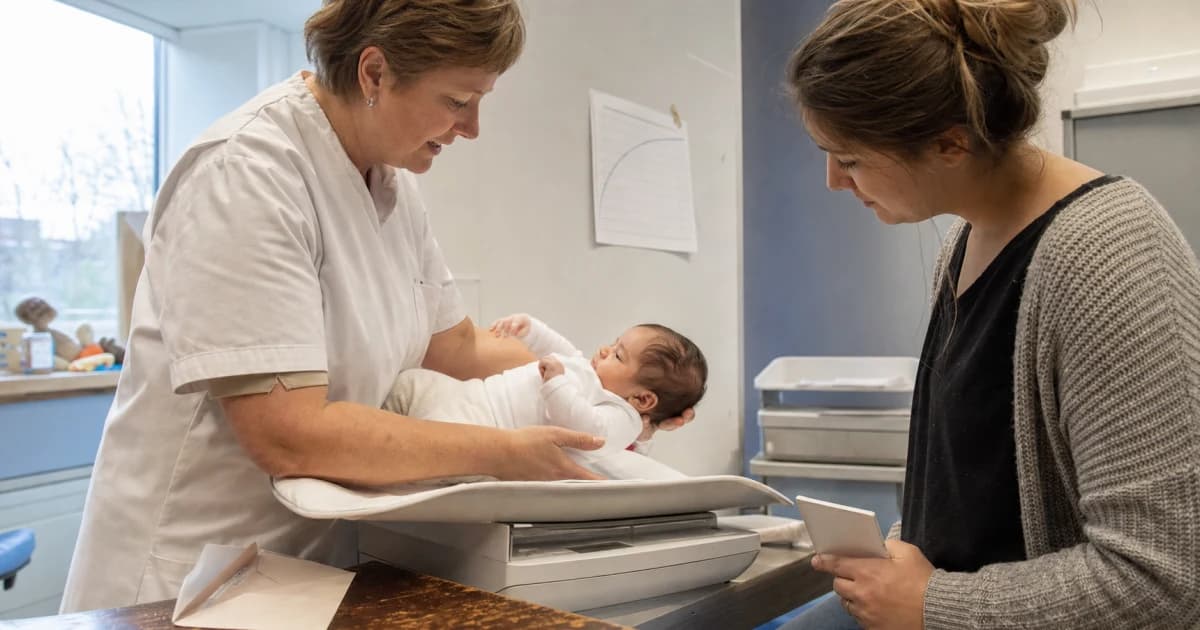
This guide is for newcomers and parents in the Netherlands. A GGD is a Gemeentelijke Gezondheidsdienst (municipal public-health service). A consultatiebureau (External site, opens in a new tab) provides preventive care for young children as part of JGZ. Your gemeente (municipality) arranges JGZ through its GGD, a Centrum voor Jeugd en Gezin (CJG, Centre for Youth and Family), or another provider. Your huisarts diagnoses and treats illness.
Which service do you need?
Match your question to the service below. Check your own provider’s appointment rules and any fee before you book.
You can scroll wide tables sideways.
| What you need | First service to contact | Main limit or cost |
|---|---|---|
| Child growth, development, parenting or RVP vaccination | Local JGZ; consultatiebureau for young children | Preventive JGZ care and programme vaccinations are free |
| Illness, pain, symptoms or a diagnosis | Huisarts; verloskundige for your baby’s health during the first ten days | With Dutch basic health insurance, GP consultations are covered; tests, medicines and hospital care can have other costs |
| Pregnancy, birth or the first weeks after birth | Verloskundige; huisarts for unrelated illness | Use maternity care rather than a GGD appointment |
| A school health invitation | Local JGZ organisation | The preventive check is free and voluntary |
| A residence-permit TB test | Regional GGD | Only if the permit instructions say you need it; ask your GGD about booking, the test and the fee |
| A GGD call about contact with an infectious disease | The GGD named in the call or letter | Follow its investigation instructions; use the huisarts for illness |
| A sexually transmitted infection (STI) test or sexual-health question | Huisarts for everyone; GGD sexual health centre if you meet its criteria and it has space | Accepted GGD care is free; GP laboratory tests can use your eigen risico (compulsory deductible) |
| Travel advice or a travel vaccination | Most GGDs or a private vaccination clinic | Normally paid; check prices and insurance reimbursement |
| Urgent or life-threatening care | Huisarts, huisartsenpost (GP out-of-hours service), or 112 | Use these urgent-care routes rather than a GGD or JGZ appointment |
Who provides public and child health care?
The gemeente registers residents and births. It is responsible for local public health and JGZ. The 25 regional GGDs control infectious diseases, monitor public health and provide other regional services. JGZ follows children’s physical, mental and social development. The huisarts treats individual medical problems. RIVM (National Institute for Public Health and the Environment) (External site, opens in a new tab) organises national programmes such as the RVP and receives public-health data.
Find your JGZ provider on your gemeente’s website. Use the GGD finder for adult public-health services. Your region may use different organisations for these services.
What happens after your baby is born?
Register your baby’s birth with the municipality where the baby was born within three days. The day of birth does not count. Weekends and public holidays can extend the deadline so you have at least two working days. The municipality sends the baby’s details to RIVM so JGZ can arrange newborn screening.
The hielprik (heel-prick test) normally takes place in the first week, usually at home or in hospital. If your baby has not had it within seven days, call the regional RIVM office listed in the heel-prick contact guidance (External site, opens in a new tab). The gehoortest (hearing test) is also usually at home in the first week. Some regions invite babies to a clinic a few weeks later. Both tests are free and voluntary.
The consultatiebureau normally invites your baby at about one month. A jeugdarts (youth doctor) or jeugdverpleegkundige (youth nurse) records growth and development. They discuss feeding, sleep, language and parenting. They give RVP vaccinations and can refer your child for extra support. JGZ provides preventive care. During your baby’s first ten days, contact the verloskundige about the baby’s health. After that, call the huisarts for illness or new symptoms.
What happens at a school health check?
JGZ continues during primary and secondary school. The invitation explains whether your child completes a questionnaire, has measurements or speaks with a youth health professional. Participation is voluntary. A school may provide the room and timetable. JGZ examines your child. The school does not receive your child’s individual result. Contact the JGZ organisation named in the invitation with questions or objections.
Who can see your child’s health record?
The Digitaal Dossier Jeugdgezondheidszorg (DD JGZ, Digital Youth Health Care Record) holds your child’s growth, development and JGZ notes. Only the JGZ doctor, nurse or assistant caring for your child can open it. A huisarts, hospital, school or gemeente does not get automatic access. JGZ normally asks for consent before sharing information with another care provider. Necessary information may be shared without consent for required infectious-disease reporting or to investigate or stop domestic violence or child abuse.
Health professionals must use the meldcode (domestic violence and child abuse reporting code) when they suspect abuse. The process can include discussing concerns, seeking advice and reporting to Veilig Thuis (domestic violence and child abuse advice and reporting service). You can ask for anonymous advice through Rijksoverheid (Dutch government) child-safety guidance (External site, opens in a new tab). Call 112 if a child is in immediate danger.
How do you arrange your child’s vaccinations?
RIVM organises the RVP and JGZ gives the vaccinations. Programme vaccinations are free and voluntary. Vaccination ages and products can change. Use the current RIVM vaccination schedule (External site, opens in a new tab) to check what your child is offered. The invitation states the local place and time. Contact the JGZ named in the invitation to change an appointment or discuss a vaccination.
When your child settles in the Netherlands from abroad, a regional RIVM office asks for a copy of their vaccination record. RIVM then sends an overview of the vaccinations your child is still eligible for. If you do not answer, RIVM sends an invitation based on your child’s age. Bring all foreign vaccination records, even in another language. If no request or invitation arrives, ask local JGZ how to send the records. Let JGZ assess which vaccinations your child needs.
Who do you contact during pregnancy and after birth?
A verloskundige is your first contact for pregnancy, birth and the first weeks after birth. You can register after a positive pregnancy test without a GP referral. De Verloskundige (Dutch midwives’ information site) (External site, opens in a new tab) explains the GP’s role during pregnancy. During the first ten days after birth, follow the midwife’s route for concerns about your baby. You can ask the midwife about your own health until six weeks after birth. After the early handover, the huisarts handles illness and the consultatiebureau follows growth, development and vaccinations. The pregnancy and birth guide explains prenatal screening, birth registration and maternity care.
How do you arrange a residence-permit TB test?
The IND (Immigratie- en Naturalisatiedienst, immigration and naturalisation service) TB requirements (External site, opens in a new tab) apply to some regular residence-permit applicants. Exemptions include nationality, age and a recent Dutch test. Check the current list for your situation. Asylum residence permits follow different requirements.
If you signed the IND declaration of intent, you must take the test within three months after receiving your residence permit. Missing that period may lead to cancellation of the permit. The completed referral form must also reach the IND within those three months. Follow these steps:
- Complete part 1 of IND TB referral form 7604 (PDF, about 300 KB) (External site, opens in a new tab) as far as possible before booking.
- Book with your regional GGD early enough to meet the deadline.
- Take the referral form to your appointment.
- Ask the GGD to confirm that it has sent the completed form to the IND in time.
The GGD decides which test fits your situation. Ask your GGD about the fee, documents, payment, accessibility and any follow-up. Another region’s price or test method may differ.
Why has the GGD contacted you about an infection?
Doctors and laboratories must report certain infectious diseases to the GGD. The GGD assesses the risk, looks for the source and decides whether contacts need information or protective measures. It may contact you as the patient or because you were exposed. Follow the instructions in its call or letter. If you feel ill or need treatment, call the huisarts. RIVM receives a pseudonymised report for national monitoring: identifying details are replaced so RIVM does not know who you are.
Can you get a free STI test at the GGD?
You can contact the huisarts about an STI test or sexual-health concern. A Centrum Seksuele Gezondheid (CSG, sexual health centre) at a GGD offers extra care for specific groups. You need both a higher STI risk and a barrier to GP care. People under 25 are one target group, but age alone does not guarantee a test appointment. National funding has a cap. Access depends on the criteria and available appointments. Check your regional GGD’s criteria before travelling to a clinic.
If the GGD accepts you under this scheme, the consultation, test and any treatment there are free. You can ask for anonymous care. If you do not meet the criteria or the GGD has no space, use the huisarts. With Dutch basic health insurance, the GP consultation does not use your compulsory deductible. Laboratory tests or medicines can use it.
If you are under 25, Sense (sexual health advice service) (External site, opens in a new tab) offers free confidential conversations about sexuality and lists regional addresses. Ask a private clinic for its price before booking.
Where do you book travel vaccinations?
Most GGDs offer travel advice and vaccinations. GGD Reisvaccinaties (GGD travel vaccinations) (External site, opens in a new tab) lists participating locations, country information and booking routes. A private vaccination clinic is another option. Travel vaccines normally fall outside the free national programmes. Ask your provider for its consultation and vaccine prices. Your insurer may reimburse some costs; check your policy before booking.
What if you have an appointment problem?
What if no invitation arrives or you move?
Birth registration or registration in the Basisregistratie Personen (BRP, Personal Records Database) helps organisations send invitations. If no child health invitation arrives, find local JGZ through the gemeente website and ask for an appointment. After a move, tell both the old and new JGZ organisations. Ask how they will transfer the DD JGZ. Keep vaccination certificates and foreign records until the new provider confirms receipt. For a newborn heel prick, use the seven-day contact rule above.
How do you ask for language or accessibility support?
Before your appointment, tell the provider which language, communication, mobility or sensory support you need. The provider assesses whether you need an interpreter. It also assesses whether you need a professional interpreter. Ask who will arrange the interpreter and whether you must pay. For consent, sexual health, child safety or another complex or sensitive conversation, ask for a professional interpreter. Avoid using a child as an interpreter. The interpreter guidance allows exceptions for clear emergencies or simple requests.
How do you complain about care?
Ask the organisation that delivered the service to explain or correct the problem. If that does not help, ask for its independent klachtenfunctionaris (complaints officer). You can also contact the complaints officer if you prefer not to speak to the provider directly. This help is free. For a heel-prick or hearing-test complaint, contact the testing organisation about how it performed the test. Contact RIVM about the national programme. Keep copies of correspondence, dates, names and what you want the provider to change.
Who do you call for urgent medical help?
During GP opening hours, call the huisarts for urgent medical help. Outside those hours, call the regional huisartsenpost first. Call 112 for a life-threatening emergency. During pregnancy or the first days after birth, also follow your midwifery practice’s urgent number and instructions. The emergency-care guide explains these routes and costs.
For other public-health services, start with your postcode in the GGD finder. For preventive child care, find JGZ through your gemeente’s website. Before booking, confirm that you have the right provider and check any fee.
Continue with these guides for registration and school arrangements:
- Author
- By Inburgering.org team
- Reviewer
- Reviewed by Kirill Svavolia
Official Sources
- GGD GHOR Nederland (national association of public-health and regional emergency medical services): Wat doet een GGD (External site, opens in a new tab) - The national role of the 25 regional GGDs, their statutory public-health tasks, municipal responsibility, and regional variation in additional services.
- GGD GHOR Nederland: Jeugdgezondheidszorg (External site, opens in a new tab) - Free preventive youth health care, consultatiebureau and school-age services, and the fact that a municipality may use a GGD, CJG, or another JGZ organisation.
- GGD.nl: Find your regional GGD (External site, opens in a new tab) - The national postcode and town search for the responsible regional GGD.
- Rijksoverheid: Questions about the health and development of a child aged 0–4 (External site, opens in a new tab) - Free consultatiebureau advice, growth and development follow-up, vaccinations, and the invitation around one month after birth.
- Rijksoverheid: What is the Digital Youth Health Care Record? (External site, opens in a new tab) - What the DD JGZ contains, who can access it, consent for sharing, and the handover to school-age JGZ.
- Rijksoverheid: How to register a birth (External site, opens in a new tab) - The duty to register a birth within three days and the weekend and public-holiday extensions.
- PNS (RIVM’s prenatal and newborn screening website): The heel prick test (External site, opens in a new tab) - Timing, home and hospital routes, voluntary participation, cost, results, privacy, and what to do if the test has not happened within seven days.
- PNS (RIVM): The hearing test (External site, opens in a new tab) - Timing, regional home or clinic routes, voluntary participation, cost, results, records, and follow-up.
- RIVM: National Immunisation Programme (External site, opens in a new tab) - The current vaccination schedule, voluntary participation, free programme vaccinations, and records in MijnRIVM (vaccination and screening portal).
- Rijksvaccinatieprogramma: Communication, registration and invitations (External site, opens in a new tab) - Separate consent for vaccination and identifiable data exchange, central invitations, and the process for vaccination records from abroad.
- De Verloskundige: Appointments with the midwife (External site, opens in a new tab) - The midwife’s prenatal, birth and postnatal role and the handover to the GP and consultatiebureau after birth.
- IND: Requirements that apply to everyone (External site, opens in a new tab) - The current TB-test requirement for regular residence permits and the exemption categories.
- IND: Declaration of intent to undergo a TB test (7603) (External site, opens in a new tab) - The three-month deadline after receiving the permit, the possible residence consequence, and the referral-form instruction.
- RIVM: Mandatory reporting of infectious diseases (External site, opens in a new tab) - Reporting by doctors and laboratories, the GGD’s source and contact investigation, protective measures, and pseudonymised reporting to RIVM.
- Rijksoverheid: Sexual health care (External site, opens in a new tab) - Universal access through the GP and free or anonymous supplementary GGD care for specific groups, subject to availability.
- RIVM: Aanvullende Seksuele Gezondheidszorg (ASG, supplementary sexual health care) (External site, opens in a new tab) - The target groups, priority rules, adjusted testing policy for young people, and the financial cap on GGD sexual-health care.
- Sense: Help and advice (External site, opens in a new tab) - Regional STI-testing addresses and free confidential sexual-health consultations for people under 25.
- GGD GHOR Nederland: Travel health care (External site, opens in a new tab) - Travel advice and vaccination at most, but not all, GGDs and the regional appointment route.
- Rijksoverheid: Are vaccinations free? (External site, opens in a new tab) - Which government vaccination programmes are free and that travel and other non-programme vaccines are normally paid, with possible reimbursement.
- Rijksoverheid: Sharing a medical record (External site, opens in a new tab) - The normal consent rule and the public-health and safeguarding exceptions for sharing health information.
- Rijksoverheid: What to do if you suspect child abuse (External site, opens in a new tab) - The 112 route for immediate danger and anonymous advice from Veilig Thuis.
- KNMG (Royal Dutch Medical Association): Quality standard for interpreter use in health care (External site, opens in a new tab) - How a provider assesses the need for an interpreter, when a professional interpreter is needed, and why children should not interpret for adults.
- Rijksoverheid: Complaints about a doctor or care provider (External site, opens in a new tab) - The provider-first complaint route and the free independent complaints officer.
- Rijksoverheid: GP out-of-hours service or emergency department? (External site, opens in a new tab) - Calling the GP out-of-hours service first and calling 112 in a life-threatening emergency.
- Rijksoverheid: Costs on a GP invoice (External site, opens in a new tab) - That GP consultations do not use the compulsory deductible, while tests, medicines and referred care can.
- IND: TB test referral form (7604) (External site, opens in a new tab) - Complete part 1 before booking, take the form to the GGD, and ensure the completed form reaches the IND within three months after receiving the permit.
- De Verloskundige: The GP’s role during pregnancy and after birth (External site, opens in a new tab) - You can register directly with a midwifery practice without a GP referral; the GP handles illness unrelated to pregnancy.
- NCJ (Dutch Centre for Youth Health): Basispakket Jeugdgezondheidszorg (basic youth health care package) (External site, opens in a new tab) - JGZ follows growth and development, advises on feeding, sleep and parenting, and arranges extra support or referral when needed.
- Rijksoverheid: Meldcode huiselijk geweld en kindermishandeling (External site, opens in a new tab) - The professional reporting-code steps: assess signs, seek advice, discuss concerns and decide whether to arrange help or report.
- Rijksvaccinatieprogramma: Your consent (External site, opens in a new tab) - Vaccination and identifiable data sharing need separate consent; you can accept vaccination without agreeing to identifiable data sharing.
- GGD Reisvaccinaties: Travel advice and appointments (External site, opens in a new tab) - Participating GGD locations, country advice, appointments and tariffs by GGD.
- IND: Appendix exemption from a TB test (7644) (External site, opens in a new tab) - The current list of nationalities exempt from the residence-permit TB test.
- GGD Amsterdam: TB examination for the IND (External site, opens in a new tab) - Amsterdam’s local booking, documents, charges and test methods; use your own GGD’s instructions outside this region.
- GGD GHOR Nederland: About the association (External site, opens in a new tab) - The association represents municipal public-health services and regional medical emergency organisations.
- KNMG: About the Royal Dutch Medical Association (External site, opens in a new tab) - The official English name of KNMG.