
Arrange care early and meet the registration deadlines
Contact a verloskundige (External site, opens in a new tab) directly after a positive pregnancy test. Arrange kraamzorg (postnatal maternity care) from about week 12. Home kraamzorg has an eigen bijdrage (statutory copay) of €5.70 per hour in 2026. Register the birth within 3 days after the birth, with weekend and public-holiday extensions. If Dutch basic-insurance rules apply, insure your baby within 4 months.
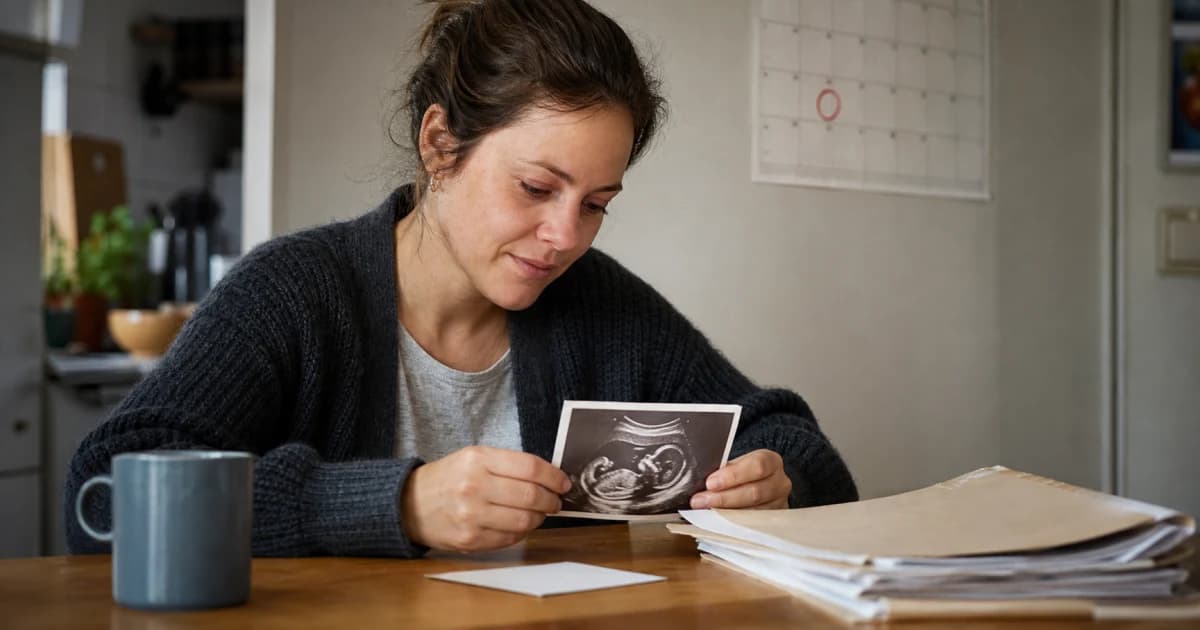
This guide is for people expecting a baby while living in the Netherlands. Your health, insurance policy, work and family situation can change the rules that apply. Ask your care provider and insurer to confirm costs and deadlines in writing.
Plan care before the birth
Use these dates to plan care before birth. Screening is voluntary; the table shows when to discuss or arrange each choice.
You can scroll wide tables sideways.
| When | Action | Why it matters |
|---|---|---|
| After a positive test | Contact a verloskundige or your current obstetric provider | A first appointment is usually in weeks 7–10; mention medicines, earlier complications or other health conditions when booking |
| Preferably weeks 8–10, after your first appointment | Ask for a counselling appointment to discuss prenatal screening | This leaves time to make an informed choice; every screening test is voluntary |
| From week 10 | Choose the NIPT (non-invasive prenatal test) (External site, opens in a new tab) only if you want it | The national programme charges you nothing for the test |
| From about week 12 | Register with a kraamzorg organisation | Providers can fill up, and contract status can affect reimbursement |
| Weeks 12+3 to 14+3 | Choose the 13 wekenecho (13-week scan) (External site, opens in a new tab) only if you want it and consent to IMITAS (the 13-week scan study) (External site, opens in a new tab) | The scan is free. Its research permit runs until at least 1 January 2028 |
| Weeks 18+0 to 21+0 | Choose the 20 wekenecho (20-week scan) (External site, opens in a new tab) only if you want it; week 19 is preferred | The scan is free |
| From week 22 | Discuss the voluntary whooping-cough and seasonal flu vaccinations | Both are free when you meet the current programme conditions |
| At least 3 weeks before your chosen leave starts | If employed, request pregnancy and maternity leave | The start window is 6–4 weeks before the day after the due date for one baby and 10–8 weeks for a multiple pregnancy |
| Before the birth | Check whether recognition, parental authority or a surname choice needs action | The answer depends on relationship, parentage and nationality |
| Before labour | Save the provider's urgent number and discuss birth-place preferences | Local availability and medical circumstances can change the plan |
Save the number for urgent help
Follow the urgent-contact instructions from your midwife or hospital obstetric team, including at night. Call that team directly if you are worried about yourself or your baby. Thuisarts (health information from general practitioners, or GPs) (External site, opens in a new tab) explains which symptoms need direct contact.
For another urgent health problem, call your huisarts (GP) or huisartsenpost (out-of-hours GP service). Call 112 (External site, opens in a new tab) for immediate life-threatening danger. Call for help before looking online for an explanation.
Find your pregnancy care provider
Pregnancy care is usually led by a neighbourhood verloskundige. A huisarts or gynaecoloog (gynaecologist) can also provide care. You may contact a midwife practice directly. The midwife checks your health and the baby’s growth, discusses choices and assesses risks. If you need specialist care, the midwife or huisarts refers you to hospital. Care can return to the midwife when that medical need ends. Zorginstituut Nederland (National Health Care Institute) (External site, opens in a new tab) explains basic-insurance coverage.
When booking, mention medicines you take, earlier pregnancy complications and other health conditions. Ask whether the practice serves your postcode and who covers nights. Ask which hospital or birth centre it works with. Ask how urgent calls work. Check whether your policy covers the provider’s full charge. The Dutch health-insurance guide explains how a provider’s contract with your insurer affects payment. Use the huisarts guide for health problems outside pregnancy care.
Choose which tests and vaccinations to have
You choose whether to have each test below. These four tests are free in the national screening programme. In scan dates, 12+3 means 12 weeks and 3 days pregnant.
You can scroll wide tables sideways.
| Offer | When | What it is |
|---|---|---|
| PSIE (early pregnancy blood screening) (External site, opens in a new tab) | Early in pregnancy; discussed at the first visit, around week 12 | Voluntary test for blood groups, antibodies, hepatitis B, hiv (human immunodeficiency virus) and syphilis Consent is required. |
| NIPT | From week 10 | Voluntary blood screening for selected chromosome differences |
| 13 wekenecho | Weeks 12+3–14+3 | Voluntary scan through IMITAS; consent to study-data use is required |
| 20 wekenecho | Weeks 18+0–21+0, preferably week 19 | Voluntary scan for physical differences |
The NIPT and the two scans look for different conditions. They do not replace one another. A screening result is not a diagnosis and can lead to an offer of further diagnostic tests.
Follow-up diagnostic tests may use your eigen risico (compulsory deductible). Ask your insurer how any proposed follow-up will be billed.
Maternity care and the initial screening tests are exempt from the eigen risico. The free PSIE blood test can be taken alongside extra laboratory tests outside the programme. Those extra tests may use your deductible. Ask which tests are included and how any extra tests will be billed before you consent.
Pregnancy vaccinations and infant RS-virus (respiratory syncytial virus, RSV) protection are voluntary. Flu vaccination depends on the season and your health. The RIVM (National Institute for Public Health and the Environment) vaccination guidance (External site, opens in a new tab) explains these options.
You can scroll wide tables sideways.
| Voluntary offer | Timing in October 2026 | Cost and route |
|---|---|---|
| 22-wekenprik (whooping-cough vaccination) | From week 22 | Free through JGZ (jeugdgezondheidszorg, youth health care) (External site, opens in a new tab), usually at a consultatiebureau (child-health clinic) |
| Flu vaccination during pregnancy | At least 22 weeks pregnant between 15 October and 1 March; medical-risk exceptions apply | Free for the programme group through JGZ. If you already qualify because of a medical condition, use your huisarts, including before week 22 |
| RS-virus (respiratory syncytial virus, RSV) protection | A baby receives one offer in the first year, timed by birth season | The infant immunisation is free in the national programme; an RSV vaccine during pregnancy is available separately and is self-paid |
Check birth places and costs
If you have a healthy pregnancy without expected extra risks, you can discuss a home, birth-centre or outpatient hospital birth. A medische indicatie (medical reason for specialist care) means hospital care. Discuss safety, transport, pain relief, local availability and your preferences with your provider. A geboorteplan (birth plan) (External site, opens in a new tab) records your wishes. It gives no guarantee about place, staff or treatment. You can change your mind. The birth-place overview (External site, opens in a new tab) explains the care routes.
Home birth and hospital birth with a medical indication have no statutory birth copay. Elective outpatient birth without a medical indication has a copay unless you use lachgas (nitrous oxide, a gas used for pain relief). The amounts below apply in 2026. Ask your insurer what your policy pays.
You can scroll wide tables sideways.
| Situation | Basic-insurance payment in 2026 | Statutory copay | Other amount to check |
|---|---|---|---|
| Home birth without a medical indication | Covered when the policy conditions are met | None for the birth | Check provider contract and any supplies not in the package |
| Elective outpatient hospital or birth-centre birth without a medical indication | Up to €161.50 for the mother and €161.50 per baby before the copay; for one baby, the insurer pays up to €278 after the minimum copay | At least €22.50 for the mother plus €22.50 per baby per day; €45 for one baby | The facility sets its charge. You pay its charge minus the insurer's payment; that difference includes the statutory copay and can be higher |
| Hospital birth with a medical indication | Covered when the policy conditions are met | No statutory birth copay | Some separate medicines, transport or laboratory costs can still use the deductible |
| Elective outpatient birth using nitrous oxide | Covered under the applicable route | The statutory birth copay lapses | Confirm availability and other charges with the facility and insurer |
For an elective outpatient birth with one baby in 2026, the insurer pays at most €278 after the minimum €45 statutory copay. Your payment is the facility’s charge minus the insurer’s payment. For example, if the facility charges €600 and your insurer pays €278, you pay €322. Ask both for a written calculation. A supplementary policy may pay some or all of that amount, depending on its terms.
The compulsory eigen risico is €385 for adults in 2026. Midwife care, kraamzorg and prenatal screening do not use it. Care directly related to pregnancy or birth is also exempt. Diagnostic follow-up after screening may still use your deductible. Ask your insurer how the proposed test will be billed. Separate medicines, transport and blood tests can use the deductible. An eigen bijdrage is a separate copay. If both apply, you pay the copay first and the deductible on the remaining eligible amount.
Arrange kraamzorg and check the hours
Kraamzorg (External site, opens in a new tab) supports you and your baby during and after birth. At home, a kraamverzorgende (maternity care worker) checks your recovery and the baby, helps with feeding and teaches newborn care. They also assist the midwife during birth. The standard package includes basic household tasks. Extra household tasks depend on your assessed care needs. Ask the organisation which tasks your package includes.
The rules below describe insured kraamzorg. The hours you receive depend on your needs and the provider’s available staff. The figures below apply in 2026.
You can scroll wide tables sideways.
| Point | Rule or action |
|---|---|
| Registration | Many organisations accept registration from week 12. Apply early and check whether the insurer contracts the provider |
| Intake | Usually about 2 months before the due date; the organisation estimates the likely hours |
| Hours | The insured entitlement is 24–80 hours. The midwife and kraamverzorgende assess the actual hours after birth |
| Days | Care normally runs through day 8, sometimes through day 10, and only in specific situations longer; legal entitlement can extend to 6 weeks |
| 2026 home copay | €5.70 per hour, with no compulsory deductible. Partusassistentie (assistance during birth) has no copay |
| Availability | A staff shortage can mean fewer delivered hours than assessed. Ask the organisation, midwife and insurer what alternative is available |
Plan pregnancy, maternity, partner and parental leave
Some benefits continue without a separate pregnancy and maternity benefit. Check UWV (Employee Insurance Agency) pregnancy-benefit eligibility rules (External site, opens in a new tab) for your benefit.
The dates below apply to employees and recipients of WW (unemployment benefit), Ziektewet (sickness benefit) or a loongerelateerde WGA-uitkering (wage-related disability benefit). Count back from the day after your due date. Sickness during the flexible start window before leave reduces the days added after birth.
You can scroll wide tables sideways.
| Situation | Pregnancy leave | Leave after birth |
|---|---|---|
| One baby | Starts 6–4 weeks before the day after the due date | At least 10 weeks; at least 16 weeks total |
| Twins or a multiple birth | Starts 10–8 weeks before the day after the due date | At least 10 weeks; at least 20 weeks total |
| Birth is early | Pregnancy leave ends on the birth date | Unused pre-birth days are added after birth, except sick days in the flexible start window |
| Birth is late | Pregnancy leave continues through the birth date | The minimum 10 weeks after birth is not shortened, so total leave is longer |
| Baby is in hospital for more than 7 days | No change before birth | Extra leave may apply. The first 7 hospital days do not count. The legal maximum is 10 extra weeks; UWV calculates the extension for your situation |
Ask the hospital for a declaration of your baby’s admission dates. If you are employed, send it to your employer and request the extension through them. If you receive WW, Ziektewet or a loongerelateerde WGA-uitkering, apply to UWV yourself. If you receive ZEZ (Zelfstandige en Zwanger, Self-employed and Pregnant benefit) (External site, opens in a new tab), use the separate self-employed form. Follow the UWV hospital-extension application instructions (External site, opens in a new tab).
UWV counts hospital days during maternity leave, subtracts the first 7 days, then subtracts any maternity leave above 10 weeks. The Wet arbeid en zorg (Work and Care Act) (External site, opens in a new tab) sets a maximum extension of 10 weeks.
If you are employed, request leave from your employer at least 3 weeks before it starts. Your employer normally applies for the WAZO (Wet arbeid en zorg, Work and Care Act) maternity benefit (External site, opens in a new tab). The payment is 100% of your dagloon (daily wage used to calculate benefits), up to the statutory maximum.
Report illness that affects your leave
If you are employed and become ill because of pregnancy before leave, your employer can request a Ziektewet (sickness benefit) payment of 100% of your dagloon. If you are ill during the flexible start window before taking leave, those sick days reduce your leave after birth. This also applies to illness with another cause. The window is weeks 6–4 before the day after the due date for one baby, or weeks 10–8 for a multiple pregnancy.
If you are employed, report illness to your employer. Illness during maternity leave adds no extra leave days. If you are ill because of pregnancy or birth on the day the maternity benefit ends, your employer can request a Ziektewet payment of 100% of your dagloon. If it starts later, the employer pays sick pay under the normal rules.
If you receive WW or Ziektewet, report illness before or after maternity leave to UWV by your second sick day. You do not need to report illness to UWV during maternity leave.
If you receive WW, illness caused by pregnancy before leave replaces it with Ziektewet at 100% of your dagloon. If you already receive Ziektewet, the payment rises to 100% for pregnancy-related illness before leave. If you are ill because of pregnancy or birth on the day the maternity benefit ends, Ziektewet pays 100% of your dagloon. If that illness starts later, you may receive 70%. Use the illness and pregnancy guidance for benefit recipients (External site, opens in a new tab) for the reporting route and rules for other benefits.
Apply for maternity benefit if you are self-employed
If you qualify, apply for ZEZ 4–2 weeks before your chosen start. ZEZ lasts at least 16 weeks, or 20 for a multiple pregnancy. It is capped at the minimum wage.
For self-employed work, at least 1,225 hours in the calendar year before the benefit starts gives you the minimum-wage benefit. Below that, UWV uses your profit or income from that year, or a higher five-year average. A shorter business history changes the averaging period. Separate rules apply if you work in your partner’s business or provide household help.
Plan partner and parental leave
The table below compares leave for employed parents. A working week means your normal weekly hours. The 9 paid parental-leave weeks become unpaid if you do not use them in the first year.
You can scroll wide tables sideways.
| Leave for an employee-parent | Amount and payment | Use-by date |
|---|---|---|
| Geboorteverlof (partner birth leave) | One working week, equal to weekly hours; employer pays full salary | Within 4 weeks after birth |
| Aanvullend geboorteverlof (additional partner leave) | Up to 5 working weeks after the first week; UWV pays up to 70% of dagloon, capped | Within 6 months after birth; normally request at least 4 weeks before it starts |
| Ouderschapsverlof (parental leave) | 26 working weeks per employed parent; 9 are paid at 70% of dagloon up to the cap, the rest is normally unpaid | Paid 9 weeks within the first year; remaining entitlement before age 8 |
Check your integration deadline after childbirth
If you are required to complete inburgering (civic integration), check whether childbirth affects your deadline. DUO (Dienst Uitvoering Onderwijs, the Dutch education service) (External site, opens in a new tab) has an application route for extra time after childbirth. The integration deadline and extra-time guide explains the conditions and evidence.
Use your rights at work
If you are employed, these rights apply during pregnancy and after birth. Discuss changes to your work with your employer and keep written records.
- Necessary pregnancy examinations and travel time may be taken during work with pay.
- Your employer must assess work risks and make your work safe. When needed, they must adjust the work, hours or workplace. Rights to adjusted work and hours continue until 6 months after birth.
- Your employer may not disadvantage you because you are pregnant or plan to become pregnant.
- A fixed-term contract can still end on its agreed date, but pregnancy may not be the reason for non-renewal. Keep relevant messages and ask for decisions in writing.
Dismissal is generally prohibited during pregnancy and leave, and for 6 weeks after maternity leave. Protection also applies during illness caused by pregnancy or birth and for 6 weeks afterward. Exceptions include business closure and serious misconduct.
For the first 9 months after birth, an employee may breastfeed or pump during work for up to one quarter of each shift. The employer must continue pay and provide a suitable private, lockable room. Discuss the schedule before returning to work. The official breastfeeding rules (External site, opens in a new tab) and Arboportaal (government workplace health and safety portal) (External site, opens in a new tab) confirm the time and pay conditions. The employment-contract guide explains how to document a workplace dispute.
Check parenthood, parental authority, surname, nationality and residence
Your legal relationship, parentage and nationality can change which steps you need. Marriage, registered partnership, donor arrangements, recognition and existing parental authority can all affect the result. Use the Rijksoverheid (Dutch central government) recognition checklist (External site, opens in a new tab).
Ask your gemeente (municipality) before birth if anything is unclear. Check each question below separately.
You can scroll wide tables sideways.
| Question | Rule and action |
|---|---|
| Is erkenning (recognition of legal parenthood) needed? | It depends on your relationship and parentage. You can arrange recognition before birth, at birth registration or later. Arranging it before birth avoids the 3-day deadline pressure. The birth mother’s consent is required for a newborn. Foreign-law rules can apply |
| Does recognition give ouderlijk gezag (parental authority)? | Recognition on or after 1 January 2023 usually gives an unmarried partner joint authority with the birth mother. Exceptions include an existing guardian or the mother already sharing authority with someone else. Use the official checklist for your case |
| Which surname can the child have? | The first child’s chosen surname applies to later children of the same parents. Since 1 January 2024, a combined surname is possible if the first child was born on or after that date. Both parents must attend together to record a surname choice. Defaults and foreign-nationality rules depend on your situation |
| Is a child born here Dutch? | Birthplace alone does not give Dutch nationality. Parentage, recognition timing and other legal routes determine the result. Check IND (Immigratie- en Naturalisatiedienst, Immigration and Naturalisation Service) (External site, opens in a new tab) before relying on an outcome |
| Does the child need a residence document? | A non-Dutch child may need a separate application. A child with EU (European Union), EEA (European Economic Area) or Swiss nationality needs no residence permit. If either parent is a UK (United Kingdom) national holding a Withdrawal Agreement residence document, apply for a Withdrawal Agreement residence document for the child. Check the IND route |
Register the birth and arrange baby insurance, health checks and benefits
Birth registration and health insurance have separate deadlines. Plan these tasks before labour so you know who will arrange them.
You can scroll wide tables sideways.
| Task | Deadline or usual timing | What to do |
|---|---|---|
| Geboorteaangifte (birth registration) | Within 3 days; the birth day does not count | Register at the municipality where the child was born |
| BRP (basisregistratie personen, Personal Records Database) and BSN (burgerservicenummer, citizen service number) | After birth registration | The municipality registers the child in the BRP and issues a BSN |
| Health insurance | Within 4 months | If Dutch basic-insurance rules apply, register the baby with an insurer. Timely registration starts cover from birth |
| Hielprik (heel-prick test) | Usually in the first week | It is voluntary. If it has not happened by day 7, contact the regional RIVM office |
| Hearing test | Usually at home on days 4–7 | Regional and hospital exceptions apply. Follow your local JGZ service’s instructions |
| Consultatiebureau and JGZ | Invitation after registration. For example, GGD (municipal health services) Hollands Noorden (municipal health service for northern Noord-Holland) (External site, opens in a new tab) invites babies at about 4 weeks; check locally | Use the free youth-health service for growth, development, feeding and vaccination appointments |
| Kinderbijslag (child benefit) | SVB (Sociale Verzekeringsbank, Social Insurance Bank) (External site, opens in a new tab) normally writes within 4 weeks after municipal registration | Apply for a first child as instructed. If you already receive kinderbijslag, a later child is normally added automatically |
| Kindgebonden budget (child-related budget) | Check after the child is registered | You must receive kinderbijslag and meet income and asset limits. It is often automatic if you receive another allowance. Otherwise check and apply in Mijn Toeslagen (My Allowances) (External site, opens in a new tab) |
To register the birth, follow these steps:
- Check Rijksoverheid’s birth-registration deadline (External site, opens in a new tab). You have 3 days after the birth; the birth day does not count. Weekend and public-holiday rules can extend the deadline. You must have at least 2 working days.
- Check the appointment and online-registration rules of the gemeente where your baby was born.
- Gather your valid ID and any recognition or surname deed.
- Register the birth with that gemeente.
The registrar draws up the birth certificate. The child is then entered in the BRP and receives a BSN. Late registration is reported to the Openbaar Ministerie (Public Prosecution Service) and can lead to a fine.
If Dutch basic-insurance rules apply to your child, register them with an insurer within 4 months. A child under 18 pays no basic premium and has no compulsory deductible. Timely registration starts cover from birth. If you register late, earlier care may remain uninsured. If your family has an EU institution or international-organisation insurance scheme, check that scheme’s rules for your baby.
A child born here may need a separate nationality or residence check. The IND nationality rules (External site, opens in a new tab) and IND route for a child born in the Netherlands (External site, opens in a new tab) explain the conditions. Use the Netherlands residence-permits overview to find the route. Check the child’s requirements separately from your own residence document.
Check consent, language support and complaint options
Your care provider must give you information you can understand. Ask for explanations and language support before making a medical decision. Use these patient rights and complaint options:
- Ask for clear information and decide together with your care provider. You may refuse a proposed examination or treatment. Ask about purpose, alternatives, risks, follow-up and cost. Repeat the plan in your own words.
- Tell the practice early if Dutch is difficult. Ask for a professional interpreter or other language support. Interpreter funding varies by care setting. Ask who arranges and pays for the interpreter. For serious medical decisions, arrange adult language support rather than asking a child to interpret.
- Record your preferences in your geboorteplan. It does not give consent for every future treatment. You can change your mind, and the clinical situation can change what is possible.
- Raise a complaint with your provider. If it remains unresolved, or you prefer not to discuss it directly, ask for the free, independent klachtenfunctionaris (complaints officer). If needed, ask which disputes body handles the provider’s complaints.
Solve common pregnancy and birth problems
You can contact a midwife directly. Check insurance payments, consent, parenthood and leave separately, and record the deadlines after birth. Keep the provider’s or insurer’s reply so you can follow up.
You can scroll wide tables sideways.
| Mistake | Better action |
|---|---|
| Waiting for a GP referral before contacting a midwife | Contact a midwife directly; use the GP for other health issues or when advised |
| Reading covered as free | Check the facility charge and insurer payment; their difference includes the minimum statutory copay and can be higher. Check any deductible separately |
| Treating screening or vaccination as compulsory | Ask for neutral information and consent only to the options you choose |
| Assuming recognition settles authority, nationality and residence | Check each question separately for your family situation |
| Using the leave calculation for one baby when you are expecting twins or more | Use the 10–8-week pre-birth window and 20-week minimum, then recalculate for the actual birth date |
| Missing the 3-day or 4-month deadline | Put birth registration and baby insurance on a shared checklist before labour |
Recheck official programme dates and euro amounts if your care or leave crosses into another calendar year.
Continue with these guides:
- Author
- By Inburgering.org team
- Reviewer
- Reviewed by Kirill Svavolia
Official Sources
- Zorginstituut Nederland: Midwifery care (External site, opens in a new tab) - The care route, referrals, insured maternity care and the 2026 copay for an elective outpatient birth.
- Zorginstituut Nederland: Kraamzorg (External site, opens in a new tab) - The 24–80-hour entitlement, normal care period, registration timing, 2026 home copay and deductible exemption.
- Zorginstituut Nederland: Compulsory deductible (External site, opens in a new tab) - The €385 compulsory deductible for 2026 and the care excluded from it.
- Prenatale en neonatale screeningen (Prenatal and Neonatal Screening): Comparing the NIPT, 13-week and 20-week scans (External site, opens in a new tab) - The timing, purpose and zero programme cost of the three voluntary prenatal screening options.
- Prenatale en neonatale screeningen (Prenatal and Neonatal Screening): Scientific study for the 13-week scan (External site, opens in a new tab) - That the 13-week scan requires IMITAS participation and consent to study-data use.
- Prenatale en neonatale screeningen (Prenatal and Neonatal Screening): Blood test during pregnancy (External site, opens in a new tab) - The voluntary early blood test, what it covers, its cost and the possible cost of extra tests.
- RIVM: Vaccinations during pregnancy (External site, opens in a new tab) - Current voluntary whooping-cough and flu vaccination timing, route and cost.
- Rijksvaccinatieprogramma (National Immunisation Programme): RSV immunisation (External site, opens in a new tab) - Current timing and programme status of infant RSV immunisation.
- De Verloskundige (The Midwife), KNOV (Royal Dutch Organisation of Midwives): Home, hospital or birth centre (External site, opens in a new tab) - The differences between home, birth-centre, elective outpatient and medically indicated hospital birth.
- De Verloskundige, KNOV (Royal Dutch Organisation of Midwives): Birth plan (External site, opens in a new tab) - That a birth plan records preferences, can change and does not guarantee how labour will proceed.
- Thuisarts: Pregnant and experiencing symptoms (External site, opens in a new tab) - When a pregnant person should contact the midwife or hospital obstetric team promptly.
- Government.nl: Emergency number 112 (External site, opens in a new tab) - That 112 is for immediate life-threatening danger.
- Rijksoverheid: Applying for pregnancy and maternity leave (External site, opens in a new tab) - The employee application deadline and WAZO payment through the employer.
- UWV: Duration of pregnancy and maternity leave (External site, opens in a new tab) - Singleton and multiple-pregnancy start windows, early and late births, and flexible leave.
- UWV: Illness during pregnancy while receiving a benefit (External site, opens in a new tab) - Pregnancy-related Ziektewet payment and timing rules around leave.
- UWV: ZEZ benefit for self-employed people (External site, opens in a new tab) - Eligibility, application window, duration, cap and the 1,225-hour reference period for ZEZ.
- Rijksoverheid: Partner birth leave (External site, opens in a new tab) - One week of fully paid partner leave and up to five additional weeks at up to 70% of dagloon.
- Rijksoverheid: Paid parental leave (External site, opens in a new tab) - The 26-week entitlement and nine partly paid weeks used in the first year.
- Rijksoverheid: Adjusted work, hours and leave during pregnancy (External site, opens in a new tab) - Paid pregnancy appointments, safe-work adjustments and rights through six months after birth.
- Rijksoverheid: Breastfeeding during working time (External site, opens in a new tab) - The first-nine-month right and maximum quarter of each shift for breastfeeding or pumping.
- Arboportaal: Breastfeeding during working time (External site, opens in a new tab) - That breastfeeding or pumping time is paid working time.
- Rijksoverheid: Dismissal protection during pregnancy (External site, opens in a new tab) - Protection during pregnancy and leave, the six-week period afterward, exceptions and fixed-term contracts.
- Rijksoverheid: Recognition and parental authority checklist (External site, opens in a new tab) - A situation-based route for recognition and parental authority.
- Rijksoverheid: Exceptions to automatic joint authority (External site, opens in a new tab) - Cases in which recognition since 2023 does not produce automatic joint authority.
- Rijksoverheid: Choosing a child's surname (External site, opens in a new tab) - Surname choices, combined surnames from 2024 and the rule for later children of the same parents.
- Rijksoverheid: Registering a birth (External site, opens in a new tab) - The 3-day deadline, weekend and holiday calculation, documents and possible late-registration fine.
- Rijksoverheid: Checklist when having a child (External site, opens in a new tab) - BRP registration, BSN, insurance, leave, child benefit and consultatiebureau steps.
- Rijksoverheid: Mandatory health insurance (External site, opens in a new tab) - The four-month baby-insurance deadline and no premium or deductible for children under 18.
- Prenatale en neonatale screeningen (Prenatal and Neonatal Screening): How the heel-prick test works (External site, opens in a new tab) - Consent, first-week timing and what to do if no heel prick has happened by day 7.
- Prenatale en neonatale screeningen (Prenatal and Neonatal Screening): Newborn hearing test (External site, opens in a new tab) - Usual day 4–7 timing and regional or hospital exceptions for newborn hearing screening.
- IND: Dutch nationality by birth, recognition or adoption (External site, opens in a new tab) - The statutory routes to Dutch nationality and why place of birth alone is not decisive.
- IND: Residence permit for a child born in the Netherlands (External site, opens in a new tab) - The situation-dependent residence route for a non-Dutch child born in the Netherlands.
- SVB: Applying for child benefit (External site, opens in a new tab) - The usual SVB letter within four weeks and first-child versus later-child application steps.
- Dienst Toeslagen (Benefits Service): A child joins the family (External site, opens in a new tab) - When a newborn is reported automatically and when parents should check or apply for kindgebonden budget.
- Rijksoverheid: Patient rights in medical treatment (External site, opens in a new tab) - Clear information, shared decision-making, refusal and other patient rights.
- KNMG (Royal Dutch Medical Association): Interpreters in healthcare (External site, opens in a new tab) - Professional standards for dealing with a healthcare language barrier and interpreter use.
- Rijksoverheid: Complaints about a doctor or care provider (External site, opens in a new tab) - The provider-first complaint route and free independent complaints officer.
- Prenatal screening: counselling timing (External site, opens in a new tab) - Counselling preferably in weeks 8–10 after intake, voluntary choices, and language support.
- Prenatal screening: 13-week scan research permit (External site, opens in a new tab) - The scientific-screening permit runs until at least 1 January 2028; this is not an IMITAS study end date.
- RIVM: Flu vaccination during pregnancy (External site, opens in a new tab) - Seasonal timing and the huisarts route, including before week 22, for people with a medical indication.
- UWV: Illness and pregnancy for employees (External site, opens in a new tab) - Pregnancy-related sickness payment, the flexible-start-window deduction, and immediate versus later sickness after maternity benefit.
- UWV: Extra leave for a newborn in hospital (External site, opens in a new tab) - The hospital-day calculation and deductions from extra maternity leave.
- Wet arbeid en zorg: Article 3:1 (External site, opens in a new tab) - The legal maximum of 10 extra maternity-leave weeks after a newborn’s hospital stay.
- Rijksoverheid: Requesting additional partner leave (External site, opens in a new tab) - Request at least 4 weeks in advance, with exceptions such as an early birth.
- Rijksoverheid: Parental leave entitlement (External site, opens in a new tab) - 26 weeks per employed parent, available before the child turns 8.
- Rijksoverheid: Recognition conditions (External site, opens in a new tab) - Consent and foreign-nationality conditions for recognition.
- Rijksoverheid: Combined surname questions (External site, opens in a new tab) - Combined surnames from 1 January 2024 when the first child is born on or after that date.
- Zorgverzekeringswet (Health Insurance Act): Article 5 (External site, opens in a new tab) - Insurance start dates and retroactive cover when registration is within four months of the insurance obligation.
- Prenatale en neonatale screeningen: Newborn hearing-test arrangements (External site, opens in a new tab) - Usual home testing on days 4–7 and regional and hospital exceptions.
- GGD Hollands Noorden: Consultatiebureau (External site, opens in a new tab) - Free visits and this region’s first clinic visit at about 4 weeks.
- KNMG: Interpreter quality standard (External site, opens in a new tab) - Professional interpretation and why children should not interpret complex care decisions.
- Rijksoverheid: Employer health and safety duties (External site, opens in a new tab) - The employer’s obligation to assess workplace risks and address them.
- DUO: Extra integration time after childbirth (External site, opens in a new tab) - A conditional application route for extra integration time after childbirth.
- Burgerlijk Wetboek (Civil Code), Book 7: Patient consent (External site, opens in a new tab) - Articles 446 and 450 cover examinations and the requirement for patient consent to medical procedures.
- Dienst Toeslagen: Mijn Toeslagen login (External site, opens in a new tab) - The official login guidance for applying for and managing allowances.
- UWV: Pregnancy and maternity benefit eligibility (External site, opens in a new tab) - Which benefits qualify for a separate maternity benefit and which continue instead.
- Prenatale en neonatale screeningen: NIPT procedure and follow-up costs (External site, opens in a new tab) - Free NIPT screening and the warning that diagnostic follow-up may use the compulsory deductible.
- Zorginstituut Nederland: Landelijk indicatieprotocol kraamzorg (National maternity care assessment protocol) (External site, opens in a new tab) - The linked protocol distinguishes basic household tasks in standard care from extra tasks included through assessment.