
Confira a ativação do celular e a internet no endereço
Precisa de uma linha móvel enquanto compara planos? Considere um SIM (chip de celular) pré-pago. Antes de pagar, confira as regras de ativação e se o chip funciona no seu aparelho. Para internet residencial, consulte quais operadoras atendem seu endereço completo. Compare o custo total e a duração do contrato. Confirme a data de ativação e qualquer visita agendada para instalar a conexão.
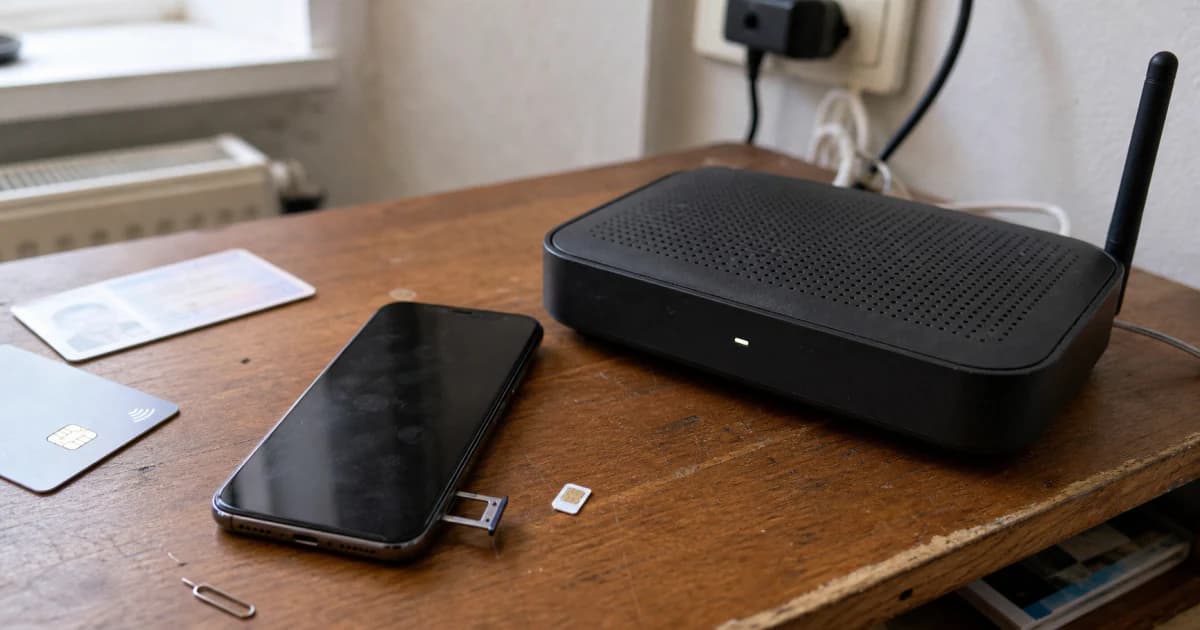
Este guia trata de contratos pessoais de telefonia móvel e internet residencial para quem acabou de chegar e vai morar nos Países Baixos.
Escolha como pagar pela linha móvel
Você pode comprar créditos pré-pagos, contratar sim-only (plano sem aparelho) ou escolher um plano com celular. No pré-pago, você paga pelas chamadas e pelos dados antes de usar. No sim-only, usa um aparelho que já tem. Se comprar um celular parcelado, o valor que faltar depois da entrada será um empréstimo.
Em 2026, o crédito do aparelho acima de € 250 é registrado no BKR (Bureau Kredietregistratie, cadastro de crédito dos Países Baixos) (Site externo, abre em uma nova aba). Se você já tem um celular, compare pré-pago e sim-only antes de financiar outro.
Você pode rolar as tabelas largas na horizontal.
| Opção | Confira antes de contratar | Como você paga |
|---|---|---|
| Pré-pago | Ativação, identificação, tarifas e validade dos créditos | Compra créditos antes de usar |
| Sim-only | Cobertura, dados, custo total, duração do contrato e forma de pagamento | Paga pelo serviço e usa seu próprio aparelho |
| Plano com celular | Custos do serviço e condições do empréstimo do aparelho | Paga pelo serviço e pelas parcelas do celular |
O pré-pago pode servir enquanto você compara planos ou espera documentos. Confira as regras do vendedor para identificação e ativação. Antes de pagar, veja se o SIM funciona no seu celular, como recarregar e quando os créditos vencem. Pergunte também se é possível ativar um SIM digital.
Confira o crédito do aparelho
Quando você parcela um celular com um toestelkrediet (crédito do aparelho), a operadora deve avaliar se você consegue pagar os custos mensais. Ela deve explicar as condições do empréstimo e os juros. Também deve apresentar o custo do aparelho separado do custo do serviço. O Rijksoverheid (governo central dos Países Baixos) (Site externo, abre em uma nova aba) explica como uma entrada pode reduzir o empréstimo para menos de € 250. Se o crédito for exatamente € 250, confira as condições da operadora: a Odido exige o registro nesse valor (Site externo, abre em uma nova aba).
Exemplo em 2026: o celular custa € 600. Você paga € 400 de entrada e financia os € 200 restantes. Esse empréstimo fica abaixo do limite de € 250 para registro. Você continua pagando pelo serviço móvel e devolve os € 200 em parcelas.
O BKR registra créditos de aparelho acima do limite mesmo quando você paga em dia. Outros credores podem considerar esse empréstimo quando você pede crédito, inclusive para financiar um imóvel.
O empréstimo do celular e o serviço móvel têm contratos separados. Encerrar ou mudar o serviço nem sempre significa que você precisa pagar imediatamente o saldo restante do aparelho. Antes de cancelar ou trocar o plano, leia as condições do empréstimo. Veja se as parcelas continuam ou se você terá de quitar o saldo. Peça por escrito um cronograma com o valor restante e as datas de pagamento.
Confira a cobertura e os recursos do celular
Confira o sinal nos lugares onde usará o celular. Inclua seus trajetos e os ambientes internos de casa e do trabalho. Os materiais do prédio e sua posição dentro dele podem afetar a recepção. Marcas que usam a mesma rede podem oferecer velocidades e recursos diferentes. Veja se o plano inclui 5G (rede móvel de quinta geração), quais recursos de chamada oferece e se há limites de dados ou velocidade. Se possível, teste o sinal antes de aceitar um contrato longo. A ACM ConsuWijzer (orientações ao consumidor da Autoriteit Consument & Markt, autoridade de consumidores e mercados dos Países Baixos) (Site externo, abre em uma nova aba) explica o que comparar.
A Rijksinspectie Digitale Infrastructuur (RDI, autoridade de infraestrutura digital dos Países Baixos) (Site externo, abre em uma nova aba) lista três redes móveis no país: KPN, Odido e VodafoneZiggo. Outras marcas podem ser MVNOs (operadoras móveis virtuais), que usam uma dessas redes. O monitor de telecomunicações da ACM do quarto trimestre de 2025 (Site externo, abre em uma nova aba) mostra as operadoras e sua participação no mercado.
O eSIM (SIM digital) é instalado em um celular compatível. Confira se seu aparelho e sua operadora oferecem esse recurso, como ativá-lo e como transferir seu número. Para manter um SIM estrangeiro ativo junto com uma linha holandesa, o aparelho precisa aceitar dual SIM (duas linhas) e estar desbloqueado para outras operadoras. Para iPhone, o guia de dual SIM da Apple (Site externo, abre em uma nova aba) explica quais modelos são compatíveis e quais são os requisitos das operadoras.
Confira os documentos e a forma de pagamento
Cada operadora define as verificações de identidade e prevenção de fraude para o produto e o canal de contratação. As exigências podem mudar entre site, loja e pedido por telefone. Pergunte sobre estes três pontos:
- Identidade: quais passaportes, documentos de identidade ou autorizações de residência o site, a loja ou o entregador aceita?
- Pagamento: quais formas de pagamento e IBANs (números internacionais de conta bancária) você pode usar?
- Crédito: quais análises de capacidade de pagamento e de crédito são feitas se você parcelar um celular?
Uma empresa que oferece transferências ou débitos automáticos em euros deve aceitar o IBAN de uma conta de pagamento elegível da UE (União Europeia) ou do EEE (Espaço Econômico Europeu). Você não precisa de um IBAN holandês para esses pagamentos. Se o formulário online só aceita IBANs holandeses, a empresa pode oferecer outra forma de informar um IBAN estrangeiro. O formulário deve explicar essa alternativa com clareza.
Se a empresa recusar seu IBAN por causa do código do país, veja A operadora pede um IBAN holandês. O guia Como abrir uma conta bancária nos Países Baixos explica outros requisitos da conta.
Faça a portabilidade e confira o roaming
Nummerbehoud (portabilidade do número) é gratuito. Peça à nova operadora para transferir seu número de celular holandês. A operadora antiga não pode recusar nem cobrar pela transferência. Números pré-pagos também têm esse direito. Você pode pedir a transferência até um mês depois do fim do contrato antigo. Faça o pedido com antecedência suficiente para as operadoras processarem a mudança. O guia de portabilidade da ACM ConsuWijzer (Site externo, abre em uma nova aba) explica o procedimento.
Se transferir o número antes do fim da fidelidade, você ainda pode ter cobranças do contrato antigo. Para telefone fixo, só é possível manter o número quando o novo endereço fica na mesma região de código de área.
Roam like at home (usar seu plano nacional de celular no exterior) vale na UE, na Islândia, em Liechtenstein, na Noruega, na Moldávia e na Ucrânia. A franquia de dados em roaming pode ser menor que a franquia nacional. Podem ser cobradas taxas extras, com limites máximos, se você passar da franquia ou usar o SIM principalmente no exterior. Confira as condições do plano no guia de roaming do Your Europe (Site externo, abre em uma nova aba).
Redes de satélite em navios e aviões ficam fora dessas regras de roaming e podem custar mais. Desative o roaming ou use o modo avião para evitar a conexão com essas redes.
Consulte a internet residencial no endereço completo
A internet residencial pode usar glasvezel (fibra óptica), kabel (cabo) ou DSL (internet pela linha telefônica de cobre). As conexões e operadoras disponíveis dependem do endereço. Informe o código postal e o número do imóvel nos sites das operadoras ou em comparadores. O guia de internet fixa da ACM ConsuWijzer (Site externo, abre em uma nova aba) explica por que as opções variam.
Compare as ofertas pelos mesmos critérios: velocidade para as pessoas da casa, preço depois dos descontos, taxas cobradas uma única vez e custo total durante a fidelidade. Confira também a duração do contrato, os equipamentos, a entrega, a data de ativação e possíveis taxas ou visitas técnicas. Escolha uma velocidade que atenda à sua casa antes de pagar por um plano mais rápido.
Combine as datas de instalação e troca
Para contratar internet residencial, siga estes passos:
- Consulte quais conexões e operadoras atendem seu código postal e número do imóvel.
- Compare o custo total do contrato e as exigências para instalação.
- Peça à operadora escolhida para confirmar a data de ativação.
- Se estiver trocando de operadora, confirme quem cancela o contrato antigo e em qual data.
- Guarde a confirmação do pedido.
- Conecte o modem ou esteja presente na visita de instalação combinada.
A instalação depende da operadora e do endereço. Pode ser necessário ativar a linha ou enviar um monteur (técnico). Pergunte o que acontece se a operadora não cumprir a data de início prometida.
Ao contratar pela internet ou por telefone, o bedenktijd (prazo de arrependimento) permite cancelar sem informar o motivo. Para contratar só o serviço, o prazo termina 14 dias depois do dia em que você aceita o contrato. Se o pedido inclui celular e serviço, termina 14 dias depois do dia em que você recebe o aparelho. Uma compra comum em loja não tem prazo legal de arrependimento. O guia de arrependimento da ACM ConsuWijzer (Site externo, abre em uma nova aba) explica as regras.
Se você autorizou a ativação antecipada e concordou em pagar pelo serviço usado, deve pagar por essa parte ao cancelar. Sem autorização para iniciar antes, você pode pedir o reembolso total. Se o último dia do prazo cair em um fim de semana ou feriado, o prazo passa para o próximo dia útil.
Na troca de internet residencial, confira se a operadora oferece overstapservice (serviço de troca de operadora). Confirme quem cancela o contrato antigo. Se a nova operadora prometeu cancelar e não fez isso, cancele o serviço antigo assim que souber da falha. Guarde as duas confirmações. Você ainda deve pagar a conta da operadora antiga, mas a nova deve reembolsar os custos extras que causou. O guia da ACM ConsuWijzer sobre problemas na troca (Site externo, abre em uma nova aba) explica como resolver.
Veja quando você pode cancelar o contrato
Depois do período de fidelidade, você pode cancelar sem custo, com aviso prévio de no máximo um mês. Leia o resumo do contrato antes de aceitar a oferta. O guia de cancelamento da ACM ConsuWijzer (Site externo, abre em uma nova aba) explica as regras de duração e aviso prévio em 2026.
Se você está acostumado à fidelidade de até 12 meses no Brasil ou de até 24 meses em Portugal, confira a duração da oferta nos Países Baixos. Aqui o limite é 2 anos, e a operadora precisa ter um bom motivo para esse prazo, como um desconto.
Você pode rolar as tabelas largas na horizontal.
| Regra | O que significa |
|---|---|
| Fidelidade máxima | Até 2 anos; a operadora precisa ter um bom motivo para exigir 2 anos, como um desconto |
| Depois da fidelidade | Pode cancelar gratuitamente a qualquer momento, com aviso prévio de no máximo 1 mês, contado do dia do pedido |
| Aviso antes do fim da fidelidade | A operadora deve entrar em contato pelo menos 1 mês antes do fim da fidelidade |
| Mudança desfavorável | Em geral, pode cancelar gratuitamente até 1 mês depois do aviso; veja as exceções abaixo |
Se o preço ou as condições mudarem de forma desfavorável para você, a operadora normalmente deve avisar com um mês de antecedência. Em geral, você pode cancelar sem custos extras até um mês depois do aviso. Se a mudança desfavorável afetar um serviço de um pacote, você pode cancelar o pacote inteiro. O guia de mudanças de condições da ACM ConsuWijzer (Site externo, abre em uma nova aba) explica esse direito e estas duas exceções:
- Uma mudança exigida por nova lei ou regra do governo não dá direito a cancelamento gratuito por esse motivo.
- O reajuste pela inflação não dá direito a cancelamento gratuito se as condições explicarem claramente como ele funciona, com que frequência e quando ocorre.
O cancelamento durante a fidelidade pode gerar cobranças previstas no contrato. Peça um cálculo por escrito, com valores separados para o serviço, o saldo do aparelho e a devolução de equipamentos. Confira o contrato do empréstimo do celular: as parcelas podem continuar ou você pode ter de quitar o saldo. Pergunte a data de vencimento de cada valor.
Resolva problemas de contrato e conexão por escrito
Peça à operadora para explicar por escrito o problema e a solução proposta. Guarde o pedido, o contrato, as contas e as mensagens para comprovar sua reclamação.
A operadora pede um IBAN holandês
Pergunte se você pode informar manualmente o IBAN de uma conta de pagamento em euros da UE ou do EEE, ou contratar por outro canal. Se a empresa recusar por causa do código do país, reclame por escrito. Guarde a recusa e sua reclamação. Se a empresa não oferecer uma solução adequada ou não responder, informe ao De Nederlandsche Bank (DNB, banco central dos Países Baixos) (Site externo, abre em uma nova aba).
A operadora recusa seus documentos
Pergunte qual exigência vale para seu produto e canal de contratação. Por exemplo, a página de pedidos da Odido (Site externo, abre em uma nova aba) informa que um passaporte estrangeiro ou documento de identidade europeu não holandês permite contratar sim-only, mas não um plano com aparelho.
Em outubro de 2026, a Odido aceita IBAN de conta de pagamento estrangeira apenas nas lojas e somente para sim-only. Para esse pedido, exige os três documentos abaixo:
- Seu cartão bancário estrangeiro.
- Um documento de identidade válido.
- Um BRP-uittreksel (extrato do Basisregistratie Personen, cadastro municipal de residentes).
O extrato deve ter sido emitido há no máximo uma semana e comprovar pelo menos seis meses de registro nos Países Baixos.
Se o extrato não mostrar a data do registro, a Odido pede uma declaração extra da sua gemeente (município). Você paga pelo extrato. A Odido não aceita extratos de não residentes. Essas exigências são da Odido. Se você não puder cumpri-las, compare outro canal de contratação, o pré-pago ou outra operadora. O guia de BSN (número de identificação pessoal) e registro no município explica o processo de registro.
Seu endereço ainda não tem internet residencial ativa
Um roteador 4G (rede móvel de quarta geração) ou 5G pode fornecer uma conexão temporária. Confira o sinal no ponto exato onde ele ficará dentro de casa. Compare a franquia de dados, os limites de uso justo (regras da operadora sobre o uso de dados), o custo total, a fidelidade, a devolução de equipamentos e a entrega. Mantenha o pedido de internet residencial separado. Cancele o serviço temporário conforme as condições dele.
Você vai mudar de endereço nos Países Baixos
Confira a verhuisregeling (política para mudança de endereço) da operadora antes de organizar a mudança. As condições da operadora e a disponibilidade no novo endereço determinam se o contrato será transferido, encerrado ou se haverá cobranças. Peça por escrito a data de ativação, os custos, as instruções para os equipamentos e qualquer período em que as duas conexões serão cobradas. Mudar durante a fidelidade pode deixar você pagando pelos meses restantes.
Você vai sair dos Países Baixos
Antes de sair, pergunte à operadora se a política para mudança de endereço cobre emigração. Peça a data de término do contrato e um cálculo detalhado das cobranças. Confira as condições do empréstimo do celular: as parcelas continuam ou você terá de quitar o saldo? Peça as datas de pagamento por escrito. Se o cálculo contrariar seu contrato, reclame à operadora por escrito.
Se a reclamação não for resolvida, a De Geschillencommissie Telecommunicatiediensten (comissão de resolução de disputas sobre serviços de telecomunicações) (Site externo, abre em uma nova aba) pode ajudar, desde que sua operadora participe. Você também pode informar à ACM ConsuWijzer possíveis problemas com o cumprimento das regras de consumo.
Para outras tarefas depois da chegada ou de uma mudança, use estes guias:
- Autor
- Por Inburgering.org team
- Revisor
- Revisado por Kirill Svavolia
Fontes oficiais
- Rijksoverheid: Is een telefoonabonnement waar een mobiele telefoon bij zit een lening? (Site externo, abre em uma nova aba) - Parcelas do celular como empréstimo, análise da capacidade de pagamento, custos separados do aparelho e do serviço e redução do crédito com uma entrada.
- BKR: Telefoonabonnement (Site externo, abre em uma nova aba) - Registro de crédito do aparelho acima de € 250 e pagamento das parcelas junto com a cobrança do serviço móvel.
- ACM ConsuWijzer: Tips bij het kiezen van een abonnement voor mobiele telefonie (Site externo, abre em uma nova aba) - Como comparar cobertura móvel, velocidade, duração do contrato, taxas, roaming e troca de operadora.
- ACM ConsuWijzer: Een telecomaanbieder kiezen voor vast internet en bellen (Site externo, abre em uma nova aba) - Opções de cabo, cobre e fibra conforme o endereço e consulta por código postal.
- ACM ConsuWijzer: Telecomabonnement opzeggen (Site externo, abre em uma nova aba) - Prazo máximo do contrato, aviso antes do fim da fidelidade, cancelamento e políticas das operadoras para mudança de endereço.
- ACM ConsuWijzer: Telecomaanbieder wijzigt voorwaarden (Site externo, abre em uma nova aba) - Cancelamento sem custos após mudanças desfavoráveis e as exceções previstas nas regras.
- ACM ConsuWijzer: Bedenktijd (Site externo, abre em uma nova aba) - Quando começa o prazo de 14 dias para serviços e pedidos que combinam produto e serviço.
- ACM ConsuWijzer: Telefoonnummer meenemen (Site externo, abre em uma nova aba) - Portabilidade gratuita, incluindo o prazo de um mês após o fim do contrato.
- ACM ConsuWijzer: Problemen bij overstappen telecom (Site externo, abre em uma nova aba) - Problemas na troca de operadora e reembolso de custos duplicados que poderiam ter sido evitados.
- ACM: Telecommonitor vierde kwartaal 2025 (Site externo, abre em uma nova aba) - Participação das operadoras de rede móvel e das operadoras virtuais no mercado e tipos de conexão fixa.
- De Nederlandsche Bank: SEPA (Single Euro Payments Area) en IBAN-discriminatie (Site externo, abre em uma nova aba) - Proibição de recusar um IBAN elegível em euros da UE ou do EEE e como reclamar ao DNB.
- Odido: Je bestelling van Mobiel (Site externo, abre em uma nova aba) - Restrições específicas da Odido para documentos estrangeiros e pedidos com IBAN estrangeiro aceitos somente em loja, incluindo extrato do BRP de até uma semana e pelo menos seis meses de registro.
- Your Europe: Roaming — using a mobile phone in the EU (Site externo, abre em uma nova aba) - Roaming na UE, no EEE, na Moldávia e na Ucrânia, regras de uso justo e exclusão das redes de satélite.
- De Geschillencommissie: Telecommunicatiediensten (Site externo, abre em uma nova aba) - Disputas de consumidores com operadoras participantes após reclamação à operadora.
- RDI: Dekkings- en snelheidsverplichting (Site externo, abre em uma nova aba) - As três redes móveis e os motivos para diferenças de cobertura e desempenho conforme o ambiente interno, o aparelho e o plano.
- Apple: Using Dual SIM with an eSIM (Site externo, abre em uma nova aba) - SIM digital, iPhones e operadoras compatíveis e necessidade de aparelho desbloqueado para usar duas operadoras.
- Rabión Consultancy para o Ministerie van Economische Zaken (Ministério dos Assuntos Econômicos): estudo sobre códigos de redes móveis, outubro de 2025 (Site externo, abre em uma nova aba) - A seção 2.6 explica que operadoras móveis virtuais usam uma rede móvel pública, em vez de ter sua própria rede de rádio.
- Rijksoverheid: Citizen service number (BSN) (Site externo, abre em uma nova aba) - O significado de BSN em inglês e sua relação com o registro no cadastro municipal de residentes.
- KPN: instalação por técnico (Site externo, abre em uma nova aba) - Exemplo de uma operadora sobre instalação pelo próprio cliente, visitas técnicas e instalação do modem para uma nova conexão ou mudança.
- Odido: internet residencial pela rede móvel (Site externo, abre em uma nova aba) - Exemplo de internet residencial por roteador móvel, consulta da recepção no local e uso temporário durante uma mudança.
- Odido: detalhes da conexão por roteador móvel (Site externo, abre em uma nova aba) - Exemplo de roteador móvel residencial que usa 5G e normalmente passa para 4G quando o 5G está temporariamente indisponível.
- Autoriteit Financiële Markten (AFM, autoridade dos mercados financeiros dos Países Baixos): Telefoonkrediet (Site externo, abre em uma nova aba) - Contratos de crédito do celular separados dos contratos de serviço móvel, com custos separados.
- Odido: quando resta apenas o pagamento do aparelho (Site externo, abre em uma nova aba) - Situações excepcionais em que o pagamento mensal do celular continua após o fim do serviço móvel.
- Odido: condições de crédito do aparelho a partir de 7 de novembro de 2025 (Site externo, abre em uma nova aba) - Contratos separados de empréstimo e serviço, cronogramas de pagamento, registro no BKR a partir de € 250 e condições que podem exigir o pagamento imediato do saldo restante, incluindo emigração.
- Odido: condições adicionais de internet residencial pela rede móvel (Site externo, abre em uma nova aba) - Exemplo de regras de uma operadora sobre uso pessoal de dados, carga da rede e prioridade na rede.
- Anatel: Oferta e Contratação (Site externo, abre em uma nova aba) - No Brasil, ofertas para pessoas físicas podem ter fidelidade de no máximo 12 meses; o prazo pode ser maior para empresas.
- Diário da República: Lei n.º 16/2022, de 16 de agosto (Site externo, abre em uma nova aba) - O artigo 131.º limita a 24 meses a fidelidade dos contratos de telecomunicações de consumidores em Portugal.