
TEV combines the MVV and residence permit
For a regular partner or child application, TEV (entry and residence) combines your MVV (provisional residence permit) and residence permit when you need the visa. Apply through the IND (External site, opens in a new tab) (Immigratie- en Naturalisatiedienst, Dutch immigration service). In 2026, the standard fee is €254 for a partner or €85 for a minor child. The legal decision period is 90 days. The IND can extend it and must notify you if it does.
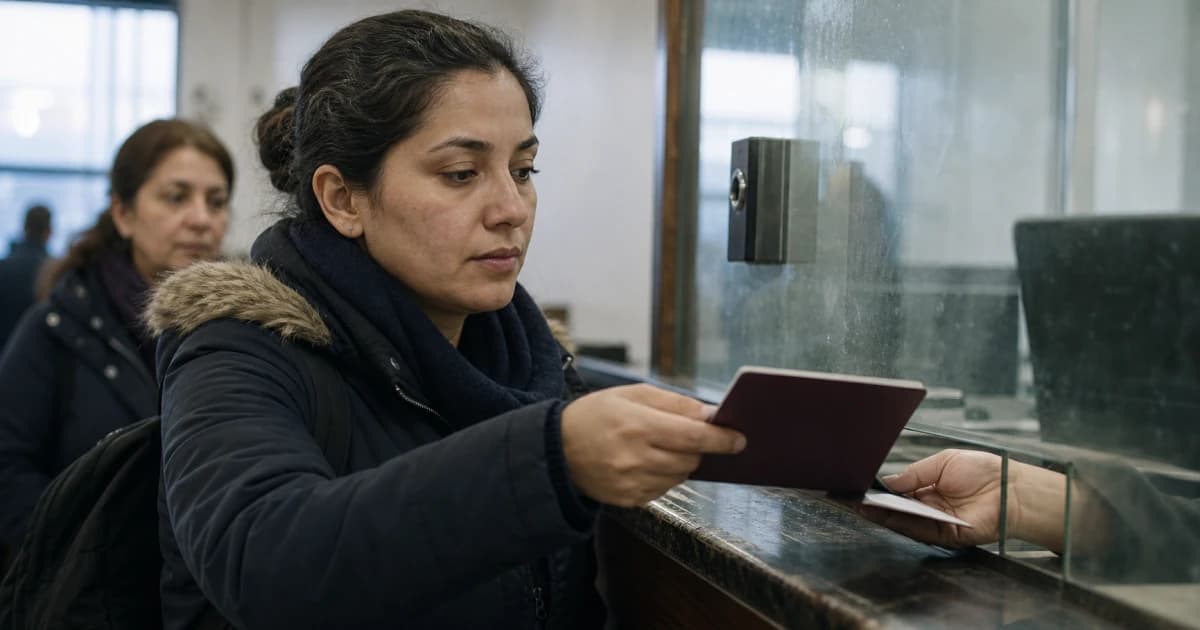
This guide covers regular Dutch-law applications for a partner or minor child who starts abroad. Adoption and foster-child applications use separate IND routes. Use the IND page for your exact route and seek qualified help for advice about your case.
Separate rules apply to asylum family reunification and verification under EU (European Union) law. A Dutch citizen returning under EU rights also uses a different route. This guide does not cover Chavez (residence with a minor Dutch child) or exceptional Article 8 cases under the EVRM (European Convention on Human Rights). Their conditions, fees and decision periods differ. For other routes, start with Dutch residence permits: choose the right route.
1. Choose the correct family route
The relationship determines which application form, conditions, evidence and fee you use. Choose the row that matches your family member.
You can scroll wide tables sideways.
| Route | Use it when | Conditions that differ |
|---|---|---|
| Regular partner | Your spouse, registered partner or unmarried partner will live with you | You must have a verifiable relationship. The general minimum age is 21 for both people. If already married when both lived abroad, both must be at least 18. If a Turkish citizen working in the Netherlands (External site, opens in a new tab) brings a spouse or registered partner, both must be at least 18. |
| Minor child with parent | A child under 18 will join a parent in the Netherlands | The IND checks family ties, parental authority and consent from the other parent when needed. Children under 18 are exempt from the exam abroad. |
| Other adult family member | An adult relative does not fit the partner route | Article 8 EVRM residence is exceptional. The IND says it is rarely granted. It has a separate form; use that route’s instructions. |
| Asylum or EU-law family route | The sponsor has asylum status, or EU or Swiss rules may apply | Follow the separate IND route. Its conditions, fees and decision period differ. |
For an adult relative outside the partner route, check the IND Article 8 EVRM page (External site, opens in a new tab). It is a separate, exceptional route rather than a general way to bring any adult relative.
The referent (sponsor) signs the sponsor declaration. In a partner case, this is the Dutch citizen or residence-permit holder your partner will live with. In a child case, the parent is the sponsor, including when you apply for your partner’s child. If you apply for your partner’s child, obtain authorisation from the parent with parental authority. If the parent and child are coming together, submit their applications at the same time. The person in the Netherlands can apply online or by post.
The family member can instead apply for an MVV and residence permit from abroad (External site, opens in a new tab). They start at a Dutch embassy or consulate in their country of nationality or continuous residence (a country where they may legally stay for more than three months). Continuous residence can be based on a residence permit or a pending residence application.
For this applicant-abroad route, send the form and documents to the IND and pay within three weeks of the date entered by the embassy. Follow that route’s submission instructions.
2. Check the sponsor’s conditions and income
For a partner residence permit (External site, opens in a new tab), check both passports, your relationship, the age rules and the plan to live and register together. Also check the sponsor’s status and any waiting period. Some temporary residence purposes do not allow you to bring a partner or child.
For a minor-child residence permit (External site, opens in a new tab), check that the child is under 18 and still part of your family. Also check who has parental authority and whether the other parent must consent. Use the child conditions as well as the sponsor conditions.
Unless an exemption applies, sponsor income must be independent, sustainable and sufficient (External site, opens in a new tab). The IND checks the income source, how long it will continue and its amount. Check that page for income exemptions and the rules for your income type.
The IND uses sv-loon (External site, opens in a new tab) (social security salary), the pay on which social insurance contributions and payroll tax are calculated. Find this amount on your payslip.
The IND income amounts (External site, opens in a new tab) below apply from 1 July through 31 December 2026. Compare the amount with or without holiday allowance on the same basis.
You can scroll wide tables sideways.
| Application and household | Monthly amount excluding holiday allowance | Monthly amount including holiday allowance |
|---|---|---|
| Partner application or couple sponsoring another family member | €2,337.00 | €2,523.96 |
| Single parent sponsoring a child or other family member | €1,635.90 | €1,766.77 |
| Single parent applying for a partner | €2,337.00 | €2,523.96 |
For example, in October 2026 a sponsor with monthly sv-loon of €2,400 excluding holiday allowance is €63 above the partner threshold. The IND still checks whether that income is independent and sustainable. The amounts change every January and July. Check the live amounts and income test when you apply.
3. Check MVV and exam exemptions
Check the MVV requirement and the exam requirement separately. Certain nationalities do not need an MVV. The IND also assesses situation-based MVV exemptions (External site, opens in a new tab).
The Basisexamen inburgering in het buitenland (External site, opens in a new tab) (civic integration exam abroad) normally applies to an adult partner who needs an MVV. If it applies, pass before applying for the MVV. Children under 18 are exempt. Other exemptions and dispensations can depend on nationality, status, residence purpose or personal circumstances.
A full pass is valid for one year. After checking whether you need the exam, use the Basisexamen preparation guide for registration and study steps.
For saving your exam result, applying within its one-year window and checking inburgering (civic integration) duties after arrival, see After the basisexamen: MVV and inburgering steps.
4. Prepare the evidence and submit the TEV application
Start with the document checklist on your chosen IND route. The documents below are examples; your checklist says which ones you need.
- Sponsor evidence: passport or permit copy, sponsor declaration and the required income evidence.
- Applicant evidence: passport, civil-status or relationship documents and an antecedentenverklaring (criminal-history declaration) when required.
- Child evidence: birth certificate, proof of parental authority and consent from the parent who remains abroad, when required.
Official foreign documents may need legalisatie (official check that a document was issued by the right authority). This can apply even when they are already written in Dutch, English, French or German. Check the requirements for your document and issuing country.
Documents in a language other than Dutch, English, French or German need translation into one of those languages. In the Netherlands, use a translator sworn in by a Dutch court. For translations made abroad, the original document and translation usually both need legalisatie.
Follow these steps to prepare and submit your application:
- Arrange any required legalisatie and translation. Follow the IND translation and legalisation instructions (External site, opens in a new tab) for the document’s country.
- Complete the application using the form for your chosen route.
- Check that you have attached every required document.
- Submit the application online, by post or through the applicant-abroad route described above.
- Pay the route-specific fee following the submission instructions.
- Save copies and the IND case number or V-nummer (foreign national’s number).
5. Wait for the IND decision
The legal decision period (External site, opens in a new tab) for a regular partner or minor-child TEV application is 90 days. The period starts when the IND receives the application. The IND can add several weeks, up to six months, to the decision period. The IND must notify you if it extends the period. Asylum family reunification has a separate legal period of nine months.
Check Mijn IND (External site, opens in a new tab) (the IND online portal) and the sponsor’s post for updates. Answer any request for information by the deadline in the letter. Keep travel and moving bookings refundable until approval.
6. Collect the MVV and travel
The positive IND letter tells you where to obtain the MVV sticker. For the regular partner and child routes, follow these steps:
- Make the embassy or consulate appointment within three months after the IND decision.
- Check that your passport will remain valid for at least six months when the sticker is placed.
- Bring the requested photo and passport to the appointment.
- Provide biometric data (fingerprints and a signature) when required.
- Travel to the Netherlands within the MVV’s validity period.
- Make the residence-card collection appointment when the IND says the card is ready.
- Collect the residence permit from the IND while the MVV is still valid.
The issued MVV sticker is valid for 90 days (External site, opens in a new tab). This is a separate period from the three months for making the embassy appointment. If no appointment is available before a deadline, contact the representation or the IND before it expires. Ask what to do; an extension is not automatic.
7. Complete the arrival steps
Register with the municipality and collect the permit
If you will live in the Netherlands for more than four months, register with your gemeente (municipality) within five days of arrival (External site, opens in a new tab). Arrange the appointment in advance. Register at your shared home address. An adult applicant must attend in person. As a parent, you arrange your child’s registration and bring the child with you.
Registration and residence-card collection are separate tasks. Collect the card when the IND says it is ready, within the MVV’s validity period. The gemeente gives you a BSN (burgerservicenummer, citizen service number) if you do not already have one. An existing BSN stays valid (External site, opens in a new tab).
Use the First 90 days in the Netherlands checklist for municipal registration, DigiD (External site, opens in a new tab) (digital identity), health insurance and banking.
Check tuberculosis and inburgering duties
If your application or decision says you need a tuberculosis test, arrange it with the GGD (External site, opens in a new tab) (Gemeentelijke Gezondheidsdienst, municipal health service). Do this within three months after receiving your residence permit. Exemptions apply; check the conditions on your IND route.
Your residence permit may also create an inburgering duty in the Netherlands. That duty is separate from the exam abroad. Check Who must integrate in the Netherlands? for the post-arrival rule.
8. Resolve common application problems
If your income is close to the threshold, check both the live amount and the IND’s rules on how long it must continue. One payslip does not settle both questions.
If a certificate, legalisation or translation is delayed, respond to the IND letter by its deadline. If you cannot provide the item on time, use the contact instructions in that letter.
If the decision period has passed, check Mijn IND and any extension notice. Follow the IND late-decision guidance (External site, opens in a new tab) if the applicable period has ended.
Object to a refusal and get advice
If the IND refuses the application, you have four weeks to send a bezwaar (objection). Most other government decisions allow six weeks. The refusal letter gives the last date and explains how to object.
The family member or the sponsor can object. A lawyer can also object on your behalf. Any other adviser needs a letter from you that names them and says what they may do. Sign the letter and send it with the objection.
Three kinds of adviser can help with the objection. They differ in who qualifies and what you pay:
You can scroll wide tables sideways.
| Adviser | Who qualifies | What you pay |
|---|---|---|
| A legal adviser at Het Juridisch Loket (External site, opens in a new tab) (legal advice service) | People below its income and savings limits | Nothing |
| An advocaat (registered lawyer) for immigration law, with a toevoeging (legal aid) | People whose income, assets and case qualify | A personal contribution based on income |
| A paid immigration adviser | Anyone | The full fee |
Het Juridisch Loket can refer you to an advocaat. If you object without one, you can use the sample objection letter on its website.
For a toevoeging, the advocaat applies to the Raad voor Rechtsbijstand (External site, opens in a new tab) (Legal Aid Board). The advocaat must be registered with the Board for immigration law. The toevoeging can be in the family member's name or the sponsor's. The Board checks that person's income and assets, and whether the case qualifies. For the application itself, the Board gives a toevoeging only in exceptional cases.
Free and subsidised legal help in the Netherlands gives the income limits and contributions. An immigration objection uses the contribution for most cases, not the higher rate for family cases such as divorce.
One example of a paid immigration adviser is Pathway Partners (External site, opens in a new tab) in Amsterdam. It helps with partner and child applications and with objections against the IND. Its advisers are juristen (legal advisers), not advocaten, so a toevoeging does not cover their fees. Its website is in English, Chinese and Russian. It lists fee ranges for applications and quotes the objection fee after assessing your case. Inburgering.org and Pathway Partners refer clients to each other.
Check before waiting in the Netherlands
The IND recommends waiting abroad while it decides your MVV application. If you have an urgent reason to be in the Netherlands, tell the IND before travelling and provide evidence. Permission for a short stay does not replace an MVV. Overstaying can lead to an entry ban, so keep within your permitted stay. Keep travel and housing plans reversible until the decision arrives.
Continue with the page that fits your stage:
- Author
- By Inburgering.org team
- Reviewer
- Reviewed by Kirill Svavolia
Official Sources
- IND: Provisional residence permit (MVV) (External site, opens in a new tab) - what the long-stay entry visa is, who normally applies, and why the MVV and residence permit are requested together
- IND: Apply for an MVV and residence permit from abroad (External site, opens in a new tab) - the applicant-abroad route, including the embassy appointment, biometrics, three-week submission and payment deadlines
- IND: Residence permit for partner (External site, opens in a new tab) - partner-route conditions, documents, the 2026 fee, the 90-day decision period, and the post-approval steps
- IND: Residence permit for minor child to stay with parent (External site, opens in a new tab) - child-route conditions, including age, family ties, parental authority, consent, sponsor income and the 90-day decision period
- IND: MVV exemptions (External site, opens in a new tab) - nationality-based and situation-based exemptions from the MVV requirement, which the IND assesses
- IND: Civic Integration Exam Abroad (External site, opens in a new tab) - who must pass the exam before an MVV application, the exemptions and dispensations, and the one-year validity of a pass
- IND: Independent, sustainable and sufficient income (External site, opens in a new tab) - how the IND checks whether income is independent, sustainable and sufficient, and when an income exemption may apply
- IND: Required amounts income requirements (External site, opens in a new tab) - the income amounts valid from 1 July through 31 December 2026 and the rule that amounts change every January and July
- IND: Fees, costs of an application (External site, opens in a new tab) - route-specific 2026 fees, including €254 for a partner or adult family member and €85 for a minor child
- IND: Decision periods (External site, opens in a new tab) - the 90-day legal period for a regular TEV application, possible extensions, and different periods for other routes
- NetherlandsWorldwide: How long is my MVV visa sticker valid? (External site, opens in a new tab) - the 90-day validity of an issued MVV and the requirement to collect the residence permit while it remains valid
- IND: Residence permit article 8 EVRM family life (External site, opens in a new tab) - exceptional residence for other family members, the separate application form and the IND contact route
- IND: Mijn IND (External site, opens in a new tab) - tracking application status and viewing family members’ information in the IND portal
- IND: IND late with decision (External site, opens in a new tab) - extensions are added to the decision period, and what to do when the applicable period has passed
- Rijksoverheid (Dutch government): Registering in the BRP (personal records database) (External site, opens in a new tab) - in-person municipal registration within five days for stays over four months, including the exceptions
- NetherlandsWorldwide: When to register with a Dutch municipality (External site, opens in a new tab) - arranging registration in advance, personal attendance by partners and children, and keeping an existing BSN
- IND: Entry ban (External site, opens in a new tab) - overstaying a permitted visit can lead to an entry ban
- IND: Partner residence permit — Dutch requirements (External site, opens in a new tab) - original-language partner conditions, sponsor restrictions, waiting periods and exemptions
- IND: Minor child with parent — Dutch requirements (External site, opens in a new tab) - original-language child conditions, sponsor identity, registration and tuberculosis-test exemptions
- IND: Basisexamen inburgering in het buitenland (External site, opens in a new tab) - original-language exam requirement, exemptions, dispensations and one-year result validity
- IND: Beslistermijnen (decision periods) (External site, opens in a new tab) - original-language confirmation that a regular decision period can be extended by up to six months
- IND: Article 8 family life — English explanation (External site, opens in a new tab) - English explanation of exceptional residence for other adult relatives
- IND: My IND — English explanation (External site, opens in a new tab) - English explanation of the online application-status service
- IND: Leges (application fees) (External site, opens in a new tab) - original-language 2026 fees and the Associatieovereenkomst EG-Turkije fee exceptions
- IND: Married or registered partner application form (PDF, 525.17 KB) (External site, opens in a new tab) - passport, relationship, income and sponsor evidence; the document checklist depends on the application
- IND: Minor child with parent application form (PDF, 412.22 KB) (External site, opens in a new tab) - birth and parental-authority evidence, consent, document examples and separate adoption or foster-child routes
- Rijksoverheid: Who must integrate? (External site, opens in a new tab) - post-arrival inburgering duties depend on nationality and circumstances
- IND: Translation and legalisation of documents (External site, opens in a new tab) - what legalisation checks and when translation into Dutch, English, French or German is required
- DigiD: Apply, activate and log in (External site, opens in a new tab) - the official digital-identity service for the arrival checklist
- GGD: Find your local health service (External site, opens in a new tab) - the official directory of local GGD health services
- IND: Turkish citizens living in the Netherlands (External site, opens in a new tab) - the minimum age of 18 for a Turkish citizen working in the Netherlands and their spouse or registered partner
- IND: Income requirements — Dutch explanation (External site, opens in a new tab) - how to identify sv-loon on a payslip and which income components count
- IND: Income amounts — Dutch definition (External site, opens in a new tab) - the definition of sv-loon and the family-income amounts valid from 1 July through 31 December 2026
- IND: Object to or appeal decision (External site, opens in a new tab) - the last objection date stated in the decision letter, and who may object: you, your sponsor, a lawyer or a person you authorise in a signed letter
- Vreemdelingenwet 2000 (Aliens Act 2000), article 69 (External site, opens in a new tab) - the four-week objection period for decisions under the Aliens Act, in place of the general period in the Awb (General Administrative Law Act)
- Rijksoverheid: Hoe kan ik bezwaar maken tegen een beslissing van de overheid? (how to object to a government decision) (External site, opens in a new tab) - the general six-week objection period for government decisions
- Het Juridisch Loket: Aanvraag buitenlandse partner naar Nederland halen (bringing a foreign partner to the Netherlands) (External site, opens in a new tab) - advice after an IND refusal, referral to an advocaat and the sample objection letter for objecting without one
- Het Juridisch Loket: Onze werkwijze (how we work) (External site, opens in a new tab) - free personal advice for people below the income and savings limits
- Raad voor Rechtsbijstand (Legal Aid Board): Verblijf gezinsleden (residence of family members) (External site, opens in a new tab) - a toevoeging for an objection against a refused family application, from an advocaat registered for immigration law, in the family member's or the sponsor's name; exceptional cases only for the application itself
- Rechtsbijstand.nl: Mediator of advocaat nodig? (need a mediator or lawyer?) (External site, opens in a new tab) - subsidised help only through an advocaat or mediator registered with the Legal Aid Board, and the income-based personal contribution
- Rechtsbijstand.nl: Voorwaarden (conditions) (External site, opens in a new tab) - the Board's check of the problem itself and of income and assets
- Rechtsbijstand.nl: Eigen bijdrage (personal contribution) (External site, opens in a new tab) - the same contribution for most legal problems and a different rate for divorce, separation, property division, contact arrangements, maintenance and custody